


Get to know Tongjiang
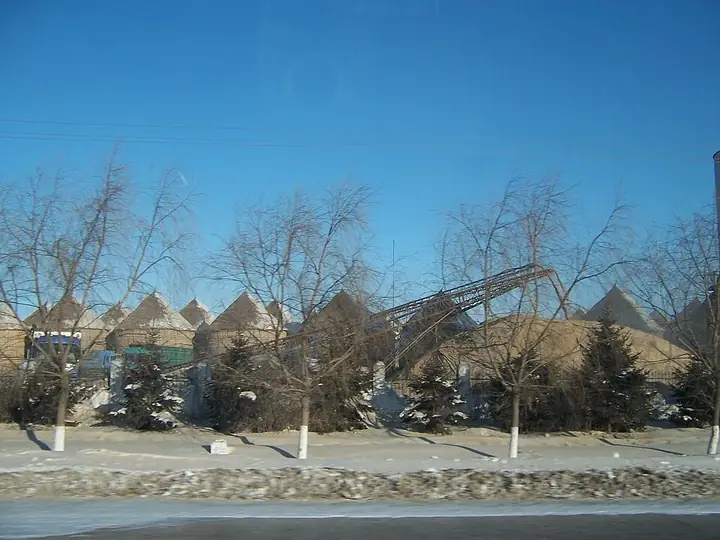
Photo adjustments
Full frame retained; resized proportionally to a maximum dimension of 960 pixels and converted to WebP quality 88. No crop, retouch, generated elements, or subject alteration. Final website rendition: full frame retained, proportionally resized to at most 720 pixels and converted to WebP. No additional retouching or subject alteration. Card displays may crop the view.
- Administrative area
- County-level city · 县级市
- Part of
- Jiamusi
- Chinese name
- 同江市
- Local areas
- County-level city guide
Area & population
- Area in the source
- 6,164.00 km²
Source: cited geographic source, as of the dates shown.
Setting and landscape
The city sits in the heart of the Sanjiang Plain (三江平原). The Tongjiang government describes the land as an old alluvial, subsiding marsh plain with a little upland left by outliers of the Outer Khingan range; it falls from south-west to north-east, at an average of 45 to 65 metres above sea level. Meadow soils cover about 61 per cent of the area and black soils about 21 per cent, and the main crops are soybeans, rice and maize.
Winters are long, severe and dry, with north-west winds; summers are short, warm and wet. The city records a January mean of −15.6°C, a July mean of 23°C and about 148 frost-free days a year.
History
The town's old local name, Lahasusu (拉哈苏苏), is a Hezhe word that the city government glosses as 'ruins' or 'old house'. In February 1906 the Qing created the sub-prefecture of Linjiang Zhou (临江州) at Lahasusu; it was raised to a prefecture, Linjiang Fu (临江府), in 1909 and made Linjiang County in 1913. Because Fengtian Province (奉天省) already had a Linjiang, it was renamed Tongjiang in 1914. The county was merged into Fujin (富锦) in 1949, passed as a town to Fuyuan (抚远) County in 1959 and was re-created as Tongjiang County in 1965. It has been under Jiamusi since 1985 and a county-level city since 24 February 1987.
The port regained first-class national status in 1986, and the city government states that the Ministry of Foreign Affairs approved it as an international port in 1994. Tongjiang is also the northern starting point of the Tongjiang–Sanya (同三) highway that runs the length of China.
Hezhe culture
The city government calls Tongjiang the place of origin and a main home of the Hezhe (赫哲族), one of the ethnic groups China classes as having a small population, a river people of the Amur, Songhua and Ussuri (乌苏里江) basins who lived mainly by fishing and hunting until the 1950s. Their language has no script. Tongjiang has two Hezhe ethnic townships, Jiejinkou (街津口赫哲族乡) and Bacha (八岔赫哲族乡).
The heritage the city lists includes Yimakan (伊玛堪) storytelling, which it names as world-level intangible heritage; fish-skin painting, fish-skin clothing making and Hezhe wedding customs at national level; and birch-bark craft, the mouth harp (口弦琴), fish-bone crafts and the Wurigong (乌日贡) gathering at provincial level.
Highlights
- Jiejinkou Hezhe Ethnic Township 街津口赫哲族乡: One of Tongjiang's two Hezhe ethnic townships.
- Yimakan storytelling 伊玛堪: Hezhe narrative tradition, listed by the city as world-level intangible heritage.
- Hezhe fish-skin clothing 鱼皮衣制作技艺: Fish-skin clothing making, a national-level intangible heritage item.
Sources for this guide
同江概况 · Tongjiang City People's Government
自然地理 · Tongjiang City People's Government
赫哲故里 · Tongjiang City People's Government
百年口岸 · Tongjiang City People's Government
人口民族 · Tongjiang City People's Government
Original English written from the listed sources and checked sentence by sentence against quoted extracts by a separate reviewer. Updated 2026-09-24.
Explore Tongjiang
Core places to explore, with English and Chinese names.
Places to explore around Tongjiang
 AI illustration · AI 示意图(仅供参考,非该地点实拍)
Sanjiangkou River Confluence三江口
Sanjiangkou in Tongjiang is the meeting place of the Songhua and Heilongjiang rivers.
Read the place guide → AI illustration · AI 示意图(仅供参考,非该地点实拍)
Jiejinkou Hezhe Ethnic Township街津口赫哲族乡
Jiejinkou Hezhen Township in Tongjiang combines a forested waterside setting with places that interpret Hezhen fishing, hunting and craft traditions.
Read the place guide →Plan your visit
Getting there
Tongjiang is about 190 km in a straight line from central Jiamusi. Search for 同江市 in a map app to find stations and your accommodation.
Where to stay →Build your route
Sanjiangkou River Confluence and Jiejinkou Hezhe Ethnic Township are both listed here. The linked place guides have entrance and visit details.
Continue with Jiamusi →More in Jiamusi
Sources & geographic information
Administrative names and parent areas: Official geographic directory · Reference date 2026-09-06.
Map data © OpenStreetMap contributors. Pins mark approximate centres, not entrances or boundaries.