

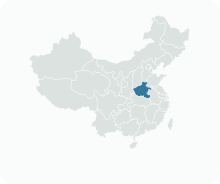
Get to know Xinyang

Photo adjustments
Full frame retained; resized proportionally to a maximum dimension of 960 pixels and converted to WebP quality 88. No crop, retouch, generated elements, or subject alteration. Final website rendition: full frame retained, proportionally resized to at most 720 pixels and converted to WebP. No additional retouching or subject alteration. Card displays may crop the view.
- Administrative area
- Prefecture-level city · 地级市
- Part of
- Henan
- Chinese name
- 信阳市
- Local areas
- 10 local areas
Area & population
- Area in the source
- 18,819.00 km²
- Administrative seat
- Pingqiao District
Source: cited geographic source, as of the dates shown.
Setting and landscape
The prefecture lies on the northern side of the junction of the Dabie (大别山) and Tongbai (桐柏山) mountains, and the city government calls it 'the Jiangnan of the north' (北国江南). It grows rice as well as wheat, with tea-oil camellia, chestnuts and ginkgo. Nanwan Lake (南湾湖), 5 kilometres southwest of the city, is a national forest park whose 75 square kilometres of water hold 61 islands.
History
The city government says 13 of the 100 commonest Han surnames, among them Huang (黄), Lai (赖) and Luo (罗), originated here or have one branch rooted here. A set of Warring States bronze bells excavated in Xinyang, which it calls the People's Republic's first complete set, played 'The East Is Red' (东方红) that rang out from China's first satellite. During the Agrarian Revolution the prefecture held the capital of the Hubei–Henan–Anhui Soviet Area (鄂豫皖苏区), by the city's count the country's second-largest revolutionary base, and 69 founding generals of the People's Republic came from here.
What to see
Jigong Mountain (鸡公山), 38 kilometres south of the city on the Henan–Hubei border, was historically grouped with Lushan (庐山), Beidaihe (北戴河) and Moganshan (莫干山) among China's four great summer retreats. After American missionaries explored it in 1903 and the Beijing–Hankou railway (平汉铁路) opened, foreign clergy and merchants and Chinese officials built over 300 villas; 212 survive, and the mountain joined the first list of national key scenic areas in 1982. Lingshan (灵山) in Luoshan County (罗山县) keeps Lingshan Temple (灵山寺), founded in 474. In Xin County (新县), General Xu Shiyou (许世友) was born and, by special permission, buried in the earth in 1985.
Food and local products
The city government lists Xinyang Maojian (信阳毛尖) among China's ten famous teas. Its making, on the national intangible heritage list since 2014, starts with picking before Qingming (清明); the leaves are fired in a hot pan, then flung toward the rim of a second pan until they roll into tight, straight strands. Ancient tea leaves from a tomb in Gushi (固始) date Xinyang's tea picking back 2,300 years, according to the heritage listing. Nanwan fish head (清炖南湾鱼头) is bighead carp from the lake, stewed clear, and Wenhui Bao (文汇报) singles out Gushi goose (固始鹅块), stewed plain in water, and fish cured in bamboo tubes (筒鲜鱼).
Getting oriented
The Beijing–Guangzhou (京广), Beijing–Kowloon (京九) and Nanjing–Xi'an (宁西) railways and the Beijing–Guangzhou high-speed line cross the prefecture, and Minggang Airport (明港机场) serves it. Zhengzhou (郑州), Wuhan (武汉) and Hefei (合肥) lie within 300 kilometres.
Highlights
- Jigong Mountain 鸡公山: Summer retreat 38 km south of the city, where 212 of the villas built in the early twentieth century survive; a national key scenic area since 1982.
- Nanwan Lake 南湾湖: National forest park 5 km southwest of the city, with 61 islands in 75 square kilometres of water.
- Lingshan Temple 灵山寺: Temple in Luoshan County's Lingshan scenic area, founded in 474.
- Xinyang Maojian 信阳毛尖: Green tea whose making technique has been on the national intangible heritage list since 2014.
Sources for this guide
信阳市概况-信阳市概况-信阳市人民政府门户网站 · Xinyang Municipal People's Government
鸡公山风景区-信阳美景-信阳市人民政府门户网站 · Xinyang Municipal People's Government
南湾湖(4A级)-信阳美景-信阳市人民政府门户网站 · Xinyang Municipal People's Government
清炖南湾鱼头-信阳美食-信阳市人民政府门户网站 · Xinyang Municipal People's Government
绿茶制作技艺(信阳毛尖茶制作技艺) - 中国非物质文化遗产网·中国非物质文化遗产数字博物馆 · China Intangible Cultural Heritage Network (ihchina.cn)
灵山风景名胜区(4A级)-信阳美景-信阳市人民政府门户网站 · Xinyang Municipal People's Government
许世友将军故里-信阳美景-信阳市人民政府门户网站 · Xinyang Municipal People's Government
《三餐四季》:烟火气串联起地域文化基因 - 新华网客户端 · Wenhui Bao, carried by the Xinhua News app
Original English written from the listed sources and checked sentence by sentence against quoted extracts by a separate reviewer. Updated 2026-10-01.
Explore Xinyang
Core places to explore, with English and Chinese names.
Mount Jigong 鸡公山
Nanwan Reservoir 南湾湖
Huangbai Mountain 黄柏山
General Xu Shiyou's Hometown 许世友将军故里
Hubei-Henan-Anhui Soviet Capital Revolutionary Museum 鄂豫皖苏区首府革命博物馆
Lingshan Temple 灵山寺
Shihe District 浉河区
Pingqiao District 平桥区
Luoshan County 罗山县
Guangshan County 光山县
Xin County 新县
Shangcheng County 商城县
Gushi County 固始县
Huangchuan County 潢川县
Huaibin County 淮滨县
Xi County 息县
Places to explore around Xinyang
 Temple gate on Mount Jigong in mist, Xinyang · 鸡公山活佛禅寺山门(云雾),信阳市 Source-recorded photograph date: 2010-04-18 10:34:04.
Mount Jigong鸡公山
Jigong Mountain is known for a landscape of wooded slopes and historic summer villas near the Henan–Hubei boundary. The villas reflect the international community that used the mountain as a retreat in the late nineteenth and…
Read the place guide →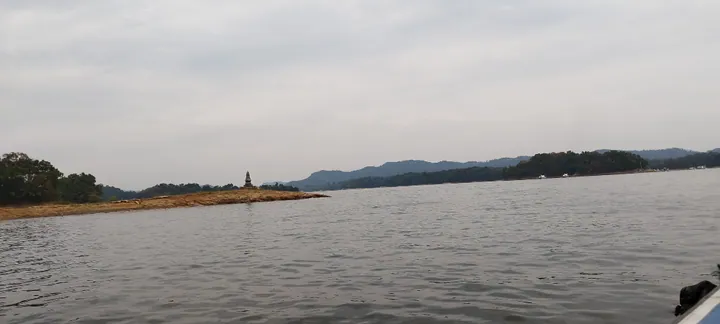 Nanwan Reservoir with its small tea island, Xinyang · 信阳南湾湖茶岛 Source-recorded photograph date: 5 October 2024 (according to Exif data).
Nanwan Reservoir南湾湖
Nanwan Lake combines a broad reservoir landscape with islands developed around local tea and wildlife themes. Tea Island links the visit to Xinyang’s tea-growing culture, while Bird Island provides a wooded contrast to the open…
Read the place guide →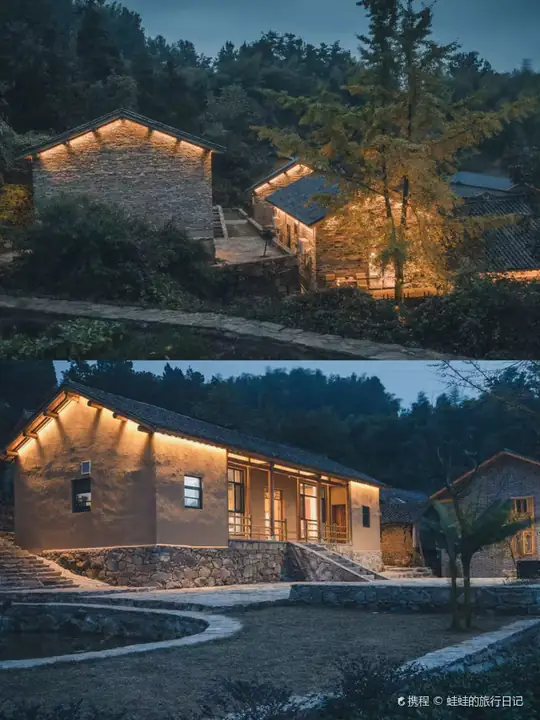 Huangbai Mountain · 黄柏山
Huangbai Mountain黄柏山
Huangbaishan (黄柏山) is a forested massif in southern Shangcheng County, Xinyang, in the heart of the Dabie Mountains where Henan, Hubei and Anhui meet, managed as Huangbaishan National Forest Park together with the state forest farm of the same name.
Read the place guide → General Xu Shiyou's Hometown · 许世友将军故里
General Xu Shiyou's Hometown许世友将军故里
The home place of General Xu Shiyou (许世友将军故里) is at Xujiawa, in Hepu village of Tianpu township, Xinxian County, Xinyang, in the Dabie Mountains, where a memorial hall and the general's grave form a well-known patriotic education base in the range.
Read the place guide → Hubei-Henan-Anhui Soviet Capital Revolutionary Museum · 鄂豫皖苏区首府革命博物馆
Hubei-Henan-Anhui Soviet Capital Revolutionary Museum鄂豫皖苏区首府革命博物馆
Xin County museum on the Hubei-Henan-Anhui revolutionary base, opened 1990, with a wall-written Soviet land law and the Red Army's first plane.
Read the place guide → Lingshan Temple · 灵山寺
Lingshan Temple灵山寺
Lingshan Temple (灵山寺) is a Buddhist monastery on Lingshan in south-western Luoshan County, Xinyang, founded under the Northern Wei and counted by the county as one of the four ancient temples of the Central Plains.
Read the place guide →Local life & food
Xinyang local specialties
信阳市特色美食 · 12 specialties to discover
 Xinyang braised fish head 信阳红焖鱼头AI illustration · AI 示意图
Tender cheek meat contrasts with gelatinous skin and a rich sauce. Eating requires attention because desirable meat sits around the bones rather than in neat fillets.
Source ↗Read the dish guide →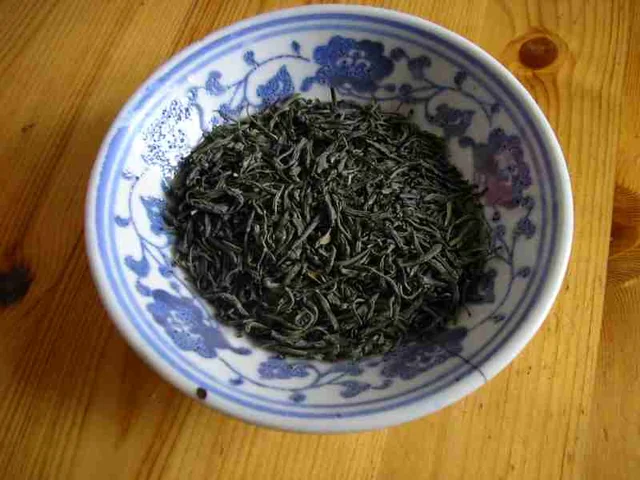 Xinyang Maojian tea 信阳毛尖
The liquor is fresh and vegetal with a gentle nuttiness and a possible light astringent finish. Leaf quality, water temperature and steeping time change the balance.
Source ↗Read the dish guide →
Photo adjustments
EXIF orientation applied where present; resized proportionally to at most 640 px on the long edge and encoded as WebP. No crop, retouching, recoloring or subject changes.
 Luoshan pork-intestine soup 罗山大肠汤AI dish illustration / AI 菜品示意图
The intestines have a resilient bite and a pronounced savoury flavour; tofu, when included, brings a softer texture.
Source ↗Read the dish guide → Xinyang Slow-Simmered Stews 信阳炖菜
Xinyang Slow-Simmered Stews (信阳炖菜) are the stewed dishes of Xinyang (信阳), the southernmost city of Henan, which lies on the upper Huai River (淮河) below the northern slopes of the Dabie Mountains (大别山).
Read the dish guide →Photo adjustments
EXIF orientation normalized; resized without changing aspect ratio; converted to WebP. No subject edits.
 Nanwan Lake Fish 南湾鱼
Nanwan Lake Fish (南湾鱼) is fish from Nanwan Lake (南湾湖) in Xinyang (信阳), Henan, and the dish the city puts forward is clear-stewed Nanwan fish head (清炖南湾鱼头), made with bighead carp (鳙鱼) from the lake.
Read the dish guide →
Photo adjustments
Full frame retained; proportionally resized and converted to WebP. No retouching or changes to the photographed subject. Card displays may crop the view.
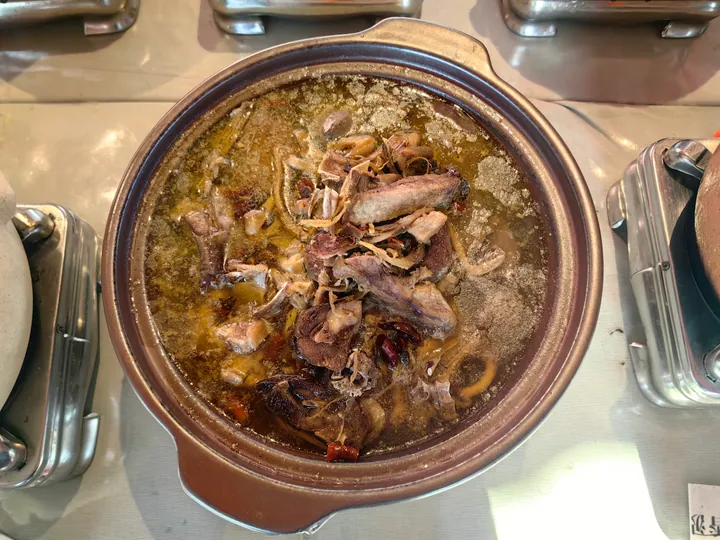 Gushi Braised Goose Pieces 固始鹅块
Gushi Braised Goose Pieces (固始鹅块) is goose stewed slowly in an old broth in an iron pot and served in red chilli oil, the dish Henan Daily calls the star of the New Year reunion dinner in Gushi (固始) county, Xinyang (信阳), Henan.
Read the dish guide →
Photo adjustments
Full frame retained; proportionally resized and converted to WebP. No retouching or changes to the photographed subject. Card displays may crop the view.
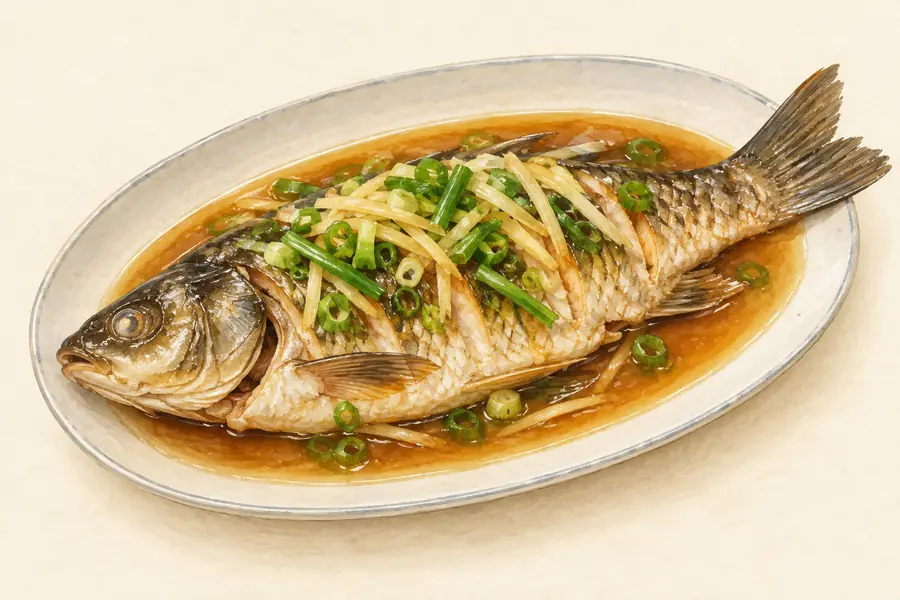 Shangcheng Bamboo-Tube Cured Fish 商城筒鲜鱼AI illustration · AI 示意图(仅供参考,非实拍)
Shangcheng Bamboo-Tube Cured Fish (商城筒鲜鱼) is bighead carp that is salted and left to ferment in sealed bamboo tubes, then cooked as a stew.
Read the dish guide → Huangchuan Tribute Noodles 潢川贡面AI illustration · AI 示意图(仅供参考,非实拍)
Huangchuan Tribute Noodles (潢川贡面) are the hollow tribute noodles (空心贡面) of Huangchuan County (潢川县) in Xinyang (信阳), Henan, made in more than 20 stages over more than 20 hours.
Read the dish guide →All dish names · 全部菜名 (12)
- Xinyang braised fish head · 信阳红焖鱼头
- Xinyang Maojian tea · 信阳毛尖
- Luoshan pork-intestine soup · 罗山大肠汤
- Xinyang Slow-Simmered Stews · 信阳炖菜
- Nanwan Lake Fish · 南湾鱼
- Gushi Braised Goose Pieces · 固始鹅块
- Shangcheng Bamboo-Tube Cured Fish · 商城筒鲜鱼
- Huangchuan Tribute Noodles · 潢川贡面
- Xixian Flaky Griddle Flatbread · 息县油酥火烧
- Huaibin Battered and Braised Chicken · 淮滨面炕鸡
- Guangshan Salted Speckled Duck Eggs · 光山麻鸭蛋
- Xinyang Hot Dry Noodles · 信阳热干面
More dishes from across Henan are in the Henan food guide.
Counties & districts in Xinyang
10 areas belong directly to Xinyang.
10 areas
Shihe District 浉河区
Shihe is a built-up (metro) district of the city of Xinyang, Henan province, China. Shihe District was established in 1998, and got its name from the Shi River (浉河).
Explore the area →DistrictPingqiao District 平桥区
Pingqiao District (simplified Chinese: 平桥区; traditional Chinese: 平橋區; pinyin: Píngqiáo Qū) is a district and the seat of the city of Xinyang, Henan province, China, bordering Hubei province to the northwest.
Explore the area →CountyLuoshan County 罗山县
Luoshan County (simplified Chinese: 罗山; traditional Chinese: 羅山; pinyin: Luóshān; postal: Loshan) is a county in the southeast of Henan province, China, bordering Hubei province to the south.
Explore the area →CountyGuangshan County 光山县
Guangshan County is a county in the southeast of Henan province, China. It is under the administration of Xinyang city. The regional dialect is the Xinyang city dialect of Southwestern Mandarin.
Explore the area →Show fewer areas
Xin County 新县
Xin County or Xinxian is a county in the southeast of Henan province, China, bordering Hubei province to the south. It is under the administration of the prefecture-level city of Xinyang.
Explore the area →CountyShangcheng County 商城县
Shangcheng County is a county of Henan province, China, containing the province's southernmost point and bordering Anhui to the southeast as well as Hubei to the south and southwest.
Explore the area →CountyGushi County 固始县
Gushi is a county of 1,023,857 people directly governed by Henan, People's Republic of China. It is administered by the prefecture-level city of Xinyang.
Explore the area →CountyHuangchuan County 潢川县
Huangchuan County (simplified Chinese: 潢川县; traditional Chinese: 潢川縣; pinyin: Huángchuān Xiàn; local pronunciation: Huāngcuǎn Xiàn) is a county of southeastern Henan province, People's Republic of China.
Explore the area →CountyHuaibin County 淮滨县
Huaibin County (simplified Chinese: 淮滨县; traditional Chinese: 淮濱縣; pinyin: Huáibīn Xiàn) is a county in the southeast of Henan province, China, bordering Anhui province to the northeast.
Explore the area →CountyXi County 息县
Xi County or Xixian (simplified Chinese: 息县; traditional Chinese: 息縣; pinyin: Xī Xiàn) is a county in the southeast of Henan province, China. It is the northernmost county-level division of Xinyang.
Explore the area →No areas match this name.
Plan your visit
Getting there
Search for 信阳市 in a map app to find stations and your accommodation.
Where to stay →Build your route
Mount Jigong and Nanwan Reservoir are about 35 km apart in a straight line. The linked place guides have entrance and visit details.
Continue with Henan →More in Henan
Sources & geographic information
Administrative names and parent areas: Official geographic directory · Reference date 2026-09-06.
Photo: Mount Jigong · Gary Lee Todd, Ph.D. · CC0. Full frame retained; proportionally resized and converted to WebP. No retouching or changes to the photographed subject. Card displays may crop the view.
_-_10323711716.jpg)
Photo: Nanwan Reservoir · Whzizhi · CC BY-SA 4.0. Full frame retained; proportionally resized and converted to WebP. No retouching or changes to the photographed subject. Card displays may crop the view.

Photo: Huangbai Mountain · Source photographer · License not provided. EXIF orientation normalized; resized without changing aspect ratio; converted to WebP. No subject edits.
Photo: General Xu Shiyou's Hometown · Source photographer · License not provided. EXIF orientation normalized; resized without changing aspect ratio; converted to WebP. No subject edits.
Photo: Hubei-Henan-Anhui Soviet Capital Revolutionary Museum · Source photographer · License not provided. EXIF orientation normalized; resized without changing aspect ratio; converted to WebP. No subject edits.
Photo: Lingshan Temple · Source photographer · License not provided. EXIF orientation normalized; resized without changing aspect ratio; converted to WebP. No subject edits.
Map data © OpenStreetMap contributors. Pins mark approximate centres, not entrances or boundaries.