

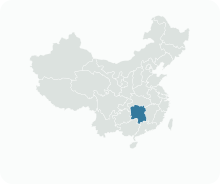
Get to know Luxi County
- Administrative area
- County · 县
- Part of
- Xiangxi Tujia and Miao Autonomous Prefecture
- Chinese name
- 泸溪县
- Local areas
- County guide
Area & population
- Area
- 1,568.65 km²
- Population · 2010
- 273,361
Source: English Wikipedia, as of the dates shown.
A river county with its own pace
Luxi County is part of Xiangxi Tujia and Miao Autonomous Prefecture in western Hunan. The county is best understood through the Yuan River: the county seat sits beside the meeting of the Wu River and the Yuan, while Pushi lies farther southeast along the river corridor. Hunan's official tourism planning places Luxi on a wider Miao-culture route linking Huayuan, Jishou, Baojing, Guzhang and Fenghuang, but Luxi itself is a county-sized landscape rather than a compact town centre.
Near the county seat, the water is not just scenery. A recent local account describes the Wu joining the Yuan beside the town and the river channels forming Wuli Isle, or Wuli Zhou (五里洲). Look for this relationship between river, sandbar and built-up bank from public riverside areas rather than expecting one single viewpoint or ticketed monument. The county's newer Yuanshui River Huabi Scenic Area is a separate managed outing: the 2025 provincial announcement describes a 4.5-square-kilometre area with a visitor centre, a river-viewing pavilion and riverside grassland. Check the operator's current opening and ticket notice before making it the centre of a day.
What to notice
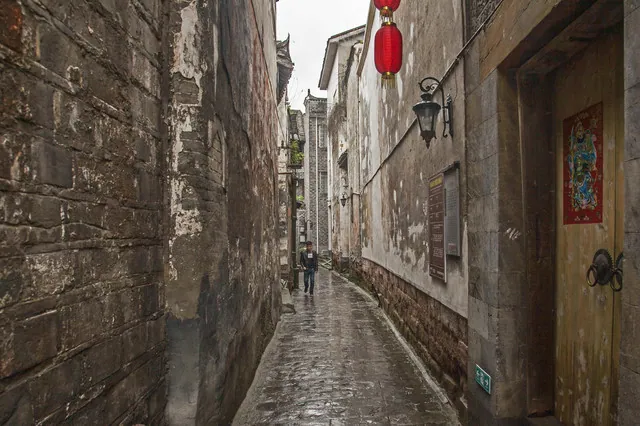
Pushi Ancient Town (浦市古镇) is the county's most legible historic river-port stop, but it should not be used as a shorthand for all of Luxi. The town stands on the west bank of the middle Yuan and grew through Ming- and Qing-period river trade; it is listed as a national historic and cultural town. Its lanes, former commercial buildings and riverside setting make the old port story tangible. Allow time for the county seat and the journey between the two places instead of planning them as one walkable block.
Luxi's cultural identity is also heard rather than only seen. Chenhe gaoqiang (辰河高腔) is a local opera tradition registered in the first national representative list of intangible cultural heritage in 2006, with Hunan's Luxi County named as the declaring area and the county training centre as its protection body. The national heritage record describes 48 Mulian plays, high-register singing and an ensemble of suona, bowed strings, drums and gongs. A performance is not a daily certainty: look for a current notice or an organised programme, and observe performers and residents without treating a community tradition as a photo prop.
Food and everyday life
For an edible introduction, look for produce and preserved foods rather than a single restaurant that claims to represent the whole county. Luxi's ponkan mandarin (泸溪椪柑) is a county-associated citrus crop: the local tourism site describes thin skin, crisp flesh and abundant juice, while a Hunan Daily report records the early-winter harvest period in one production season. Peel it fresh when it is in season; do not treat an old harvest date as a promise for every year.
Local promotion has also identified Pushi iron-bone pork cured meat, cured tofu, Heshui tea oil and Waxiang rice among Luxi products. These are useful market or small-shop clues, not a guarantee that every stall carries them or that a preparation meets a dietary requirement. Ask what meat, soy, oil or seasoning is used when that matters to you.
Getting there and moving around
The official China Railway profile places Jishou East (吉首东站) in Jishou City and records its opening on 6 December 2021. It is a rail gateway for the prefecture, not an entrance to Luxi County. From the station, arrange an onward road connection to the county-seat area around Wuxi Town and Baisha (武溪镇、白沙); the exact station-to-county service and pickup point should be checked for your travel date.
For driving, use the Chinese destination names 泸溪县武溪镇白沙 Lúxī Xiàn Wǔxī Zhèn Báishā for the county-seat area and 浦市古镇 Pǔshì Gǔzhèn for Pushi. The G56 Hangrui Expressway's Luxi toll station completed an upgrade and reopened on 2 December 2025. The county tourism company's older route page directs drivers from the Luxi station via G319 and onward local roads to Wuxi/Baisha; it is a useful directional outline, not a current promise about every junction or closure.
For the county's internal connection to Pushi, the Pushi operator's transport page says visitors should reach Baisha first and then transfer toward Pushi. The page also carries older frequencies and fares, so use the transfer sequence only, confirm the current last service locally, and reverse the same connection for the return journey. There is no metro in this rural county; allow for road transfers and do not assume that a riverside attraction is a railway or bus-station entrance.
Explore Luxi County
Core places to explore, with English and Chinese names.
Places to explore around Luxi County
 A narrow stone-paved lane in Pushi Ancient Town, Luxi County, Hunan. Photo: Allervous · CC BY-SA 4.0
Plan your visit
Getting there
Luxi County is about 50 km (straight-line distance) from central Xiangxi Tujia and Miao Autonomous Prefecture. Search for 泸溪县 in a map app to find stations and your accommodation.
Where to stay →Build your route
Start with Pushi Ancient Town. The linked place guides have entrance and visit details.
Continue with Xiangxi Tujia and Miao Autonomous Prefecture →More in Xiangxi Tujia and Miao Autonomous Prefecture
Sources & geographic information
Administrative names and parent areas: Official geographic directory (dmfw.mca.gov.cn) · Reference date 2026-09-06.
Background text adapted from Luxi County, Hunan — Wikipedia contributors, under CC BY-SA 4.0. Text has been shortened and reorganized; source revision 1339292949.
Map data © OpenStreetMap contributors. Pins mark approximate centres, not entrances or boundaries.
Image credits & notes (1)
- A stone-paved lane through Pushi ancient town in Luxi County, Hunan · 湖南泸溪县浦市古镇石板巷Photo: Allervous · CC BY-SA 4.0 · taken 2018-09-15Resized for the web; the photo itself has not been edited. Thumbnails may show a cropped view.
