

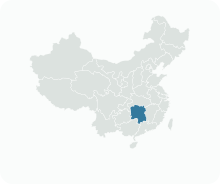
Get to know Qiyang
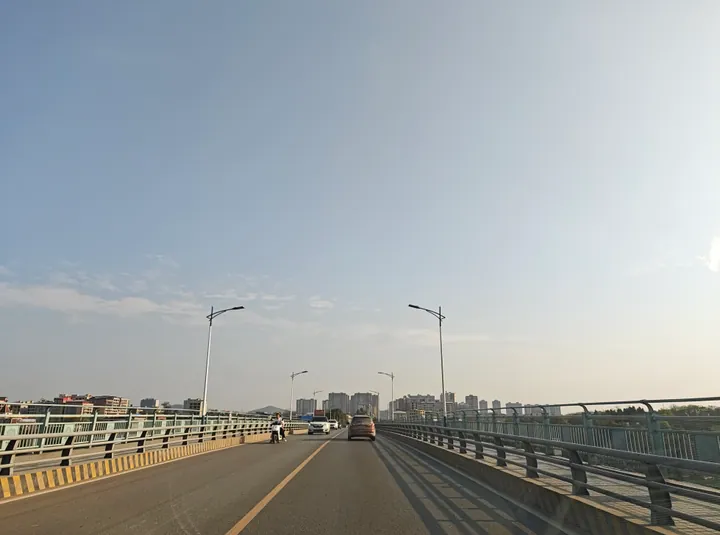
Photo adjustments
Full frame retained; proportionally resized and converted to WebP. No retouching or changes to the photographed subject. Card displays may crop the view.
- Administrative area
- County-level city · 县级市
- Part of
- Yongzhou
- Chinese name
- 祁阳市
- Local areas
- County-level city guide
Area & population
- Area in the source
- 2,538.20 km²
- Population · 2020
- 832,813
- Administrative seat
- Changhong Subdistrict
Source: cited geographic source, as of the dates shown.
Setting and landscape
The land is high to the north and south and lower in the middle, forming a basin. The Yangming Mountains (阳明山) rise along the southern edge, while the Siming (四明山) and Qishan (祁山) ranges run across the north. The Xiang enters at Dacundian (大村甸镇) and leaves at Huangnitang (黄泥塘镇), collecting the Baishui (白水) from the south and the Qishui (祁水) from the north. The Qishui takes its name from the way it winds around Mount Qi.
Protected landscapes include Taibaifeng National Forest Park (太白峰国家森林公园), Wuxi National Wetland Park (浯溪国家湿地公园) and the Guabangshan provincial nature reserve for salamanders (挂榜山小鲵省级自然保护区).
History
Qiyang County was split from Quanling (泉陵) in 257, under the Eastern Wu, and named for lying south of the ancient Mount Qi. It was abolished and restored more than once under the Sui and Tang before being re-established for good in 630. In 1452, during the Ming, the county seat moved to the present urban area. The northeast was split off as Qidong County (祁东县) in 1952, and in January 2021 Qiyang County became a county-level city administered by Yongzhou.
Figures from Qiyang named by the city government include Jiang Wan (蒋琬), a chancellor of Shu in the Three Kingdoms period, and the revolutionary Tao Zhu (陶铸). Qi opera and the Qiyang ditty (祁阳小调), a folk song form, are on the national intangible heritage list, and Qiyang stone (祁阳石) carries a national geographical-indication mark.
What to see
The Wuxi stele forest sits in Wuxi Park at the southern end of the Xiang River bridge, in the southwest of the city. Its sheer cliff runs for 78 metres beside the Xiang, and the stele forest keeps 505 inscriptions dating from the Tang dynasty onward. Among them is the Ode to the Restoration of the Great Tang (大唐中兴颂), composed by Yuan Jie (元结) and written in large regular script by Yan Zhenqing (颜真卿), which the city government calls renowned at home and abroad. The site is a nationally protected cultural relic.
The Li family compound (李家大院) in Longxi village (龙溪村), Panshi town (潘市镇), was begun in 1498 and completed in 1583. What survives is the upper and lower courtyards, joined by pavilions, lanes and eaved steps, and the Li ancestral hall; it is a provincial protected site.
Getting oriented
Qiyang borders Lingling (零陵区) and Lengshuitan (冷水滩区) to the west, Changning (常宁市) to the east and Qidong to the north. The Quannan (泉南高速) and Hengyong (衡永高速) expressways and the Hunan–Guangxi high-speed railway (湘桂高铁) cross the city.
Highlights
- Wuxi stele forest 浯溪碑林: Riverside cliff and stele forest with 505 inscriptions from the Tang onward, including Yan Zhenqing's Ode to the Restoration of the Great Tang; nationally protected.
- Li family compound 李家大院: Courtyard houses and ancestral hall in Longxi village built between 1498 and 1583; provincial protected site.
- Qi opera 祁剧: Local opera on the national intangible heritage list.
- Qiyang stone 祁阳石: Stone with national geographical-indication protection.
Sources for this guide
市情概况_湖南省永州市祁阳市人民政府网 · Qiyang City People's Government
历史沿革_历史沿革_湖南省永州市祁阳市人民政府网 · Qiyang City People's Government
祁阳市地理概况_地理概况_湖南省永州市祁阳市人民政府网 · Qiyang City People's Government
龙溪李家大院_龙溪李家大院_湖南省永州市祁阳市人民政府网 · Qiyang City People's Government
浯溪碑林_浯溪碑林_湖南省永州市祁阳市人民政府网 · Qiyang City People's Government
Original English written from the listed sources and checked sentence by sentence against quoted extracts by a separate reviewer. Updated 2026-09-25.
Explore Qiyang
Core places to explore, with English and Chinese names.
Plan your visit
Getting there
Qiyang is about 30 km in a straight line from central Yongzhou. Search for 祁阳市 in a map app to find stations and your accommodation.
Where to stay →More in Yongzhou
Sources & geographic information
Administrative names and parent areas: Official geographic directory · Reference date 2026-09-06.
Map data © OpenStreetMap contributors. Pins mark approximate centres, not entrances or boundaries.