

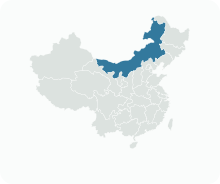
Get to know Jiuyuan District
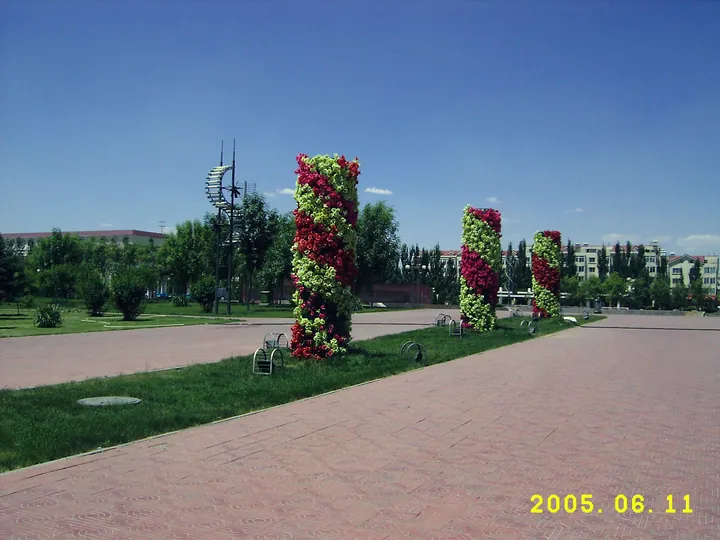
Photo adjustments
Full frame retained; proportionally resized and converted to WebP. No retouching or changes to the photographed subject. Card displays may crop the view.
- Administrative area
- District · 市辖区
- Part of
- Baotou
- Chinese name
- 九原区
- Local areas
- District guide
Area & population
- Area in the source
- 686.30 km²
- Population · 2020
- 245,190
- Administrative seat
- Shahe Subdistrict
Source: cited geographic source, as of the dates shown.
History
The district takes its name from Jiuyuan (九原), the town King Wuling of Zhao (赵武灵王) built here in 306 BC. The Qin made it the Jiuyuan commandery (九原郡), the northern end of the Qin Straight Road (秦直道), and under the Han the seat of the Wuyuan commandery (五原郡) stood at Machi (麻池), inside today's district. The Machi walled-city site and the Zhaowan tombs (麻池城址和召湾墓群) are listed together as a national key cultural relics protection unit. From the mid-Ming the land was Mongol pasture, first of the Tumed (土默特) and in the early Qing of the Urad (乌拉特) banners, before Han settlers arrived in the mid-Qing. The suburban district created in 1953 moved its offices here and was renamed Jiuyuan in 1999.
Food and local products
The district government singles out shaomai (稍美), thin-skinned steamed dumplings shaped like a lotus flower. The filling is fresh mutton from the Houcaodi (后草地) pastures, mixed with dry-land spring onion, fresh ginger and chicken stock, and starch is worked into the wrapper dough. A local legend credits the name to an innkeeper who fed the Qianlong Emperor (乾隆) while he was hunting below the Daqing Mountains (大青山).
What to see
Some townships in Jiuyuan still stage zhuan jiuqu (转九曲), the "nine bends of the Yellow River" lantern maze, at festivals in good harvest years. Villagers plant 361 poles in a 19-by-19 square, hang a lantern on each and string them into a winding route of two to three kilometres; yangge (秧歌) dancers lead the crowd through the nine gates, and people who reach the tall central pole embrace it for luck.
Highlights
- Machi Walled City Site and Zhaowan Tombs 麻池城址和召湾墓群: Han-dynasty sites listed as a national key cultural relics protection unit; Machi was the seat of the Wuyuan commandery.
- Shaomai 稍美: Lotus-shaped steamed dumplings with mutton, spring onion and ginger filling.
- Nine-bend lantern maze 转九曲: Festival maze of 361 lantern poles, still staged in some townships.
Sources for this guide
九原概况 · Jiuyuan District People's Government, Baotou
转九曲河灯会 · Jiuyuan District People's Government, Baotou
戏说稍美 · Jiuyuan District People's Government, Baotou
九原区 · Wikipedia (Chinese) · CC BY-SA 4.0
内蒙古自治区境内的全国重点文物保护单位列表 · Wikipedia (Chinese) · CC BY-SA 4.0
Original English written from the listed sources and checked sentence by sentence against quoted extracts by a separate reviewer. Updated 2026-09-26.
Explore Jiuyuan District
Core places to explore, with English and Chinese names.
Jiuyuan District 九原区
Plan your visit
Getting there
Jiuyuan District covers the centre of Baotou. Search for 九原区 in a map app to find stations and your accommodation.
Where to stay →More in Baotou
Sources & geographic information
Administrative names and parent areas: Official geographic directory · Reference date 2026-09-06.
Some facts checked against 九原区 — Wikipedia contributors, CC BY-SA 4.0.
Some facts checked against 内蒙古自治区境内的全国重点文物保护单位列表 — Wikipedia contributors, CC BY-SA 4.0.
Map data © OpenStreetMap contributors. Pins mark approximate centres, not entrances or boundaries.