

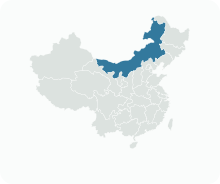
Get to know Hure Banner

- Administrative area
- Banner · 旗
- Part of
- Tongliao
- Chinese name
- 库伦旗
- Local areas
- Banner guide
Area & population
- Area in the source
- 4,650.00 km²
- Population · 2020
- 151,133
- Administrative seat
- Hure Town
Source: cited geographic source, as of the dates shown.
History
The banner descends from the Qing-era Siretu Hure Banner (锡埒图库伦旗); in 1934, under Manchukuo, it was merged with neighbouring banners and re-formed as Hure Banner. It joined Inner Mongolia in 1949, belonged to Jilin from 1969 to 1979 and has been part of Tongliao since 1999. The Hure culture and tourism bureau dates Kulun town to the seventeenth century, and the banner government lists it as a national famous historic and cultural town. Of the eleven ethnic groups living in the banner, Mongols form the main one, alongside Han, Hui and Manchu.
What to see
The Three Temples of Hure (库伦三大寺) stand in terraces on the slope in the middle of Kulun town, which rises to the north. Xingyuan Temple (兴源寺), begun in 1649, is a lamasery in combined Tibetan and Chinese style; its main hall, with 61 gilded dragon columns and nine bays each way, is known as the "hall of eighty-one rooms", and the temple now houses a museum. Fuyuan Temple (福缘寺), from 1742, has four halls one behind another, and Xiangjiao Temple (象教寺) is likewise laid out in four courtyards. The group has been a national key cultural relics protection unit since 2006 and was rated a national 4A scenic area in December 2010.
The Tamin Chagan desert, whose Mongolian name the Hure culture and tourism bureau glosses as "devil's sand", runs east to west through the whole banner; the scenic area at the Wafang ranch (瓦房牧场) offers horse and camel riding and sand-sliding. The banner government also counts Andai (安代), a Mongol dance, and the Hure Mongolian medicine factory, described as the first Mongolian medicine company in China, among its signatures.
Food and local products
Hure buckwheat (库伦荞麦) is a national geographical-indication product, and the banner calls itself China's home of buckwheat culture. The culture and tourism bureau presents buckwheat hele noodles (荞麦饸饹面) as the taste of Hure: the grain is stone-milled, kneaded by hand and pressed through a hele press into even noodles. They are served with a choice of toppings such as pickled cabbage, celery, potherb mustard, tofu or green pepper, finished with spring onion and a spoon of hot oil.
Highlights
- Three Temples of Hure 库伦三大寺: Qing lamaseries in Kulun town; national protected site since 2006 and 4A scenic area since 2010.
- Xingyuan Temple 兴源寺: Begun in 1649; main hall with 61 gilded dragon columns, now a museum.
- Tamin Chagan desert 塔敏查干: East-west sands crossing the banner; the name is glossed as 'devil's sand'.
- Buckwheat hele noodles 荞麦饸饹面: Stone-milled buckwheat pressed into noodles and served with pickled-cabbage, tofu or pepper toppings.
Sources for this guide
基本情况 · Hure Banner People's Government
三大寺景区 · Hure Banner Culture and Tourism Bureau
塔敏查干沙漠景区简介 · Hure Banner Culture and Tourism Bureau
库伦旗 · Wikipedia (Chinese) · CC BY-SA 4.0
冬旅库伦:一碗荞麦饸饹面,藏着舌尖上的暖冬邀约 · Hure Banner Culture and Tourism Bureau
Original English written from the listed sources and checked sentence by sentence against quoted extracts by a separate reviewer. Updated 2026-09-25.
Explore Hure Banner
Core places to explore, with English and Chinese names.
Places to explore around Hure Banner
 Kulun Three Temples · 库伦三大寺
Kulun Three Temples库伦三大寺
Kulun's Three Temples bring together Xingyuan, Xiangjiao and Fuyuan, Qing-period Buddhist complexes that once served different religious, educational and administrative roles.
Read the place guide →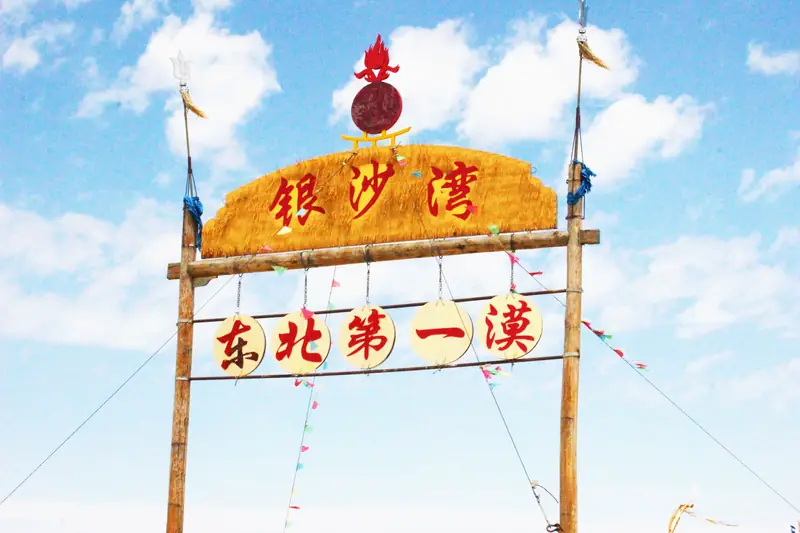 Yinshawan Desert · 银沙湾
Yinshawan Desert银沙湾
Yinshawan is a section of the Tamin Chagan Desert in Kulun Banner where the Yangchumu River separates northern dunes from southern hills.
Read the place guide →Local life & food
Hure Banner local specialties
库伦旗特色美食 · 1 specialties to discover
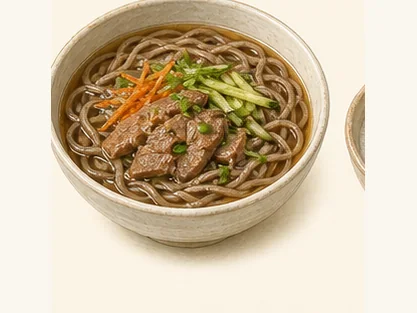 Hure buckwheat noodles 库伦荞面AI dish illustration / AI 菜品示意图
Buckwheat brings a darker colour and an earthy grain taste. A wheat blend can make the noodles more elastic.
Source ↗Read the dish guide →All dish names · 全部菜名 (1)
More dishes from across Inner Mongolia are in the Inner Mongolia food guide.
Plan your visit
Getting there
Hure Banner is about 110 km in a straight line from central Tongliao. Search for 库伦旗 in a map app to find stations and your accommodation.
Where to stay →Build your route
Kulun Three Temples and Yinshawan Desert are both listed here. The linked place guides have entrance and visit details.
Continue with Tongliao →More in Tongliao
Sources & geographic information
Administrative names and parent areas: Official geographic directory · Reference date 2026-09-06.
Some facts checked against 库伦旗 — Wikipedia contributors, CC BY-SA 4.0.
Photo: Kulun Three Temples · Source photographer · License not provided. EXIF orientation normalized; resized without changing aspect ratio; converted to WebP. No subject edits.
Photo: Yinshawan Desert · Source photographer · License not provided. EXIF orientation normalized; resized without changing aspect ratio; converted to WebP. No subject edits.
Map data © OpenStreetMap contributors. Pins mark approximate centres, not entrances or boundaries.