

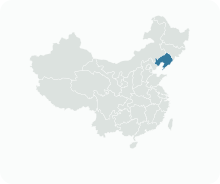
Get to know Zhuanghe
- Administrative area
- County-level city · 县级市
- Part of
- Dalian
- Chinese name
- 庄河市
- Local areas
- County-level city guide
Area & population
- Area
- 3,655.70 km²
- Population · 2020
- 742,496
- Administrative seat
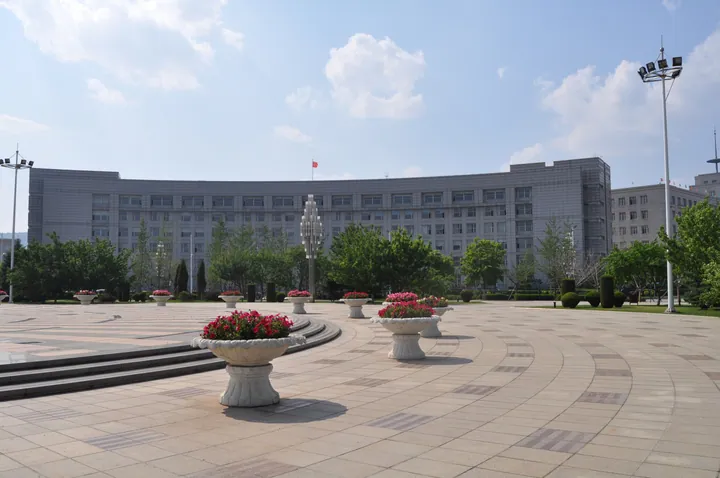
- No. 1 Century Square (世纪广场1号)
Source: English Wikipedia, as of the dates shown.
Zhuanghe is not a compact suburb that can be covered on foot from one centre. The municipal area includes 3,739 km² of land, 2,832 km² of sea, 373 km of natural coastline and 106 islands, and is administered through 21 towns and five subdistricts. Plan it as a regional landscape: choose the northern mountain country or the southern island coast rather than assuming that both are neighbouring stops.
The city’s everyday character also comes from the meeting of farming and the sea. Zhuanghe’s official geographical-indication products include Manila clams, oysters, rice, blueberries, strawberries, mountain burdock and nameko mushrooms; “Zhuanghe big-boned chicken” has its own geographical-indication certification mark. These labels describe local provenance, not one fixed recipe or one restaurant, so ask what is in season and how a seafood dish is prepared.
How to read the area
The built-up city around the municipal seat at Century Square is the practical administrative and service centre, but the district’s most distinctive scenery lies well beyond it. The northern side rises into the mountain towns, while the southern side opens onto fishing settlements, ports and islands. A map of “Zhuanghe” therefore covers a much larger area than the urban streets around 世纪广场.
Northern mountain country
Bingyu, in Xianrendong Town, is a mountain landscape of forest, narrow gorges, river corridors and unusual rock forms. The operator identifies the destination as a National AAAA scenic spot, National Geopark and National Forest Park, and gives its visitor address as 辽宁省大连庄河市仙人洞镇英纳湖村 Liáoníng Shěng Dàlián Zhuānghé Shì Xiānréndòng Zhèn Yīngnàhú Cūn. A People’s Daily Overseas Edition description highlights the preserved karst terrain and the Xiaoyu and Yingna river valleys, which is a better way to picture the place than the old “little Guilin” label on its own.
There is an important current restriction. The operator’s notice, published on 20 October 2026, says that Bingyu has been closed to visitors from 23 October because of weather conditions and the forest-fire prevention control period. It gives no reopening date and prohibits unauthorised entry into the forest. Treat Bingyu as a future option only after the operator announces reopening; do not travel there expecting the normal ticketed visit now.
Southern island coast
Haiwang Nine Islands is a separate coastal destination in Wangjia Town, not an extension of the mountain park. The provincial cultural-tourism directory lists it as a National 4A scenic area and describes a group of nine islands—Dawangjia, Xiaowangjia, Shoulong, Shuangshi, Yuanbao, Jingwa, Haigui, Guanxiang and Tuanyuan—surrounded by reefs. The listed land area is 9.64 km² and the surrounding sea area 380 km². The useful scale here is an island outing with a boat and a return plan, not a stroll along an urban waterfront.
The reviewed official pages do not publish a current Haiwang sailing timetable, ticket price or passport-specific boarding rule. Check the operating port and return sailing before setting out, especially outside the main holiday and summer periods. Do not treat a historic sightseeing route as a guaranteed service.
Eating locally
Zhuanghe’s food story is coastal but not limited to one signature dish. Manila clams, oysters and pufferfish are prominent local products, while the surrounding agricultural belt supplies fruit, rice and mushrooms. In a market or restaurant, the useful question is often where today’s shellfish came from and whether it is grilled, stir-fried, steamed or added to a soup. Seafood, shellfish and poultry are not automatically suitable for every diet; state allergies or restrictions when ordering rather than relying on a dish name.
Getting there and moving around
There is no metro system in Zhuanghe. For rail, search for 庄河北站 (Zhuanghe North Railway Station), a passenger station on the Dandong–Dalian railway in Xuling Town. The local bus directory lists 102路 between 庄河北站 and 庄河港客运站, and 113路 between 庄河北站 and 大学城东门. Use 12306 or the station’s current ticketing information for the return train; this guide does not copy a train frequency or assume that every listed service runs every day.
For a road coach, use the current destination name 庄河客运站 Zhuānghé Kèyùnzhàn rather than relying on older references to 老客运站. A 14 September 2021 notice from the municipal transport authority said that the coach station had moved to Xuling Subdistrict’s Qianzhangtun, west of 庄河北站. Because that notice is historical and does not provide a current timetable, confirm the station and return ticket on the day of travel.
For the islands, search for 庄河新港客运站 Zhuānghé Xīngǎng kèyùnzhàn. The port operator gives the address as 辽宁省大连庄河市大连新兴产业经济区临港产业园288号 and lists land-island passenger routes to Shicheng Island, Wangjia Island and Shoulong Island. This is the relevant mainland boarding point in the operator’s information; the current sailing, the exact island landing point for a Haiwang visit and the return boat still need confirmation before boarding. The same operator lists a passenger-service telephone number, 0411-89378201, but a phone call does not replace checking weather, sailing status and ticket rules.
For a taxi or ride-hailing car, paste the Chinese destination rather than an English translation. Use 大连冰峪旅游度假区 Dàlián Bīngyù Lǚyóu Dùjiàqū with 辽宁省大连庄河市仙人洞镇英纳湖村 Liáoníng Shěng Dàlián Zhuānghé Shì Xiānréndòng Zhèn Yīngnàhú Cūn for Bingyu when it reopens, and 庄河新港客运站 Zhuānghé Xīngǎng kèyùnzhàn with the port address above for island departures. Neither address should be read as proof of an open gate or a guaranteed boat. There are no metro exits or fixed travel times to add.
Because the attractions are dispersed, build the return leg before leaving the station, port or rural attraction. A north-mountain visit and a south-island visit are separate outings; if one is closed or weather-dependent, do not substitute an unverified nearby entrance or boat.
Guide sources
Explore Zhuanghe
Core places to explore, with English and Chinese names.
Places to explore around Zhuanghe
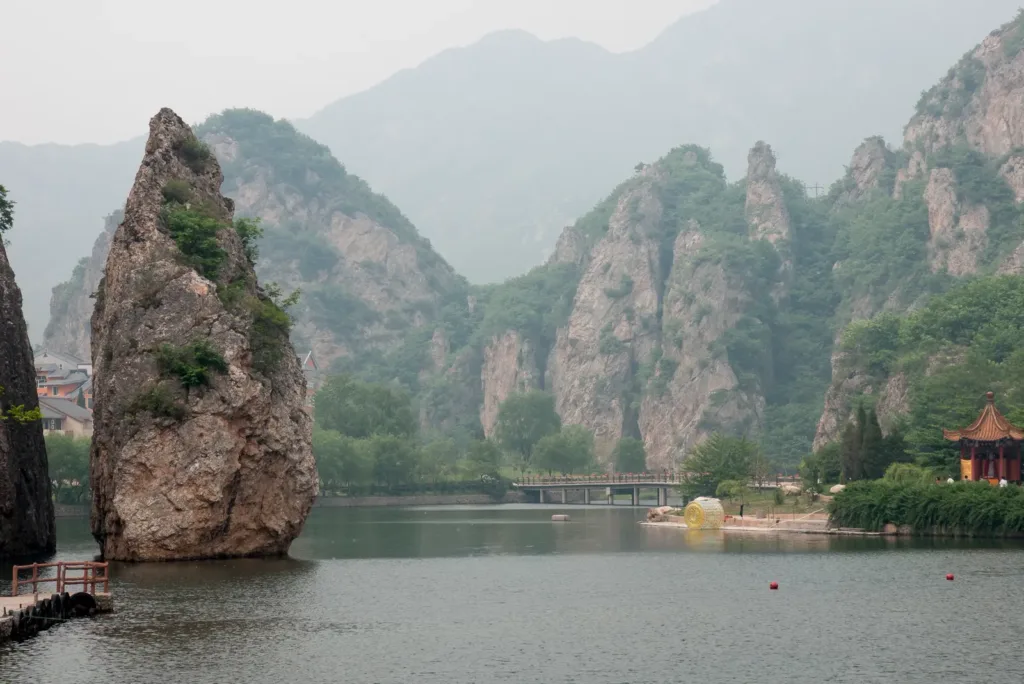 Quartzite rock formations, wooded cliffs and water in Bingyugou Valley, photographed in 2009. Photo: CEphoto, Uwe Aranas · CC BY-SA 3.0
Bingyugou Valley冰峪沟
Bingyugou Valley is a mountain scenic area in Zhuanghe, Dalian, where the Yingna and Xiaoyu rivers pass between quartzite peaks and pine-and-oak woodland.
Read the place guide → AI illustration · AI 示意图(仅供参考,非该地点实拍)
Haiwang Nine Islands海王九岛
Haiwang Nine Islands is a nine-island group off Wangjia Town in Zhuanghe, where sea-eroded rocks, reefs, caves and named rock forms spread across the Yellow Sea. Treat it as an island trip rather than a single beach stop: take the passenger boat to Wangjiadao, then explore only the shore and attractions that are open that day.
Read the place guide →Plan your visit
Getting there
Zhuanghe is about 145 km (straight-line distance) from central Dalian. Search for 庄河市 in a map app to find stations and your accommodation.
Where to stay →Build your route
Bingyugou Valley and Haiwang Nine Islands are about 60 km apart (straight-line distance). The linked place guides have entrance and visit details.
Continue with Dalian →More in Dalian
Sources & geographic information
Administrative names and parent areas: Official geographic directory (dmfw.mca.gov.cn) · Reference date 2026-09-06.
Background text adapted from Zhuanghe — Wikipedia contributors, under CC BY-SA 4.0. Text has been shortened and reorganized; source revision 1369451388.
Map data © OpenStreetMap contributors. Pins mark approximate centres, not entrances or boundaries.
Image credits & notes (1)
- Zhuanghe City Government building and plaza, Dalian, Liaoning · 辽宁大连庄河市政府大楼及广场Photo: Yoshi Canopus · CC BY-SA 3.0 · taken 2011-06-13Resized for the web; the photo itself has not been edited. Thumbnails may show a cropped view.
