


Get to know Ansai District
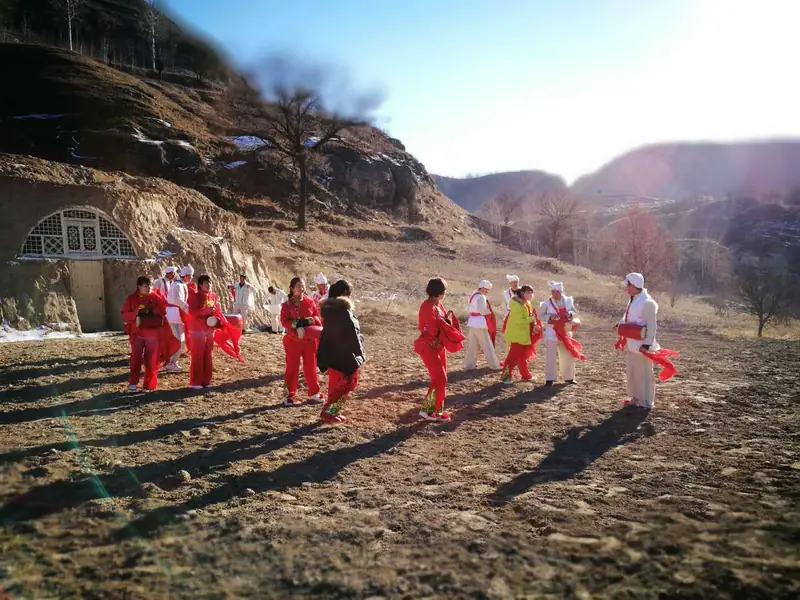
Photo adjustments
Full frame retained; EXIF orientation normalized, proportionally resized to at most 800 pixels and converted to WebP. No generated pixels or subject changes. Cards may crop the display.
- Administrative area
- District · 市辖区
- Part of
- Yan'an
- Chinese name
- 安塞区
- Local areas
- District guide
Area & population
- Area in the source
- 2,951.30 km²
- Population · 2012
- 172,900
- Administrative seat
- Zhenwudong Subdistrict
Source: cited geographic source, as of the dates shown.
Two forms of drumming
Ansai waist drumming (安塞腰鼓) distinguishes between moving processions and performances in a cleared space. Processional drumming uses simpler, smaller movements, including cross-steps and a movement called mabu chanyao (马步缠腰). Once a group reaches its performance area, it spreads out for the other form. Large groups can change their formation to create patterns.
Village arts
Fengjiaying Village (冯家营) is a local centre for waist-drum culture. It hosted an Ansai branch of the national village Spring Festival gala in January 2020, with drumming, northern Shaanxi folk songs (陕北民歌), storytelling and paper-cutting performance. Waist drumming joined China’s first national intangible cultural heritage list in 2006.
Sources for this guide
非遗之美——来自黄土地上的安塞腰鼓-新华网 · Xinhua / National Public Culture Cloud
中华人民共和国文化和旅游部 · Ministry of Culture and Tourism / Shaanxi Culture and Tourism Department
Original English written from the listed sources and checked sentence by sentence against quoted extracts by a separate reviewer. Updated 2026-09-27.
Explore Ansai District
Core places to explore, with English and Chinese names.
Ansai District 安塞区
Plan your visit
Getting there
Ansai District is about 30 km in a straight line from central Yan'an. Search for 安塞区 in a map app to find stations and your accommodation.
Where to stay →More in Yan'an
Sources & geographic information
Administrative names and parent areas: Official geographic directory · Reference date 2026-09-06.
Map data © OpenStreetMap contributors. Pins mark approximate centres, not entrances or boundaries.