

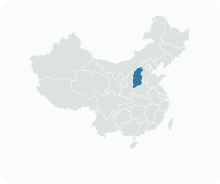
Get to know Yaodu District
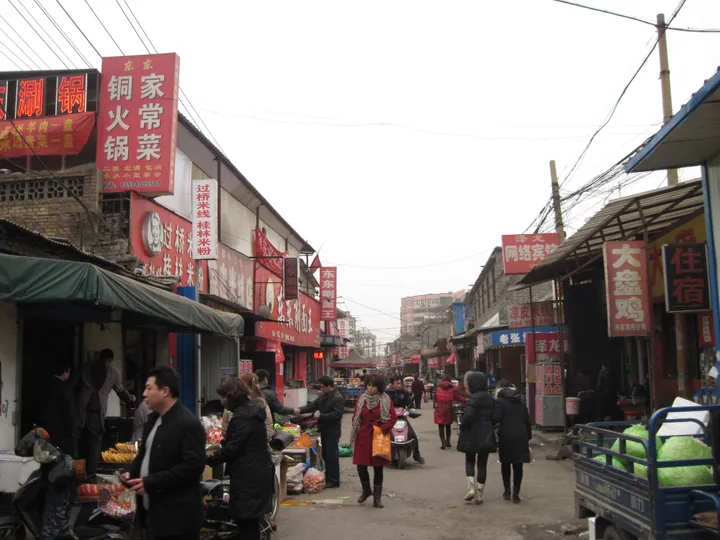
Photo adjustments
Full frame retained; proportionally resized and converted to WebP. No retouching or changes to the photographed subject. Card displays may crop the view.
- Administrative area
- District · 市辖区
- Part of
- Linfen
- Chinese name
- 尧都区
- Local areas
- District guide
Area & population
- Area in the source
- 1,307.00 km²
- Population · 2010
- 944,050
Source: cited geographic source, as of the dates shown.
History
Liu Yuan (刘渊) made Pingyang his capital in 309, and the name Linfen dates from 583 under the Sui. In the Ming and Qing the city was the seat of Pingyang Prefecture (平阳府). The county and city of Linfen were merged and split several times after 1937; the county-level city of Linfen was renamed Yaodu District on 1 November 2000.
Setting and landscape
The Fen crosses the district for 28 kilometres, joined by its tributaries the Lao (涝河) and the Ju (洰河). About 25 kilometres west of the city, Xiandong Valley (仙洞沟) lies at the southern foot of the Lüliang Mountains (吕梁山).
What to see
Yao Temple (尧庙), about 3 kilometres south of the city centre, has stood on its present site since 658 and was listed by the province in 1965; it was largely rebuilt in 2002 and includes Guangyun Hall (广运殿) and halls for Shun (舜) and Yu (禹). Huamen (华门), a monumental gate of base, main gateway and pavilion, is built around symbols of the origins of Chinese civilisation, among them a 25-metre waterfall wall standing for the Yellow River. Yao's Mausoleum (尧陵) at Dayang (大阳镇), known locally as the "sacred grove", is a mound about 50 metres high; a stele of 1539 shows the whole site, and it has been a national monument since 2006.
In the west of the city centre, the Drum Tower (鼓楼), also called Dazhong Tower (大中楼), carries an iron bell cast in 1196, and stone plaques over its four gateways name the lands each one faces. Villages in the northwest keep three Yuan-dynasty opera stages, including the one at the Niuwang Temple (牛王庙) in Weicun (魏村), whose temple was founded in 1283. Xiandong Valley, among the first provincial scenic areas named by Shanxi in 1987, has three groups of old buildings: the South and North Immortal Caves and Yunwu Temple (云雾寺). The district also lists Dayun Temple (大云寺) and the Longzi Shrine (龙子祠) scenic area.
Food and local products
The district names walnut oil from the western hills of Yipingyuan (一平垣), listed among China's notable farm products, and Kyoho grapes grown at Jiade (贾得).
Getting oriented
The Datong–Xi'an high-speed railway, the Beijing–Kunming Expressway (京昆高速) and the Tongpu Railway (同蒲铁路) pass north to south through the district, and the Qingdao–Lanzhou Expressway (青兰高速) runs east to west.
Highlights
- Yao Temple 尧庙: On its present site south of the city since 658; provincial listing 1965.
- Yao's Mausoleum 尧陵: Mound about 50 m high at Dayang with a 1539 stele; national listing 2006.
- Drum Tower 鼓楼: Tower in the west of the city centre holding an iron bell cast in 1196.
- Yuan-dynasty stages 元代戏台: Three surviving Yuan opera stages in the district's northwestern villages.
- Xiandong Valley 仙洞沟: Provincial scenic area since 1987 in the Lüliang foothills, with cave shrines and Yunwu Temple.
Sources for this guide
尧都概况-尧都简介-尧都区人民政府门户网站 · Yaodu District People's Government
名胜古迹-人文旅游-尧都区人民政府门户网站 · Yaodu District People's Government
尧都区 - 维基百科,自由的百科全书 · Chinese Wikipedia · CC BY-SA 4.0
Original English written from the listed sources and checked sentence by sentence against quoted extracts by a separate reviewer. Updated 2026-09-26.
Explore Yaodu District
Core places to explore, with English and Chinese names.
Yaodu District 尧都区
Plan your visit
Getting there
Yaodu District is about 6 km in a straight line from central Linfen. Search for 尧都区 in a map app to find stations and your accommodation.
Where to stay →More in Linfen
Sources & geographic information
Administrative names and parent areas: Official geographic directory · Reference date 2026-09-06.
Some facts checked against 尧都区 — Wikipedia contributors, CC BY-SA 4.0.
Map data © OpenStreetMap contributors. Pins mark approximate centres, not entrances or boundaries.