

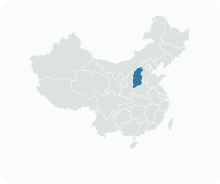
Get to know Yonghe County
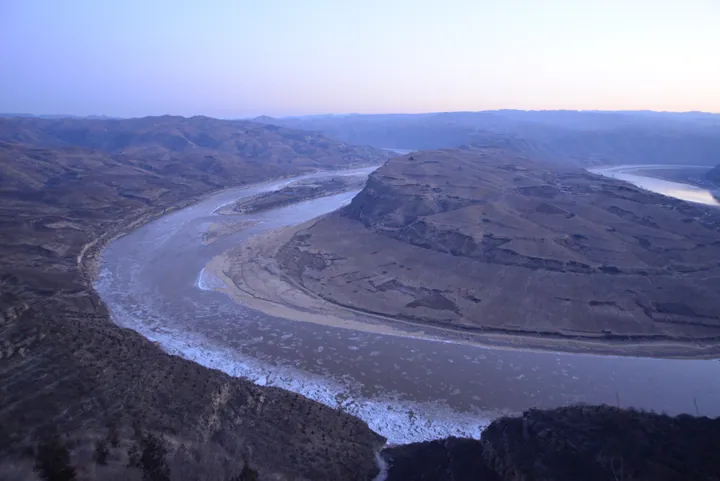
Photo adjustments
Full frame retained; proportionally resized and converted to WebP. No retouching or changes to the photographed subject. Card displays may crop the view.
- Administrative area
- County · 县
- Part of
- Linfen
- Chinese name
- 永和县
- Local areas
- County guide
Area & population
- Area in the source
- 1,214.00 km²
- Population · 2010
- 63,649
- Administrative seat
- Zhihe
Source: cited geographic source, as of the dates shown.
Setting and landscape
This is loess plateau cut into ridges, mounds and more than 2,500 gullies, with nine mountains in three ranges running roughly parallel. The land falls from the northeast to the southwest, from 1,521 metres to under 512 metres. Besides the Yellow River on its western side, the main rivers are the Zhi (芝河) and the Sangbi (桑壁河). Jujube, walnut, apple and wild locust-tree plantings cover large areas. Xixian (隰县) lies to the east, Daning (大宁) to the south and Shilou (石楼) to the north.
History
The Western Han set up Huzhe County (狐讘县) here, and the name Yonghe dates from 598 under the Sui. Between February and May 1936 the Red Army crossed the Yellow River into Shanxi on its Eastern Expedition; Mao Zedong's headquarters stayed in Yonghe twice, for 13 days in all, and there the plan changed to a return west across the river. The county government also records a Communist Party branch founded at Lijiaya (李家崖) in 1926.
What to see
Qiankun Bend (乾坤湾), a loop of the Yellow River, became a national 4A scenic area in December 2021. At the head of the Zhi River, the county describes the Yonghe Terraces (永和梯田) as the largest terraced landscape in northern China. The Confucian Temple (永和文庙) on Dongmen Lane (东门巷) off the main street of the county town has been a national monument since 2013; the county dates its Dacheng Hall (大成殿) and the Dragon King Temple at Loushan (楼山龙王庙) to the Yuan. The Red Army Eastern Expedition Memorial Hall, which includes the house where Mao stayed, is a provincial monument, and Wanghai Temple (望海寺) is among the other sights the county lists.
Getting oriented
National Highway 341 and the Huozhou–Yonghe Expressway (霍永高速) cross the county from east to west, while provincial road S248 and the road along the Yellow River run north to south; the riverside "Yellow River No. 1" (黄河一号) tourist road links the county's sights. Yan'an (延安) is 138 kilometres away.
Highlights
- Qiankun Bend 乾坤湾: Yellow River meander; national 4A scenic area since December 2021.
- Yonghe Terraces 永和梯田: Terraced fields at the head of the Zhi River, described by the county as northern China's largest.
- Yonghe Confucian Temple 永和文庙: County-town temple, national monument since 2013.
- Red Army Eastern Expedition Memorial Hall 红军东征永和纪念馆: Provincial monument including the house where Mao stayed in 1936.
Sources for this guide
永和县情概况-永和简介-永和县人民政府门户网站 · Yonghe County People's Government
永和文庙 - 维基百科,自由的百科全书 · Chinese Wikipedia · CC BY-SA 4.0
Original English written from the listed sources and checked sentence by sentence against quoted extracts by a separate reviewer. Updated 2026-09-26.
Explore Yonghe County
Core places to explore, with English and Chinese names.
Yonghe County 永和县
Plan your visit
Getting there
Yonghe County is about 110 km in a straight line from central Linfen. Search for 永和县 in a map app to find stations and your accommodation.
Where to stay →More in Linfen
Sources & geographic information
Administrative names and parent areas: Official geographic directory · Reference date 2026-09-06.
Some facts checked against 永和文庙 — Wikipedia contributors, CC BY-SA 4.0.
Map data © OpenStreetMap contributors. Pins mark approximate centres, not entrances or boundaries.