

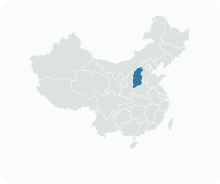
Get to know Jinyuan District
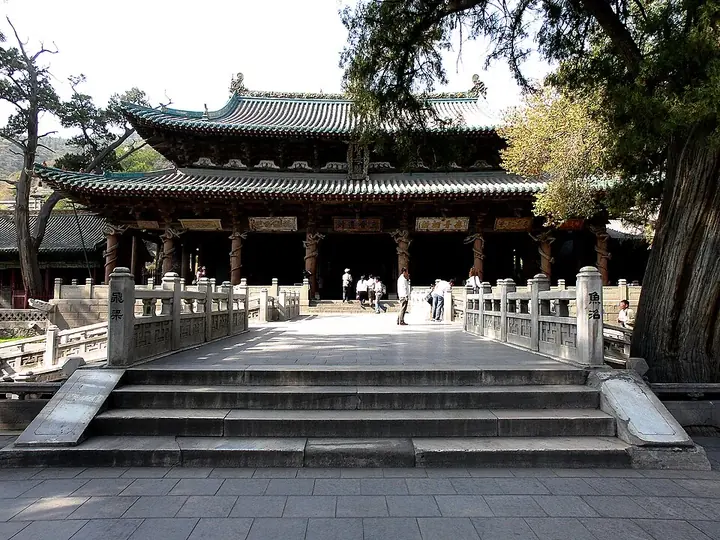
Photo adjustments
Full frame retained; proportionally resized and converted to WebP. No retouching or changes to the photographed subject. Card displays may crop the view.
- Administrative area
- District · 市辖区
- Part of
- Taiyuan
- Chinese name
- 晋源区
- Local areas
- District guide
Area & population
- Population · 2020
- 316,445
Source: cited geographic source, as of the dates shown.
Setting and landscape
The district faces Xiaodian District across the Fen River to the east and borders Qingxu County and Gujiao to the south-west. Hills rise on the east and west, with a broad valley plain between them opening to the south; plains make up 57.33% of the area. The highest peak is Miaoqian Mountain (庙前山) at 1,865.8 m. Jinyang Lake (晋阳湖) and the Jin spring waters (晋泉) lie within the district.
History
The district government traces the area to the state of Tang, granted by King Cheng of Zhou to his younger brother Shu Yu (叔虞) in the early Western Zhou. Jinyang later served as a capital or commandery seat for many states; under the Northern Qi it was a secondary capital, and under the Tang it was the Northern Capital. The Jinyang ancient city site, a large city site from the Spring and Autumn period to the Five Dynasties, became a national key cultural relics protection unit in 2001. On top of it stands the old Taiyuan county town (太原古县城), founded in 1375, with walls 3,732 m long; its Confucian temple dates from 1373. The present district was set up on 1 January 1998.
What to see
Jinci, first built as a shrine to Shu Yu, is recorded by the Northern Wei geographer Li Daoyuan (郦道元) and grew over later dynasties into a complex of more than 100 buildings. It was among the first national key cultural relics protection units in 1961. Its best-known features are the Song-dynasty Hall of the Holy Mother (圣母殿), the cross-shaped Fish Pond Flying Bridge (鱼沼飞梁), the Nanlao spring (难老泉) and ancient cypresses said to date from the Western Zhou.
The Tianlongshan Grottoes, 11 km west of Jinci, were begun in the Eastern Wei (534–550) and extended through the Northern Qi, Sui and Tang into 25 caves on the eastern and western peaks. The head of Cave 8's main Buddha, abroad for nearly a century, came back to China and in July 2021 went to the Tianlongshan Grottoes Museum. Mengshan Giant Buddha (蒙山大佛), 8 km from Jinci, was cut in 551 at the Kaihua Temple (开化寺) site, a national key protected site since 2019; the site also keeps two square brick pagodas begun in 990.
Food and local products
Guzhai tofu (古寨豆腐) comes from Guzhai village, where it is set with brine and pressed. The village also makes dried tofu, simmered in a coloured brine with salt and spices, and tofu skin lifted from the boiled soy milk.
Highlights
- Jinci 晋祠: Shrine complex to Shu Yu with more than 100 buildings; among the first national protected sites in 1961.
- Tianlongshan Grottoes 天龙山石窟: 25 caves begun in the Eastern Wei, 11 km west of Jinci; a returned Buddha head is in the site museum.
- Mengshan Giant Buddha 蒙山大佛: Cut in 551 at the Kaihua Temple site, with twin Song pagodas of 990 nearby.
- Taiyuan old county town 太原古县城: Ming county town of 1375 on the Jinyang site, with a 3,732 m wall and a Confucian temple of 1373.
- Guzhai tofu 古寨豆腐: Brine-set tofu, dried tofu and tofu skin from Guzhai village.
Sources for this guide
地理环境 · Jinyuan District People's Government, Taiyuan
建制沿革 · Jinyuan District People's Government, Taiyuan
晋阳古城遗址 · Jinyuan District People's Government, Taiyuan
晋祠 · Jinyuan District People's Government, Taiyuan
天龙山 · Jinyuan District People's Government, Taiyuan
蒙山 · Jinyuan District People's Government, Taiyuan
古寨豆腐 · Jinyuan District People's Government, Taiyuan
Original English written from the listed sources and checked sentence by sentence against quoted extracts by a separate reviewer. Updated 2026-09-25.
Explore Jinyuan District
Core places to explore, with English and Chinese names.
Places to explore around Jinyuan District
 The cliff face and protective pavilion at Tianlongshan Grottoes near Taiyuan, August 2014.
Tianlongshan Grottoes天龙山石窟
Tianlongshan's caves extend across two wooded mountain faces, tracing changes in Buddhist sculpture from the Eastern Wei and Northern Qi into the Tang period. Caves 2 and 3 preserve the earlier architectural language, while Cave…
Read the place guide → Jinci · 晴天下的圣母殿
Jinci晋祠
Jinci brings spring water, garden scenery and early timber architecture together at the foot of Xuanweng Mountain. Its Hall of the Holy Mother is especially rewarding for the coiled wooden dragons outside and the individually…
Read the place guide →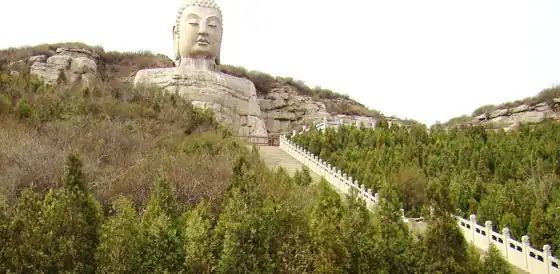 Mengshan Giant Buddha
Mengshan Giant Buddha蒙山大佛
The Mengshan Buddha is a huge rock-cut figure whose weathered body and modern replacement head tell two distinct chapters of the site's history. The original carving belongs to the Northern Qi period and stood behind Kaihua…
Read the place guide →Plan your visit
Getting there
Jinyuan District is about 15 km in a straight line from central Taiyuan. Search for 晋源区 in a map app to find stations and your accommodation.
Where to stay →Build your route
Tianlongshan Grottoes and Jinci are about 7 km apart in a straight line. The linked place guides have entrance and visit details.
Continue with Taiyuan →More in Taiyuan
Sources & geographic information
Administrative names and parent areas: Official geographic directory · Reference date 2026-09-06.
Photo: Tianlongshan Grottoes · Halazhang · CC BY-SA 4.0. Proportionally resized and converted to WebP without cropping, retouching or changing the photographed subject.

Photo: Jinci · Patrick20242023 · CC BY-SA 4.0. Resized and WebP compressed; subject not altered.

Photo: Mengshan Giant Buddha · YOTTKP_cultural_trip.jpg: Dereklamnc1104 derivative work: 如沐西风 · CC BY-SA 3.0. Resized and WebP compressed; subject not altered.

Map data © OpenStreetMap contributors. Pins mark approximate centres, not entrances or boundaries.