


Get to know Qianwei County
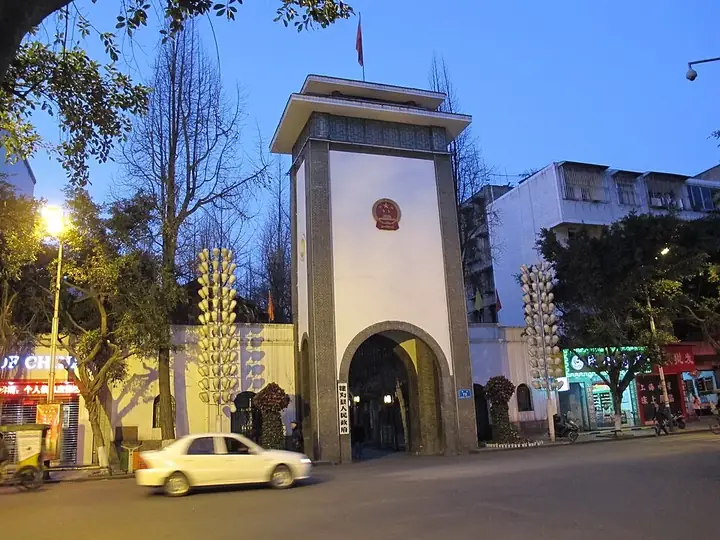
Photo adjustments
Full frame retained; resized proportionally to a maximum dimension of 960 pixels and converted to WebP quality 88. No crop, retouch, generated elements, or subject alteration. Final website rendition: full frame retained, proportionally resized to at most 720 pixels and converted to WebP. No additional retouching or subject alteration. Card displays may crop the view.
- Administrative area
- County · 县
- Part of
- Leshan
- Chinese name
- 犍为县
- Local areas
- County guide
Area & population
- Area in the source
- 1,375.00 km²
- Population · 2020 census
- 416,673
Source: cited geographic source, as of the dates shown.
What to see
Qianwei Confucian Temple (犍为文庙) stands on South Street in Yujin town (玉津镇). It was founded in the Xiangfu years of the Northern Song (1008–1016) and has been rebuilt three times and moved three times since. The complex faces south and measures 200 metres from north to south and 120 metres across; Wikipedia ranks it fourth in size among surviving Confucian temples in China and first in Sichuan. Together with the nearby Kui Pavilion (奎阁) and the Jiexiao memorial arch (节孝总坊) it forms the South Street group of old buildings, and it has been a national protected site since 2006.
The Jiayang Little Train (嘉阳小火车) runs on the Bashi narrow-gauge railway (芭石铁路), a mine railway built to carry coal. The train was made in 1958 at a steam locomotive works in Shijiazhuang (石家庄) and brought in by the Jiayang coal mine, which had moved here from Jiaozuo (焦作) in Henan in 1937. The line opened on 12 July 1959 and runs 19.84 kilometres to Shixi (石溪镇) on the Min River; its gauge was changed from 600 to 762 millimetres in 1960. At Mifengyan station (蜜蜂岩站) the track uses a switchback. The coal-fired engines are worked entirely by hand, and the railway became a Sichuan provincial protected site in June 2007.
Luocheng Old Town (罗城古镇) sits on a hilltop and dates from the Ming; its boat-like shape is summed up in the saying "a boat on the hilltop, a shuttle in the clouds". Qingxi Old Town (清溪古镇) is listed as a Chinese historic and cultural town.
Jasmine and tea
Qianwei jasmine tea (犍为茉莉花茶) is a Chinese geographical-indication product, and Qingxi is one of China's three main jasmine-growing areas. Legal Daily reports 186,000 mu of flower-growing land in the county and describes tea picking at Fangjing village (方井村) in Dingwen town (定文镇).
History
From 1950 the county belonged to the Leshan prefecture. In 1951 part of it was split off to form Wutongqiao city (五通桥市), the forerunner of today's Wutongqiao District.
Highlights
- Qianwei Confucian Temple 犍为文庙: Founded 1008–1016 under the Northern Song; national protected site since 2006.
- Jiayang Little Train 嘉阳小火车: Hand-worked steam trains on the 1959 Bashi narrow-gauge coal railway; provincial protected site since 2007.
- Mifengyan station 蜜蜂岩站: Station on the Bashi line where the track uses a switchback.
- Luocheng Old Town 罗城古镇: Ming-dynasty hilltop town shaped like a boat.
- Qingxi Old Town 清溪古镇: Chinese historic and cultural town, one of China's three main jasmine-growing areas.
- Qianwei jasmine tea 犍为茉莉花茶: Chinese geographical-indication product.
Sources for this guide
犍为县 - 维基百科 · Chinese Wikipedia · CC BY-SA 4.0
犍为文庙 - 维基百科 · Chinese Wikipedia · CC BY-SA 4.0
嘉阳小火车及芭石窄轨铁路 - 维基百科 · Chinese Wikipedia · CC BY-SA 4.0
四川犍为:“+旅游”深度融合 全域旅游多点开花 · China Tourism News (中国旅游新闻网)
古韵今风“芬芳”犍为 · Legal Daily (法治日报)
Original English written from the listed sources and checked sentence by sentence against quoted extracts by a separate reviewer. Updated 2026-09-25.
Explore Qianwei County
Core places to explore, with English and Chinese names.
Places to explore around Qianwei County
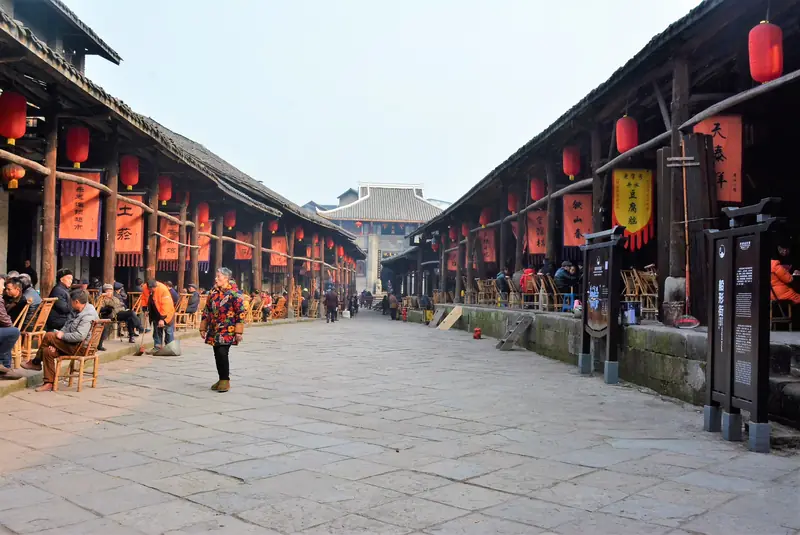 Luocheng Ancient Town · 罗城古镇
Luocheng Ancient Town罗城古镇
Luocheng’s most recognisable space is Liangting Street, whose long, narrowing outline has given it the description of a boat-shaped street. Older Ming- and Qing-period buildings frame this market-town centre, making the street…
Read the place guide →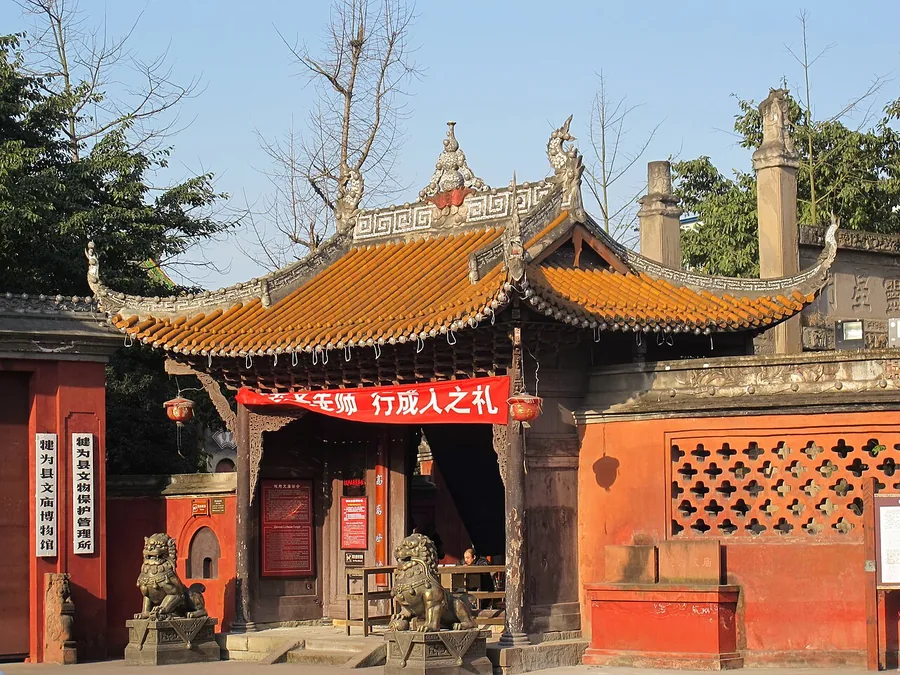 The entrance to Qianwei Confucian Temple in Sichuan, December 2012.
Qianwei Confucian Temple犍为文庙
Qianwei Confucian Temple is an educational and ritual complex in the county town of Yujin, distinct from the Buddhist sites that dominate many Leshan itineraries. Its walled courtyards and ceremonial halls present the Confucian…
Read the place guide →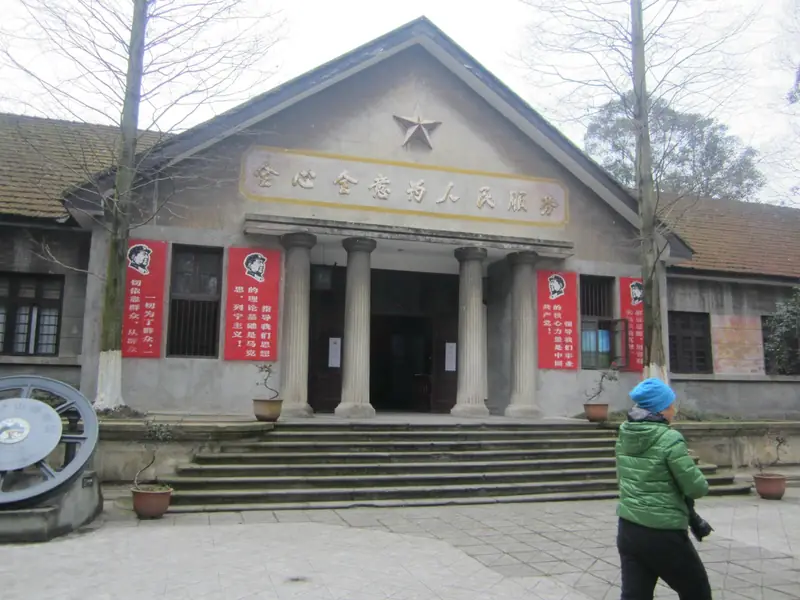 Jiayang National Mining Park Museum · 嘉阳国家矿山公园博物馆
Jiayang National Mining Park Museum嘉阳国家矿山公园博物馆
The Jiayang National Mining Park Museum adds the human and industrial story behind the area’s steam railway. Housed in a former mine administration building at Bajiaogou, its displays cover the mine’s history, geology and coal…
Read the place guide →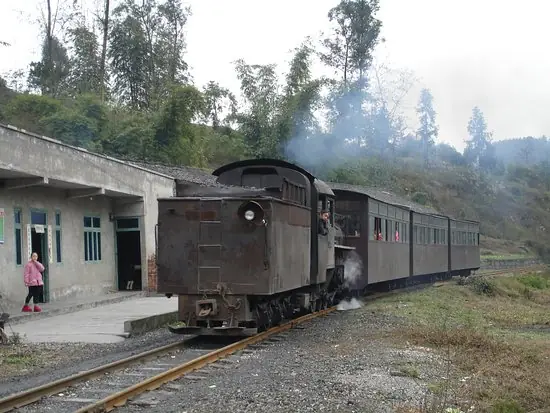 Jiayang Railway Mifengyan Station · 嘉阳小火车蜜蜂岩站
Jiayang Railway Mifengyan Station嘉阳小火车蜜蜂岩站
Mifengyan is the Jiayang Railway stop where the line uses a zigzag reversal to negotiate the hillside. Watching the change of direction makes the engineering easier to understand than a diagram: the train must reverse along the…
Read the place guide → The Jiayang narrow-gauge steam train running through rice paddies near Qianwei, Sichuan · 四川犍为嘉阳小火车行驶于田野间 Source-recorded photograph date: 2011.
Jiayang Narrow-Gauge Steam Train嘉阳小火车
The Jiayang steam train (嘉阳小火车) runs on the narrow-gauge Ba-Shi railway in Jianwei County, Leshan, built in 1959 by the predecessor of Jiayang Group, a former Sino-British joint-venture coal mine, to move coal from the Bajiaogou mine.
Read the place guide →Local life & food
Qianwei County local specialties
犍为县特色美食 · 2 specialties to discover
 Qianwei leaf-wrapped rice parcels 犍为叶儿粑AI illustration · AI 示意图
The white wrapper is smooth and sticky, contrasting with a dense sweet filling or juicy savory center.
Source ↗Read the dish guide → Qianwei thin pancake rolls 犍为薄饼AI illustration · AI 示意图
The skin is delicate and soft, while vegetables bring crunch and the dressing adds tang, sweetness or chili depending on the stall.
Source ↗Read the dish guide →All dish names · 全部菜名 (2)
More dishes from across Sichuan are in the Sichuan food guide.
Plan your visit
Getting there
Qianwei County is about 40 km in a straight line from central Leshan. Search for 犍为县 in a map app to find stations and your accommodation.
Where to stay →Build your route
Luocheng Ancient Town and Qianwei Confucian Temple are about 20 km apart in a straight line. The linked place guides have entrance and visit details.
Continue with Leshan →More in Leshan
Sources & geographic information
Administrative names and parent areas: Official geographic directory · Reference date 2026-09-06.
Some facts checked against 犍为县 — Wikipedia contributors, CC BY-SA 4.0.
Some facts checked against 犍为文庙 — Wikipedia contributors, CC BY-SA 4.0.
Some facts checked against 嘉阳小火车及芭石窄轨铁路 — Wikipedia contributors, CC BY-SA 4.0.
Photo: Luocheng Ancient Town · Source photographer · License not provided. EXIF orientation normalized; resized without changing aspect ratio; converted to WebP. No subject edits.
Photo: Qianwei Confucian Temple · Nyx Ning · CC BY-SA 3.0. Proportionally resized and converted to WebP without cropping, retouching or changing the photographed subject.

Photo: Jiayang National Mining Park Museum · Source photographer · License not provided. EXIF orientation normalized; resized without changing aspect ratio; converted to WebP. No subject edits.
Photo: Jiayang Railway Mifengyan Station · Source photographer · License not provided. EXIF orientation normalized; resized without changing aspect ratio; converted to WebP. No subject edits.
Photo: Jiayang Narrow-Gauge Steam Train · MBxd1 · CC BY-SA 3.0. Full frame retained; proportionally resized and converted to WebP. No retouching or changes to the photographed subject. Card displays may crop the view.

Map data © OpenStreetMap contributors. Pins mark approximate centres, not entrances or boundaries.