


Get to know Magong City
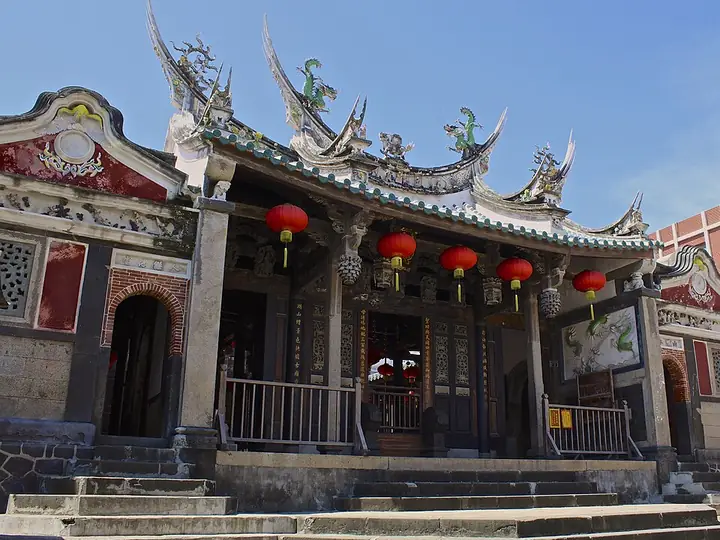
Photo adjustments
Full-frame source proportionally resized and converted to WebP for display. No subject alteration. Source-supplied marks and edits remain; cards may crop the view.
- Administrative area
- County-administered city · 市
- Part of
- Penghu County
- Chinese name
- 馬公市
- Local areas
- County-administered city guide
Area & population
- Area in the source
- 33.99 km²
Source: cited geographic source, as of the dates shown.
History
The town grew up around a sheltered harbour and took its old name, Magong (媽宮, "Mazu's temple"), from the Penghu Tianhou Temple. In 1920 the Japanese authorities changed the written name to the similar-sounding Magong (馬公), still used today. After the Qing took Penghu in 1684, troops were stationed at the harbour and a market quarter of seven streets and one market formed around the temple.
After the Sino-French War, the Qing decided Penghu needed a fortified town. The walled town of Magong (媽宮城) was begun in December 1887 under Penghu garrison commander Wu Hongluo (吳宏洛) and completed in October 1889, the last walled town built under Qing rule in Taiwan. Magong became a county-administered city in 1981; Chinese Wikipedia notes it is the only city in Taiwan located on an outlying island.
What to see
Penghu Tianhou Temple (澎湖天后宮), a national monument, keeps a stele dated 1604 recording how the Ming commander Shen Yourong (沈有容) ordered the "red-haired" foreigners under Wei Malang (韋麻郎) to withdraw; the Penghu County Government treats the stele's date as evidence that this is the oldest Mazu temple in Taiwan and Penghu. The present buildings date from a rebuilding in 1922–23 led by the Cantonese master Lan Mu (藍木) with craftsmen from Fujian.
Central Old Street (中央老街), once called Jienei (街內, "inside the streets"), was the first Han Chinese market in Penghu; its mostly southern Fujian buildings are mixed with Japanese-Western styles, and the street was made a special historic preservation area in 1984. The Four-Eye Well (四眼井) at its northern end is dated to 1592. Shuncheng Gate (順承門), the small west gate of the old wall, has walls of local basalt topped with battlements of coral stone and is the only gate tower of the city wall still standing; the wall was listed as a national monument on 19 August 1985.
Highlights
- Penghu Tianhou Temple 澎湖天后宮: National monument holding a 1604 Ming stele; the source of Magong's name.
- Central Old Street 中央老街: Penghu's earliest Han Chinese market street, a special historic preservation area since 1984.
- Four-Eye Well 四眼井: Well at the north end of Central Old Street, dated to 1592.
- Shuncheng Gate 順承門: Basalt and coral-stone gate, the only surviving gate tower of the 1889 city wall.
Sources for this guide
马公市 - 维基百科 · Wikipedia (Chinese) · CC BY-SA 4.0
媽宮古城(順承門) - 澎湖Travel · Penghu County Government Tourism Department
澎湖天后宮 - 澎湖Travel · Penghu County Government Tourism Department
中央老街 - 澎湖Travel · Penghu County Government Tourism Department
Original English written from the listed sources and checked sentence by sentence against quoted extracts by a separate reviewer. Updated 2026-09-25.
Explore Magong City
Core places to explore, with English and Chinese names.
Places to explore around Magong City
Front facade of Penghu Tianhou Temple in Magong · 马公澎湖天后宫正面 Source-recorded photograph date: 2017-06-22 14:23:39.Penghu Tianhou Temple澎湖天后宮
Penghu Tianhou Temple stands in Magong’s historic centre and reflects the islands’ close relationship with seafaring and Mazu worship. Its layered halls contain detailed timber and stone craftsmanship. Begin at the front…
Read the place guide →Exterior of Penghu Tianhou Temple in Magong · 马公澎湖天后宫外观 Source-recorded photograph date: 2017-06-22 14:23:39.Penghu Tianhou Temple & Central Old Street澎湖天后宫与中央老街
Penghu Tianhou Temple and Central Old Street (澎湖天后宫与中央老街) sit within Magong's historic core.
Read the place guide →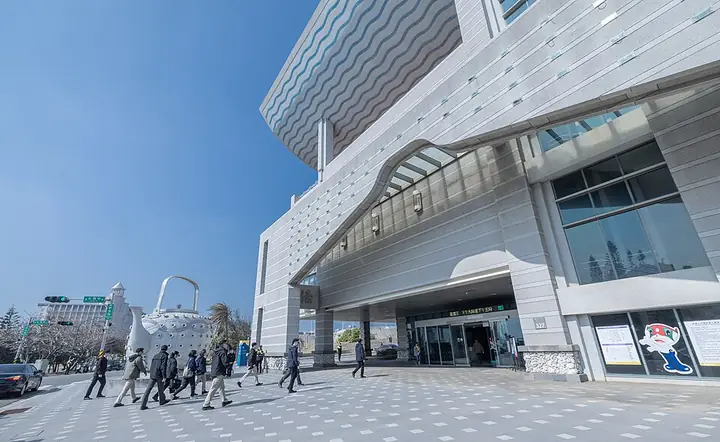 Entrance and exterior of Penghu Living Museum · 澎湖生活博物馆入口与外观 Source-recorded photograph date: 2025-01-21 13:35:20.
Penghu Living Museum澎湖生活博物馆
Penghu Living Museum (澎湖生活博物馆) in Magong introduces how people have lived in the islands, using objects, documents, models and reconstructed settings.
Read the place guide →Plan your visit
Getting there
Magong City covers the centre of Penghu County. Search for 馬公市 in a map app to find stations and your accommodation.
Where to stay →Build your route
Penghu Tianhou Temple and Penghu Tianhou Temple & Central Old Street are both listed here. The linked place guides have entrance and visit details.
Continue with Penghu County →More in Penghu County
Sources & geographic information
Administrative names and parent areas: Official geographic directory · Reference date 2026-09-06.
Some facts checked against 马公市 — Wikipedia contributors, CC BY-SA 4.0.
Photo: Penghu Tianhou Temple · TroyJiang · CC BY-SA 4.0. Full-frame source proportionally resized and converted to WebP for display. No subject alteration. Source-supplied marks and edits remain; cards may crop the view.

Photo: Penghu Tianhou Temple & Central Old Street · TroyJiang · CC BY-SA 4.0. Full-frame source proportionally resized and converted to WebP for display. No subject alteration. Source-supplied marks and edits remain; cards may crop the view.
Photo: Penghu Living Museum · 總統府 · CC BY 2.0. Full-frame source proportionally resized and converted to WebP for display. No subject alteration. Source-supplied marks and edits remain; cards may crop the view.

Map data © OpenStreetMap contributors. Pins mark approximate centres, not entrances or boundaries.