


Get to know Beitun District
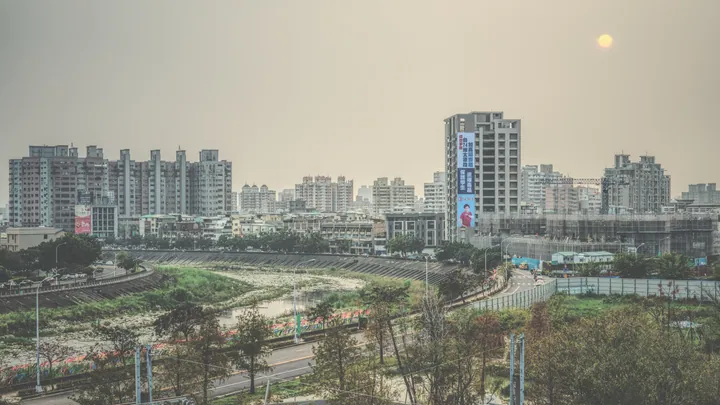
Photo adjustments
Full frame retained; proportionally resized and converted to WebP. No retouching or changes to the photographed subject. Card displays may crop the view.
- Administrative area
- District · 區
- Part of
- Taichung City
- Chinese name
- 北屯區
- Local areas
- District guide
Area & population
- Area in the source
- 63.00 km²
Source: cited geographic source, as of the dates shown.
From family home to military village
The three-sided courtyard was completed in 1925, following the marriage of Lin Mao-yang and Lai Duan (賴端); the two-storey Western house followed in 1930. A military provisions factory acquired the property in 1950, and it became part of Yide New Village (一德新村). The military families left in 2008. Listed as a historic building in 2007, the residence reopened after restoration in 2015.
Food memories at Beitun New Village
A February 2026 Culture Bureau announcement highlighted a noodle-culture exhibition at the military dependents’ village museum in Beitun New Village (北屯新村). It connected a century of everyday food memories with local wheat, interactive exhibits and science education.
Sources for this guide
臺中市北屯區公所-旅遊景點-一德洋樓(林懋陽故居) (https://www.beitun.taichung.gov.tw/831946/832192/832228/3668971) · Taichung Beitun District Office
臺中垃圾清運大車隊 · Taichung Culture Bureau; republished by the municipal Environmental Protection Bureau
Original English written from the listed sources and checked sentence by sentence against quoted extracts by a separate reviewer. Updated 2026-09-30.
Explore Beitun District
Core places to explore, with English and Chinese names.
Beitun District 北屯區
Plan your visit
Getting there
Beitun District is about 8 km in a straight line from central Taichung City. Search for 北屯區 in a map app to find stations and your accommodation.
Where to stay →More in Taichung City
Sources & geographic information
Administrative names and parent areas: Official geographic directory · Reference date 2026-09-06.
Map data © OpenStreetMap contributors. Pins mark approximate centres, not entrances or boundaries.