

Get to know South District
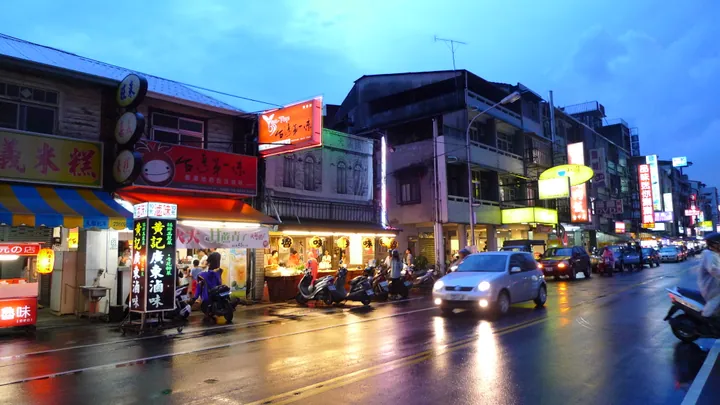
Photo adjustments
Full frame retained; proportionally resized and converted to WebP. No retouching or changes to the photographed subject. Card displays may crop the view.
- Administrative area
- District · 區
- Part of
- Taichung City
- Chinese name
- 南區
- Local areas
- District guide
Area & population
- Area in the source
- 6.80 km²
Source: cited geographic source, as of the dates shown.
Brewery buildings and a flowing library
After brewing moved to the industrial district, the old brewery’s buildings became a setting for cultural exhibitions and creative exchange. The National Library of Public Information (國立公共資訊圖書館) has a flowing exterior conceived around river imagery. Its interior colours and furnishings respond to views from different floors, with interactive and three-dimensional installations for different age groups.
Street food and a city deity
Zhongxiao Road Night Market (忠孝路觀光夜市) combines food stalls and restaurants, including tube-shaped rice cakes, grilled foods, tofu pudding and sugarcane juice. Taichung City God Temple (臺中城隍廟) on Hezuo Street (合作街) is another district landmark, with a festival traditionally associated with the sixth lunar month.
Sources for this guide
〖宅.在臺中|南區〗 · Taichung Tourism and Travel Bureau
South District, Taichung · Wikipedia contributors · CC BY-SA 4.0
Original English written from the listed sources and checked sentence by sentence against quoted extracts by a separate reviewer. Updated 2026-09-30.
Explore South District
Core places to explore, with English and Chinese names.
South District 南區
Plan your visit
Getting there
South District covers the centre of Taichung City. Search for 南區 in a map app to find stations and your accommodation.
Where to stay →More in Taichung City
Sources & geographic information
Administrative names and parent areas: Official geographic directory · Reference date 2026-09-06.
Some facts checked against South District, Taichung — Wikipedia contributors, CC BY-SA 4.0.
Map data © OpenStreetMap contributors. Pins mark approximate centres, not entrances or boundaries.