


Get to know Haiyan
- Administrative area
- County · 县
- Part of
- Jiaxing
- Chinese name
- 海盐县
- Local areas
- County guide
Area & population
- Area
- 584.96 km²
- Population · 2020
- 456,775
Source: English Wikipedia, as of the dates shown.
Haiyan is a county on the northern shore of Hangzhou Bay whose name recalls a coast once lined with salt fields. The landscape is more varied than a single “water town” label suggests: the county combines a built-up county seat with low hills, lake country and a coastal edge. Its cultural life also reaches beyond monuments. Haiyan’s documented local programmes include traditional sauce and yellow-wine making in Shendang, stove-top painting and other forms of intangible cultural heritage, so a visit can include working craft traditions as well as scenery.
Plan Haiyan as two separate outings rather than one oversized scenic area. Nanbei Lake belongs to the southern Ganpu side of the county, where a causeway divides the paired lakes and walking routes climb into the hills. Qiyuan Garden is an urban heritage garden in Wuyuan, with a very different scale and rhythm. Keeping these locations distinct makes the day easier to pace and prevents a county guide from implying that one gate or one ticket covers both.
What to see
Nanbei Lake
Nanbei Lake is Haiyan’s signature landscape: water, wooded hills and the Hangzhou Bay coast are read together rather than as isolated viewpoints. The central causeway divides the two lakes; from the shore, you can walk beside the water, then choose a managed hill route for a wider view. Recent local reporting describes the scenic area’s night-time and outdoor programmes, but also stresses that ecological protection and a controlled commercial boundary come first. Stay on open paths, follow the current entrance notices and do not treat closed shore or hill areas as informal trails.
For a taxi or ride-hail, use the Chinese destination 南北湖景区 Nánběi Hú Jǐngqū. A current visitor listing places it on County Road 331 in Ganpu Town and publishes a ticket-enquiry number, but it does not establish a dependable public-bus timetable or a single current gate for every activity. Treat the scenic area as a separate managed destination and arrange the return leg before leaving the lakeside.
Qiyuan Garden
Qiyuan is the quieter, more compact counterpoint to Nanbei Lake. It began as the Feng family’s private garden in 1871 and is known for a layout of three rockeries and two bodies of water, with trees and ponds doing more of the spatial work than buildings. The residence and garden are set apart, so look for the change from Jiangnan domestic architecture to a deliberately shaped landscape: bridges, winding paths, reflected rockeries and small pavilions. The site is also a nationally protected historic and cultural property, not merely a reconstructed photo stop.
Qiyuan sits in Wuyuan, within the county’s urban area, and should not be folded into the Nanbei Lake scenic-area boundary. Current public listings disagree on the street number and visiting hours, so confirm the day’s entrance and admission arrangement with the venue before setting out. Allow time for a slow circuit rather than expecting a large park; the garden’s interest is in how a small site makes water, stone and mature trees feel deep.
Local culture and a considerate visit
Haiyan’s living culture is best approached as something made and used, not as a performance guaranteed on every day. If a workshop or festival is open, ask before photographing people or recording a demonstration. The county’s documented heritage examples include Shendang sauce and yellow-wine techniques, Haiyan stove-top painting and craft-based visitor activities; schedules are event-led, so do not assume a fixed daily show.
At Nanbei Lake, respect the scenic area’s ecological management and stay within marked visitor routes. At Qiyuan, do not climb rockeries, touch old trees or treat memorial and heritage rooms as a photo set. These small boundaries protect the very details that make Haiyan different from a generic Jiangnan outing.
Getting there and keeping the route practical
Use Jiaxing South Railway Station as the rail gateway for now. Jiaxing’s city-bus integration announcement documents intercity route 175 between Jiaxing South Railway Station and Haiyan Passenger Transport Center. That announcement is from 2021 rather than a live timetable, so confirm the day’s departure, stop list and payment method before boarding. From the passenger transport centre, take a current local taxi or bus connection to the specific Wuyuan or Ganpu destination; do not assume the county-centre stop is the entrance to either attraction.
Do not book an arrival to “Haiyan High-speed Railway Station” as if it were operating. September 2026 reporting says the Tong-Su-Jia-Yong high-speed railway’s Haiyan station in Wuyuan is planned to be ready by the end of 2027, while a June 2026 report still described the station and forecourt as construction projects. The station is therefore a future gateway, not a current visitor arrival point.
For a first visit, the least ambiguous plan is one managed area per half-day: Nanbei Lake for the hill-and-water landscape, or Wuyuan for Qiyuan and nearby county-seat culture. Keep the Chinese names 海盐县 Hǎiyán Xiàn, 南北湖景区 Nánběi Hú Jǐngqū and 绮园 Qǐ Yuán available for transport searches, and leave enough daylight for the return connection.
Explore Haiyan
Core places to explore, with English and Chinese names.
Places to explore around Haiyan
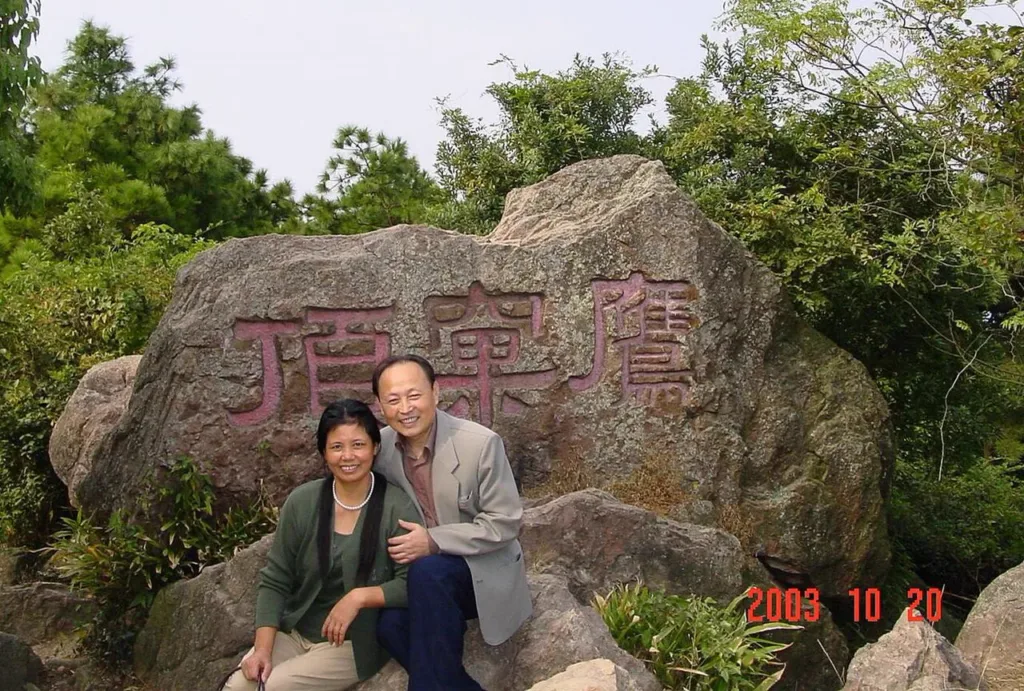 The Yingke Peak (鹰窠顶) inscribed rock marker at Nanbei Lake, Haiyan, Jiaxing, Zhejiang (photographed 20 October 2003). Photo: zhiyin586@163.com · CC BY 3.0
Nanbei Lake南北湖
Nanbei Lake (Nanbei Hu, 南北湖) is a scenic area in southern Haiyan where a causeway divides two lakes below low hills facing Hangzhou Bay. It is worth the detour for a compact sequence of causeway, islands, temple steps and hilltop viewpoints rather than for a single monument.
Read the place guide → A pebble-paved path, clipped bonsai and a moon gate inside Qiyuan Garden (Qi Garden), Haiyan. Photo: Siyuwj (Wikimedia Commons user) · CC BY-SA 4.0
Qiyuan Garden绮园
Qiyuan Garden (绮园), also known as Feng Family Garden (冯家花园), is a Qing-dynasty private garden in Haiyan. Its unusual plan separates the residence from the garden and lets three rockery hills, two pools, bridges and old trees do most of the spatial work.
Read the place guide →Plan your visit
Getting there
Haiyan is about 30 km (straight-line distance) from central Jiaxing. Search for 海盐县 in a map app to find stations and your accommodation.
Where to stay →Build your route
Nanbei Lake and Qiyuan Garden are about 15 km apart (straight-line distance). The linked place guides have entrance and visit details.
Continue with Jiaxing →More in Jiaxing
Sources & geographic information
Administrative names and parent areas: Official geographic directory (dmfw.mca.gov.cn) · Reference date 2026-09-06.
Background text adapted from Haiyan County, Zhejiang — Wikipedia contributors, under CC BY-SA 4.0. Text has been shortened and reorganized; source revision 1328121560.
Map data © OpenStreetMap contributors. Pins mark approximate centres, not entrances or boundaries.
Image credits & notes (1)
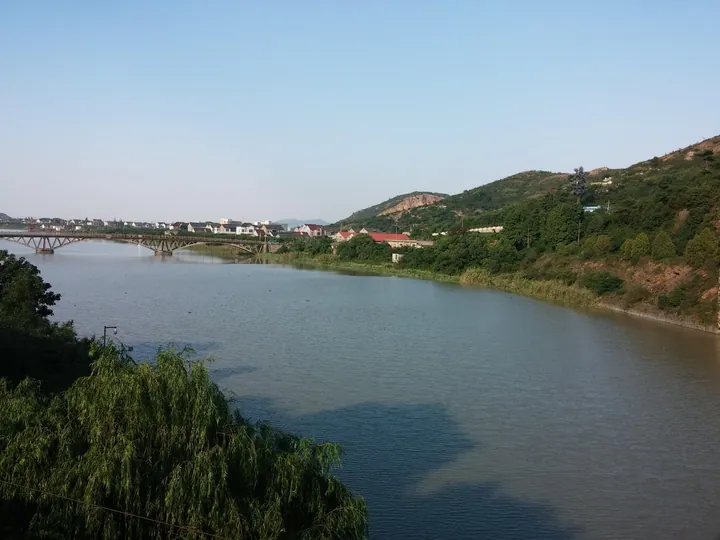
- A river bend with a bridge, village and hills near Haiyan, Jiaxing · 嘉兴市海盐县河湾、桥梁与村落山景 Source-recorded photograph date: Taken on 2 October 2015.Photo: song songroov · CC BY 3.0Resized for the web; the photo itself has not been edited. Thumbnails may show a cropped view.
