


Get to know Fengdu County

- Administrative area
- County · 县
- Part of
- Chongqing
- Chinese name
- 丰都县
- Local areas
- County guide
Area & population
- Area
- 2,896.00 km²
- Population · 2020 census
- 557,374
Source: English Wikipedia, as of the dates shown.
Fengdu County lies within Chongqing Municipality, well beyond the central urban districts. The Yangtze crosses the county from west to east and divides its northern and southern parts; the county seat is in Sanhe Subdistrict (三合街道), while the famous Mingshan Scenic Area (名山景区, often called Fengdu Ghost City) is a specific visitor site on the river’s north side. This is a county-scale destination: do not treat the county name and the Mingshan attraction as interchangeable.
At Mingshan, follow the hillside route through temple courtyards, gates, halls, religious sculpture and scenes drawn from Chinese ideas of the afterlife. The complex blends Confucian, Buddhist and Daoist traditions with popular underworld folklore; landmarks described in the site guide include the Bridge of Helplessness (奈何桥), Ghost Gate Pass (鬼门关) and Tianzi Hall (天子殿). Read the imagery as moral teaching and folk art as well as spectacle: the stories commonly contrast wrongdoing with justice and virtue. Give yourself time to climb between buildings and pause at viewpoints over the river and county town, rather than treating the place as a single photo stop.
Fengdu’s other landscapes are dispersed across the county, not adjoining Mingshan. On the southern side of the Yangtze, the Longhe River area contains the highland Nantian Lake (南天湖), Xueyu Cave (雪玉洞) and Jiuchongtian Scenic Area (九重天); these are separate excursions, not a walkable extension of the Ghost City visit. Xueyu Cave is a karst cave known for pale mineral formations, while Nantian Lake is a mountain-lake and forest destination. Check local operators and the county’s tourism service before combining them: the evidence reviewed here does not establish current shuttle timetables, seasonal opening, or a single public-transport itinerary between these sites.
Fengdu’s history unfolds over several eras. The county guide describes an Eastern Han-era Pingdu County and says a Fengdu county was later split from Linjiang in 618, alongside subsequent changes in the county name and spelling. The present visitor experience is shaped by both older temple traditions and the modern river landscape. The former county town at Mingshan was affected by the Three Gorges reservoir and the county seat moved to Sanhe; the current county therefore has distinct old-town, new-seat and scenic-area geographies.
Getting there: There is no metro connection to Fengdu County. Passenger trains serve Fengdu Railway Station (丰都站); a current timetable page checked on 22 October 2026 showed service between Fengdu and Chongqing North, but train numbers and operating days can change, so check the date-specific China Railway timetable for both directions. For Mingshan, a current visitor listing gives the destination as 丰都鬼城名山景区, 重庆市丰都县名山镇名山路152号. From Fengdu Station, arrange a taxi or ride-hail to that named destination and ask to be set down at the signed public visitor entrance, not at an unverified roadside point. The address is a listing cross-check, not confirmation of an official gate or a permitted curbside drop-off. The sources reviewed did not verify a current local bus number or stop from the station to the entrance. Older material mentions a river crossing, but current ferry piers, sailings and a same-day return were not confirmed; do not plan around a boat without checking directly with the operator.
A visit is best planned around the site you actually want to see: Mingshan for temples and folklore, or a separate day for the county’s karst and highland scenery. Opening hours, ticket conditions, reservations, local buses and ferry service can change; confirm them with the official county or scenic-area service before setting out. No current routine ticket price or guaranteed sailing is asserted here.
Guide sources
- iChongqing Discover the Beautiful and Historic Fengdu County
- iChongqing Fengdu Ghost City
- Qunar current timetable D6107
- Trip.com Fengdu Mingshan Scenic Area listing
- Fengdu County Government public service portal
- Xinhua Chongqing administrative adjustment
- Chongqing local media May holiday Fengdu feature
Explore Fengdu County
Core places to explore, with English and Chinese names.
Places to explore around Fengdu County
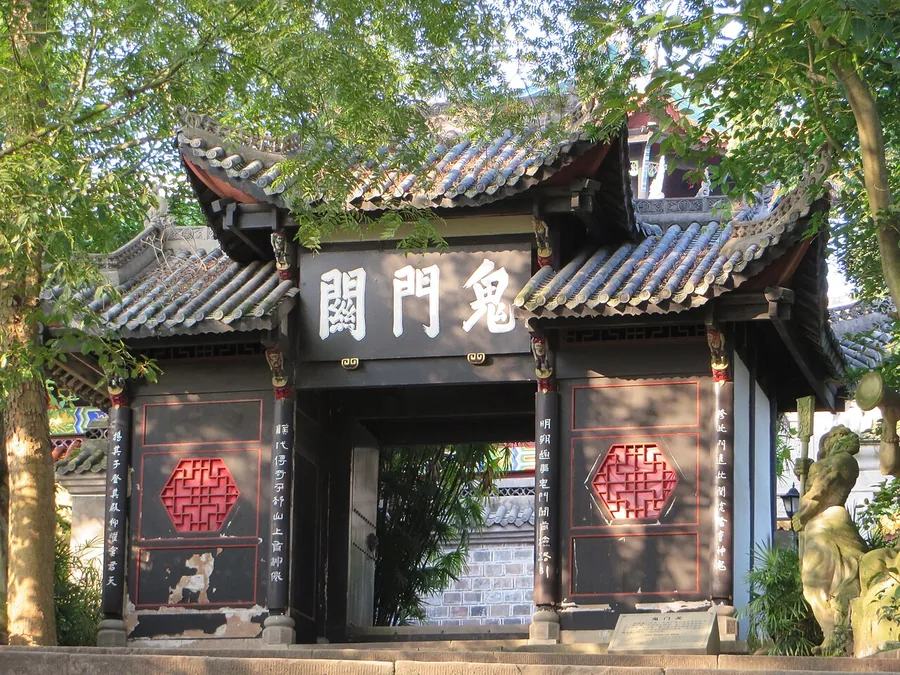 The Gates of Hell at Fengdu Ghost City, Chongqing; 14 September 2014.
Fengdu Ghost City丰都鬼城
On Ming Mountain across the Yangtze from Fengdu’s newer county seat, this temple-and-shrine landscape turns Chinese afterlife traditions into a walk through gates, bridges, judgment halls and river views.
Read the place guide →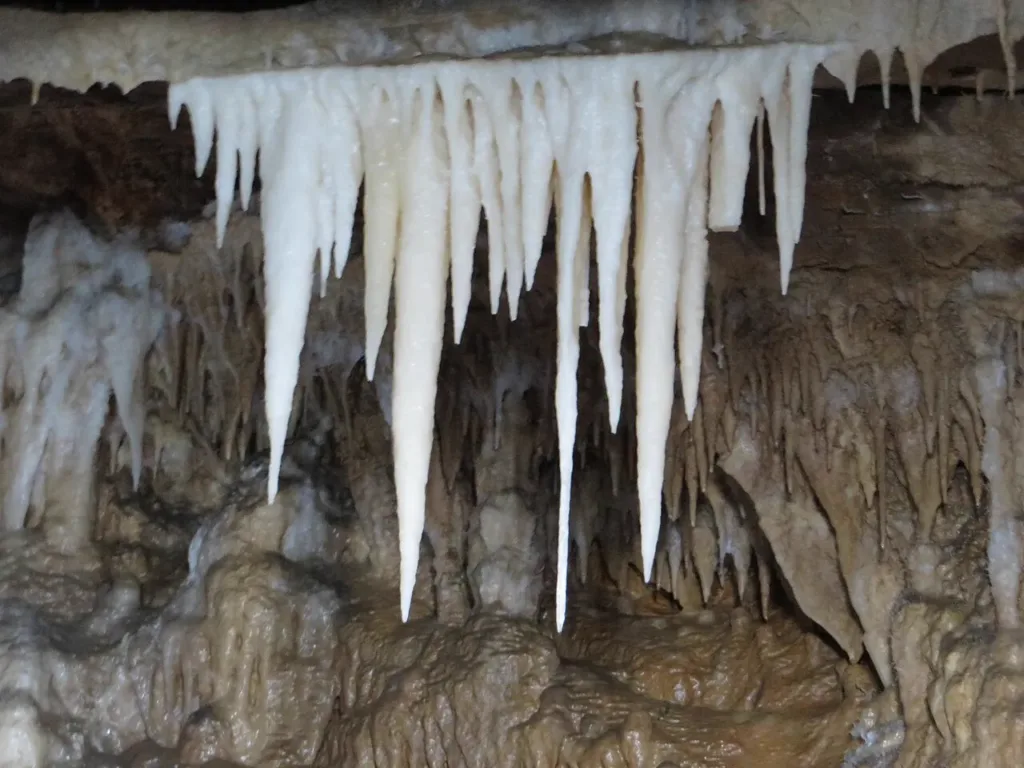 White stalactites and flowstone inside Xueyu Cave, Fengdu County. Photo: Jpbowen · CC BY-SA 4.0
Xueyu Cave雪玉洞
A remote Fengdu County cave where a long, walk-through route reveals unusually pale stalactites, delicate stone curtains and other mineral formations.
Read the place guide →Local life & food
Fengdu County local specialties
丰都县特色美食 · 6 specialties to discover
 Fengdu Numbing-Spicy Chicken Pieces 丰都麻辣鸡块AI illustration · AI 示意图(仅供参考,非实拍)
A signature chicken dish associated specifically with Fengdu County in Chongqing, served in glossy red chili oil with Sichuan pepper, savory broth seasoning and a light sweet finish.
Read the dish guide →Ghost City Numbing-Spicy Chicken 鬼城麻辣鸡AI illustration · AI 示意图(仅供参考,非实拍)
A Fengdu County specialty of poached, bone-in chicken dressed with layered chili oils, Sichuan pepper and fragrant cooking stock; recipes vary from maker to maker.
Read the dish guide → Fengdu Charred Chilli Noodles 丰都糊辣壳小面AI illustration · AI 示意图(仅供参考,非实拍)
A Fengdu-associated Chongqing noodle style built around hulake (糊辣壳): dried chillies toasted until dark and fragrant, then crushed into the seasoning. The technique is also found elsewhere in the region, so it is a local favorite rather than a proven Fengdu-only invention.
Read the dish guide → Fengdu Wontons 丰都抄手AI illustration · AI 示意图(仅供参考,非实拍)
A Fengdu specialty pairs tender pork-filled wontons with hulake (糊辣壳), a deeply toasted, smoky chili seasoning. In some local yuanyang servings, wontons share a bowl with noodles.
Read the dish guide → Xianjia Fermented Bean Curd 仙家豆腐乳AI illustration · AI 示意图(仅供参考,非实拍)
A Fengdu County specialty, this fermented soybean condiment is known for a fine, soft texture and a fragrant, savory finish.
Read the dish guide → Fengdu Pickled Mustard Stem 丰都榨菜Reference photo of a similar dish · 同类菜品参考照片
Fengdu zhacai is Chongqing’s county-grown form of qingcaitou pickled mustard stem, made within the wider Fuling mustard-stem region. Expect a crisp, fermented, salty-savoury accent; seasonings and cuts vary by maker.
Read the dish guide →
Image notes
Resized for the web; the photo itself has not been edited. Thumbnails may show a cropped view.
More dishes from across Chongqing are in the Chongqing food guide.
Plan your visit
Getting there
Fengdu County is about 120 km (straight-line distance) from central Chongqing. Search for 丰都县 in a map app to find stations and your accommodation.
Where to stay →Build your route
Fengdu Ghost City and Xueyu Cave are both listed here. The linked place guides have entrance and visit details.
Continue with Chongqing →More in Chongqing
Sources & geographic information
Administrative names and parent areas: Official geographic directory (dmfw.mca.gov.cn) · Reference date 2026-09-06.
Background text adapted from Fengdu County — Wikipedia contributors, under CC BY-SA 4.0. Text has been shortened and reorganized; source revision 1364380278.
Photo: Fengdu Ghost City · Jpbowen · CC BY-SA 4.0. Resized for the web; the photo itself has not been edited.

Map data © OpenStreetMap contributors. Pins mark approximate centres, not entrances or boundaries.
Image credits & notes (1)
- The Fengdu waterfront skyline at sunrise. Photo: 2019-09-03 06:37:32.Photo: Jedesto · CC BY-SA 4.0Resized for the web; the photo itself has not been edited. Thumbnails may show a cropped view.
