


Get to know Qianjiang District

Photo adjustments
Full frame retained; proportionally resized and converted to WebP. No retouching or changes to the photographed subject. Card displays may crop the view.
- Administrative area
- District · 市辖区
- Part of
- Chongqing
- Chinese name
- 黔江区
- Local areas
- District guide
Area & population
- Area in the source
- 2,397.00 km²
- Population · 2009
- 545,000
- Administrative seat
- Chengxi Subdistrict
Source: cited geographic source, as of the dates shown.
Setting and landscape
The land drops from 1,938.5 metres at Huiqianliangzi (灰千粱子), the highest point, to 320 metres at Masikou (马斯口) in the Heixi River (黑溪) valley. Danxia landforms run from the east of the town towards Zhoubai (舟白).
History
County history here begins in 201, when Liu Zhang (刘璋), governor of Yizhou (益州), created Danxing County (丹兴县). Shicheng County (石城县) was set up in 585 and renamed Qianjiang in 742. In 1983 the county became the Qianjiang Tujia and Miao Autonomous County, and from 1988 it belonged to the new Qianjiang Prefecture (黔江地区) of Sichuan, which covered five autonomous counties. It became a district directly under Chongqing in 2000, the only one in the municipality created from an ethnic autonomous county.
What to see
The Zhuoshui scenic area (濯水景区), rated 5A, combines Zhuoshui Ancient Town (濯水古镇), a farm park along the Puhua River (蒲花河) and the Puhua underground river (蒲花暗河), where a large sinkhole is called the "Eye of Heaven" (苍天有眼). The town dates from the late Tang, flourished under the Ming and Qing, keeps much of its old street plan and is a national historic and cultural town. A covered wind-and-rain bridge 658 metres long crosses the Apeng River (阿蓬江), billed by the Chongqing government as the "world's number one" wind-and-rain bridge.
Xiaonanhai (小南海), 32 kilometres from the old county town, is a lake formed when the 1856 earthquake brought down a mountainside that blocked a tributary of the Apeng River. It became a national geopark in 2004. On Chaoyang Temple Island (朝阳寺岛), one of its three islands, the Tiexue Lianying Society (铁血联英会), organised by Wen Chaozhong (温朝钟), had its meeting place for an armed uprising on the eve of the 1911 Revolution.
Food and local products
Qianjiang kiwifruit (黔江猕猴桃), a Chinese kiwifruit variety also called yangtao (羊桃), received geographical-indication protection from the Ministry of Agriculture and Rural Affairs on 4 September 2019.
Highlights
- Zhuoshui Ancient Town 濯水古镇: Late-Tang town that flourished under the Ming and Qing; core of a 5A scenic area.
- Puhua underground river 蒲花暗河: Underground river with a large sinkhole known as the Eye of Heaven.
- Xiaonanhai 小南海: Lake dammed by the 1856 earthquake; a national geopark since 2004.
- Qianjiang kiwifruit 黔江猕猴桃: Geographical-indication product since 2019.
Sources for this guide
黔江濯水景区_重庆市人民政府网 · Chongqing Municipal People's Government
黔江区 - 维基百科,自由的百科全书 · Chinese Wikipedia · CC BY-SA 4.0
黔江猕猴桃_重庆市人民政府网 · Chongqing Municipal People's Government
小南海 (黔江) - 维基百科,自由的百科全书 · Chinese Wikipedia · CC BY-SA 4.0
Original English written from the listed sources and checked sentence by sentence against quoted extracts by a separate reviewer. Updated 2026-09-25.
Explore Qianjiang District
Core places to explore, with English and Chinese names.
Places to explore around Qianjiang District
 Zhuoshui Ancient Town · 濯水古镇
Zhuoshui Ancient Town濯水古镇
Zhuoshui combines merchant courtyards with a dramatic covered bridge over the Apeng and Puhua rivers. Its stilt-building forms and layered roofs make the bridge a strong contrast to the smaller lanes. An 1888 moral-inscription…
Read the place guide → Puhua Underground River · 蒲花暗河
Puhua Underground River蒲花暗河
Puhua Underground River is the karst landscape component of Qianjiang's Zhuoshui scenic area. Underground water, natural stone bridges and open sinkholes provide a different experience from the streets and covered bridge of Zhuoshui Ancient Town.
Read the place guide → AI illustration · AI 示意图(仅供参考,非该地点实拍)
Zhuoshui Ancient Town and Puhua Underground River濯水古镇与蒲花暗河
Zhuoshui old town and the Puhua underground river together form the Zhuoshui scenic area in Zhuoshui town, Qianjiang District, rated a national AAAAA-grade tourist attraction in December 2020. Zhuoshui town takes its name from Zhuohe Ba (also written Zhuoshui Ba) within its territory. The People's Daily report sets the scenic area on the Apeng River, and the Puhua underground river within it has a giant-sinkhole landscape and natural bridges.
Read the place guide → AI illustration · AI 示意图(仅供参考,非该地点实拍)
Xiaonanhai Lake小南海
Xiaonanhai is a barrier lake in Qianjiang District in south-eastern Chongqing, formed when an earthquake in 1856 threw a hillside across a stream, and it gives its name to a national geopark.
Read the place guide →Local life & food
Qianjiang District local specialties
黔江区特色美食 · 7 specialties to discover
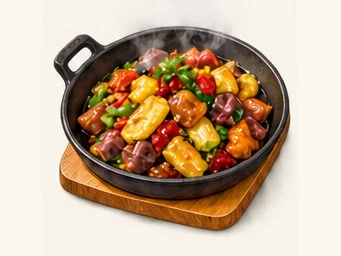 Qianjiang chicken giblets 黔江鸡杂AI illustration · AI 示意图
Different giblets give crisp, springy and tender bites, while pickles create a sharp sour note beneath the chili heat.
Source ↗Read the dish guide →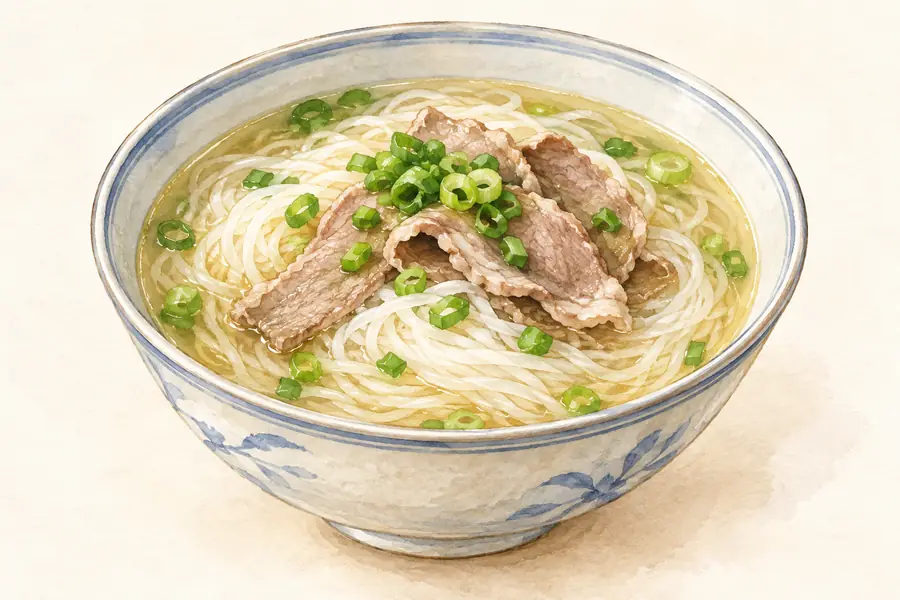 Qianjiang Mung Bean Noodles 黔江绿豆粉AI illustration · AI 示意图(仅供参考,非实拍)
Qianjiang Mung Bean Noodles (黔江绿豆粉) are a Tujia snack from Qianjiang (黔江), Chongqing: rice ground with mung beans, soybeans and other grains into a batter, then cooked on a traditional iron pan.
Read the dish guide → Qianjiang Dried Beef Slices 黔江牛肉脯AI illustration · AI 示意图(仅供参考,非实拍)
Qianjiang Dried Beef Slices (黔江牛肉脯) are a beef speciality of Qianjiang (黔江), Chongqing, made from the lean meat of quality yellow cattle (黄牛) fattened on natural grass in the misty Wuling Mountains (武陵山区).
Read the dish guide → Tujia Shefan Festival Rice 土家社饭AI illustration · AI 示意图(仅供参考,非实拍)
Tujia Shefan Festival Rice (土家社饭) is rice cooked with wild spring greens, cured pork and cured dried tofu for the She Day (社日), the day of offerings to the earth god, as Xiushan (秀山) and Youyang (酉阳) counties in Chongqing record it.
Read the dish guide → Jar-Fermented Sour Pork 酸酢肉AI illustration · AI 示意图(仅供参考,非实拍)
Jar-Fermented Sour Pork (酸酢肉) is pork mixed with salt and chilli and kept in an upside-down earthenware jar. It is a Tujia (土家) preserved meat of the Wuling Mountains (武陵山), recorded in Qianjiang District (黔江区), Chongqing.
Read the dish guide → Stir-Fried Cured Pork with Fermented Chilli Meal 渣海椒炒腊肉AI illustration · AI 示意图(仅供参考,非实拍)
Stir-Fried Cured Pork with Fermented Chilli Meal (渣海椒炒腊肉) is a dish of Qianjiang District (黔江区) in Chongqing.
Read the dish guide → Fairy Tofu Green Leaf Jelly 神豆腐Reference photo of a similar dish · 同类菜品参考照片
Fairy Tofu Green Leaf Jelly (神豆腐) is a green summer jelly from Qianjiang District (黔江区), Chongqing. It is called tofu, but it is set from the juice of a wild leaf rather than from soybeans, and it is eaten cold.
Read the dish guide →
Photo adjustments
Full frame retained; EXIF orientation normalized, proportionally resized to at most 800 pixels and converted to WebP. No generated pixels or subject changes. Cards may crop the display.
More dishes from across Chongqing are in the Chongqing food guide.
Plan your visit
Getting there
Qianjiang District is about 215 km in a straight line from central Chongqing. Search for 黔江区 in a map app to find stations and your accommodation.
Where to stay →Build your route
Zhuoshui Ancient Town and Puhua Underground River are both listed here. The linked place guides have entrance and visit details.
Continue with Chongqing →More in Chongqing
Sources & geographic information
Administrative names and parent areas: Official geographic directory · Reference date 2026-09-06.
Some facts checked against 黔江区 — Wikipedia contributors, CC BY-SA 4.0.
Some facts checked against 小南海 (黔江) — Wikipedia contributors, CC BY-SA 4.0.
Photo: Zhuoshui Ancient Town · Source photographer · License not provided. EXIF orientation normalized; resized without changing aspect ratio; converted to WebP. No subject edits.
Photo: Puhua Underground River · Source photographer · License not provided. EXIF orientation normalized; resized without changing aspect ratio; converted to WebP. No subject edits.
Map data © OpenStreetMap contributors. Pins mark approximate centres, not entrances or boundaries.