


Get to know Shuanghe

- Administrative area
- County-level city · 县级市
- Part of
- Xinjiang
- Chinese name
- 双河市
- Local areas
- County-level city guide
Area & population
- Area in the source
- 742.18 km²
- Population · 2020
- 54,731
Source: cited geographic source, as of the dates shown.
Setting and landscape
The city takes its name from two rivers that cross it, the Bortala (博尔塔拉河) and the Jinghe (精河). The division's land is interleaved with Jinghe County (精河县), Wenquan County (温泉县), Bole (博乐市) and Alashankou (阿拉山口市). The Bortala, Bao'erde (保尔德河), Akar (阿卡尔河) and Tuotuo (托托河) rivers run east to west through it. The city government gives mean annual temperatures of 4.1 to 9.2°C, about 2,815 hours of sunshine a year and 157 to 209 frost-free days. The Bole–Jinghe road (博精公路) runs east to west through the middle of the city centre.
History
The 5th Division descends from the 16th Division of the 6th Army, First Field Army, which the city government says took part in the Nanchang Uprising, the Long March, the battle of Pingxingguan (平型关) and the Hundred Regiments Offensive. It entered Xinjiang in November 1949 and opened a reclamation area at Hami (哈密). In January 1960 it began moving west to develop the Bole reclamation area, and in February 1963 the division headquarters and most of its units moved to Bortala. The State Council approved Shuanghe as a city in January 2014. The city government notes that the Tang dynasty set up the Shuanghe Area Command (双河都督府) here in 658.
What to see
The Shuanghe Gudao Hot Spring (双河古道温泉康养中心) draws water from two geothermal wells drilled between 2022 and 2024, 96 and 390 metres deep, at 55.6°C and 60.9°C. The wells lie 4 kilometres in a straight line from the spa and feed it through a sealed pipeline; its 72 pools are set in an 8,000-square-metre tropical garden planted with more than 260 species of tropical trees and shrubs. Spent spring water is treated and used to irrigate greenhouses growing strawberries, blueberries and cherry tomatoes.
The Guaishiyu scenic area (怪石峪景区) is known for a landscape crowded with oddly shaped rocks that the city presents as hundreds of millions of years old.
Highlights
- Shuanghe Gudao Hot Spring 双河古道温泉康养中心: Geothermal water from two wells feeding 72 pools in a tropical garden.
- Guaishiyu scenic area 怪石峪景区: A landscape of densely packed rock formations.
- Shuanghe Area Command 双河都督府: Tang-dynasty command that the city government says was set up here in 658.
Sources for this guide
师市简介 · 5th Division / Shuanghe City government
自然资源 · 5th Division / Shuanghe City government
双河市 - 维基百科 · Wikipedia (Chinese) · CC BY-SA 4.0
【魅力双河 文旅之城】四季皆宜的诗和远方 · 5th Division / Shuanghe City government (Shuanghe media centre)
双河古道温泉:让身心归栖自然的康养秘境 · 5th Division / Shuanghe City government (Shuanghe media centre)
新疆怪石峪景区春节假期人气火爆 迎来新春旅游“开门红”! · 5th Division / Shuanghe City government (Shuanghe media centre)
Original English written from the listed sources and checked sentence by sentence against quoted extracts by a separate reviewer. Updated 2026-09-25.
Explore Shuanghe
Core places to explore, with English and Chinese names.
Local life & food
Shuanghe local specialties
双河市特色美食 · 8 specialties to discover
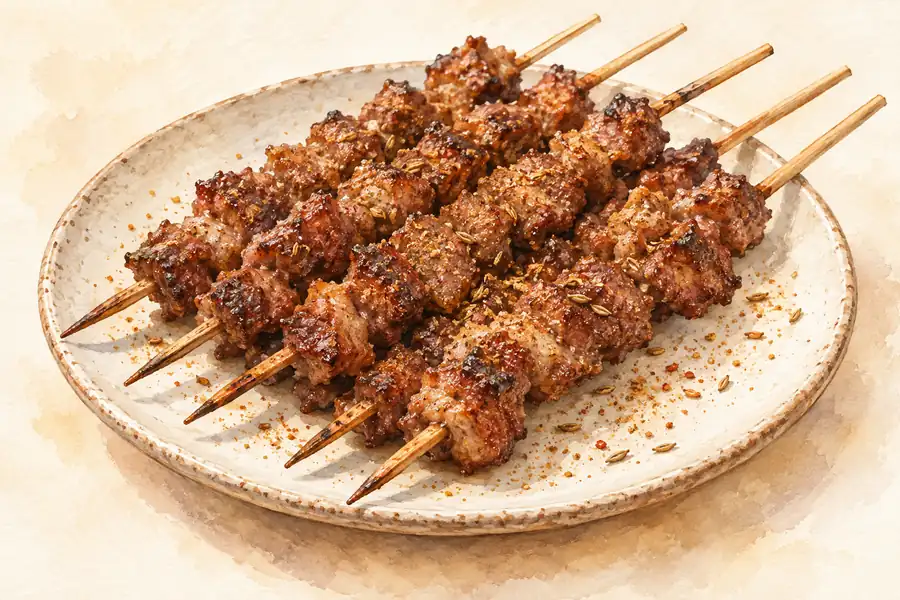 Bole-Style Roast Lamb 博乐风味烤羊肉AI illustration · AI 示意图(仅供参考,非实拍)
Bole-Style Roast Lamb (博乐风味烤羊肉) is listed among the local specialties of Shuanghe, Xinjiang. The name includes 羊肉 (lamb or mutton). 烤 describes roasting or grilling.
Read the dish guide →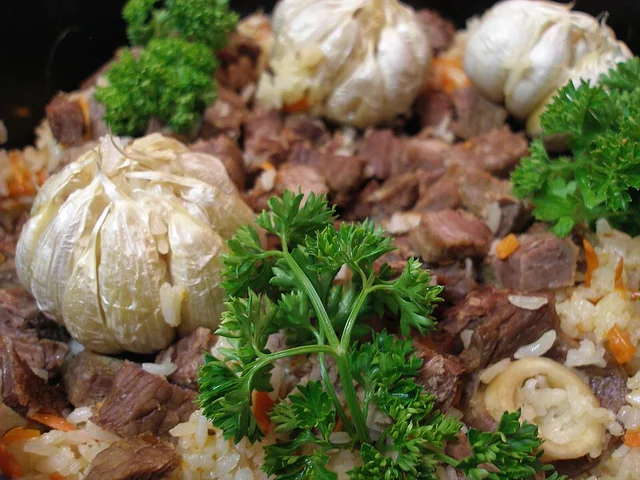 Polo rice 抓饭
The rice is rich and separate-grained, with sweet carrot, savory meat and occasional fruit sweetness rather than a sticky porridge texture.
Source ↗Read the dish guide →
Photo adjustments
EXIF orientation applied where present; resized proportionally to at most 640 px on the long edge and encoded as WebP. No crop, retouching, recoloring or subject changes.
 Nang bread 馕
Thin nang is crisp, while thicker bread has a soft, chewy center and toasted crust. Fresh warmth brings out the wheat and topping aromas.
Source ↗Read the dish guide →
Photo adjustments
EXIF orientation applied where present; resized proportionally to at most 640 px on the long edge and encoded as WebP. No crop, retouching, recoloring or subject changes.
 Baked samsa buns 烤包子
The shell is crisp and firm, while the center is juicy, onion-sweet and richly savory.
Source ↗Read the dish guide →
Photo adjustments
EXIF orientation applied where present; resized proportionally to at most 640 px on the long edge and encoded as WebP. No crop, retouching, recoloring or subject changes.
 Hand-Grabbed Boiled Meat 手抓肉
Hand-Grabbed Boiled Meat (手抓肉) is a way of preparing bone-in meat associated with pastoral communities of the Junggar Basin (准噶尔盆地) and other northern grasslands.
Source ↗Read the dish guide →.jpg)
Photo adjustments
Full frame retained; proportionally resized and converted to WebP. No retouching or changes to the photographed subject. Card displays may crop the view.
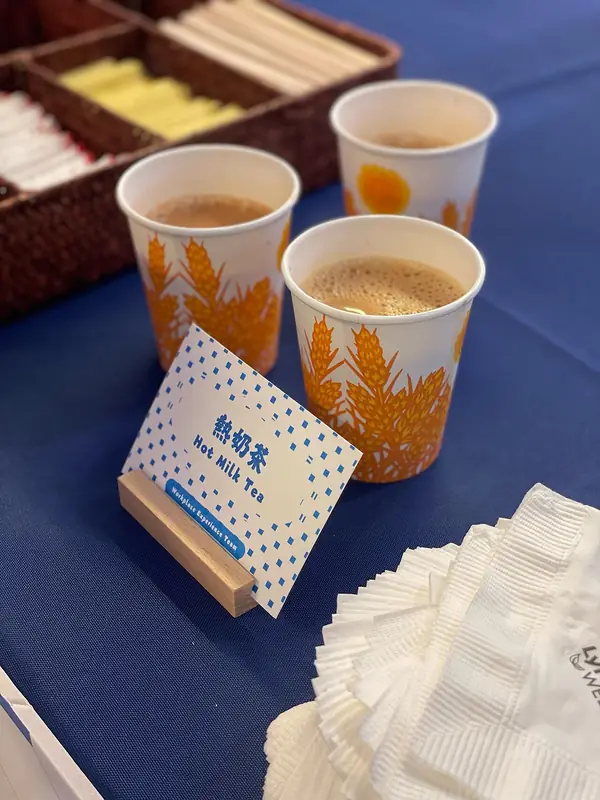 Salted Milk Tea 奶茶
Salted Milk Tea (奶茶) is brick tea mixed with boiled milk, hot water and salt. The Keketuohai Scenic Area Management Committee in Altay calls it the most important item of Kazakh food and drink, and in Ürümqi (乌鲁木齐) Xinjiang milk tea (新疆奶茶) is one of the common drinks.
Read the dish guide →
Photo adjustments
EXIF orientation normalized; resized without changing aspect ratio; converted to WebP. No subject edits.
 Wind-Dried Meat 风干肉AI illustration · AI 示意图(仅供参考,非实拍)
Wind-Dried Meat (风干肉) is listed among the local specialties of Karamay, Xinjiang. It is grouped here with meat & poultry dishes; retain the complete Chinese name when comparing local menus.
Read the dish guide → Hand-Pulled Mixed Noodles 拌面
Hand-Pulled Mixed Noodles (拌面) is listed among the local specialties of Karamay, Xinjiang. The term 面 points to noodles or flour-based food.
Read the dish guide →
Photo adjustments
EXIF orientation normalized; resized without changing aspect ratio; converted to WebP. No subject edits.
More dishes from across Xinjiang are in the Xinjiang food guide.
Plan your visit
Getting there
Search for 双河市 in a map app to find stations and your accommodation.
Where to stay →More in Xinjiang
Sources & geographic information
Administrative names and parent areas: Official geographic directory · Reference date 2026-09-06.
Some facts checked against 双河市 — Wikipedia contributors, CC BY-SA 4.0.
Map data © OpenStreetMap contributors. Pins mark approximate centres, not entrances or boundaries.