


Get to know Yuhang District
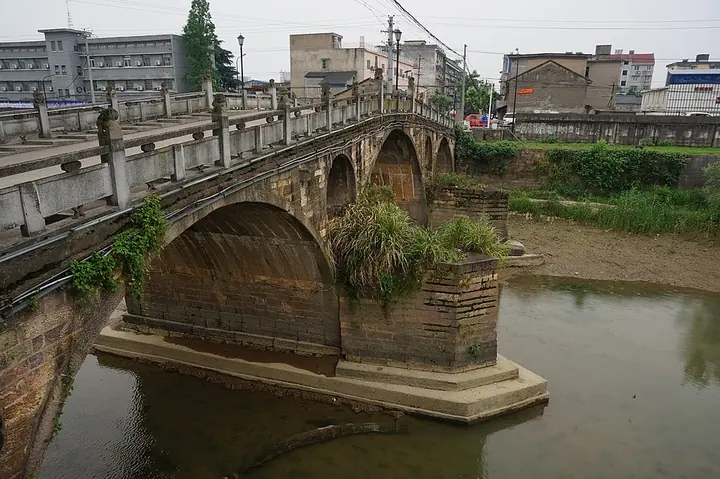
Photo adjustments
Full frame retained; proportionally resized and converted to WebP. No retouching or changes to the photographed subject. Card displays may crop the view.
- Administrative area
- District · 市辖区
- Part of
- Hangzhou
- Chinese name
- 余杭区
- Local areas
- District guide
Area & population
- Area in the source
- 1,228.41 km²
- Population · 2022
- 1,390,900
Source: cited geographic source, as of the dates shown.
Setting and landscape
The East Tiaoxi River (东苕溪) roughly divides Yuhang into two parts. To the west are hills and river valleys, and to the east is a plain of waterways and tidal flats. The highest peak is Yaotou Mountain (窑头山, 1,095 metres), and Mount Jing (径山) rises to 616 metres. In 2021 Linping (临平) and six other subdistricts, with Tangqi town (塘栖), were moved into the new Linping District (临平区), and the district government moved to Cangqian (仓前).
History
In the name Yuhang, "Hang" is a place name, and "Yu" may be an ancient Yue word for salt or a syllable with no meaning. In 222 BCE, after Qin conquered Chu, it set up the counties of Qiantang (钱唐) and Yuhang under Kuaiji Commandery (会稽郡). When the Sui created Hangzhou prefecture in 589, its seat was first at Yuhang, moving to Qiantang the next year.
What to see
The Archaeological Ruins of Liangzhu City (良渚古城遗址), dated to 5,300 to 4,300 years ago, were the centre of power and belief of the Liangzhu culture. They were inscribed on the World Heritage List on 6 July 2019. The Hangzhou culture and tourism bureau describes the ruins park at Pingyao (瓶窑) as covering 14.33 square kilometres in its plan. The walled-city area has city gates and walls, the Mojiaoshan palace (莫角山宫殿) and the Fanshan royal tombs (反山王陵). The Yaoshan site park (瑶山遗址公园), an altar with a group of high-ranking graves, opened in 2021. The Liangzhu Museum (良渚博物院), also in Yuhang, is an archaeological site museum devoted to the Liangzhu culture.
Jingshan Temple (径山寺), in full Jingshan Wanshou Chan Temple (径山万寿禅寺), stands at the top of Mount Jing in Jingshan town. The Chan master Faqin (法钦) founded it in 745, and in 768 Emperor Daizong of Tang ordered a monastery built there. Under the Southern Song it ranked first among the Five Mountains and Ten Temples (五山十刹). It is one of the ancestral temples of Japanese Zen.
Food and local products
The Jingshan tea feast (径山茶宴) is the formal tea gathering that Jingshan Temple holds for honoured guests in its Mingyue Hall (明月堂). It began in the mid-Tang, flourished under the Song and Yuan, and spread to Japan, where it became a source of the tea ceremony. It entered the national intangible-heritage list in 2011. Local produce includes bayberries, spring bamboo shoots, water chestnuts and yellow ginger.
Highlights
- Archaeological Ruins of Liangzhu City 良渚古城遗址: Centre of the Liangzhu culture, 5,300–4,300 years ago; on the World Heritage List since 6 July 2019.
- Liangzhu Museum 良渚博物院: Archaeological site museum for the Liangzhu culture.
- Jingshan Temple 径山寺: Founded in 745 on the summit of Mount Jing; first of the Five Mountains under the Southern Song.
- Jingshan tea feast 径山茶宴: The temple's formal tea gathering, a source of the Japanese tea ceremony; national intangible heritage since 2011.
Sources for this guide
良渚文化体验(良渚古城遗址公园、良渚博物院) · Hangzhou Municipal Bureau of Culture, Radio, TV and Tourism
余杭区 - 维基百科,自由的百科全书 · Wikipedia (Chinese) · CC BY-SA 4.0
径山寺 - 维基百科,自由的百科全书 · Wikipedia (Chinese) · CC BY-SA 4.0
径山茶宴 - 中国非物质文化遗产网 · China Intangible Cultural Heritage Network (ihchina.cn)
Original English written from the listed sources and checked sentence by sentence against quoted extracts by a separate reviewer. Updated 2026-09-25.
Explore Yuhang District
Core places to explore, with English and Chinese names.
Places to explore around Yuhang District
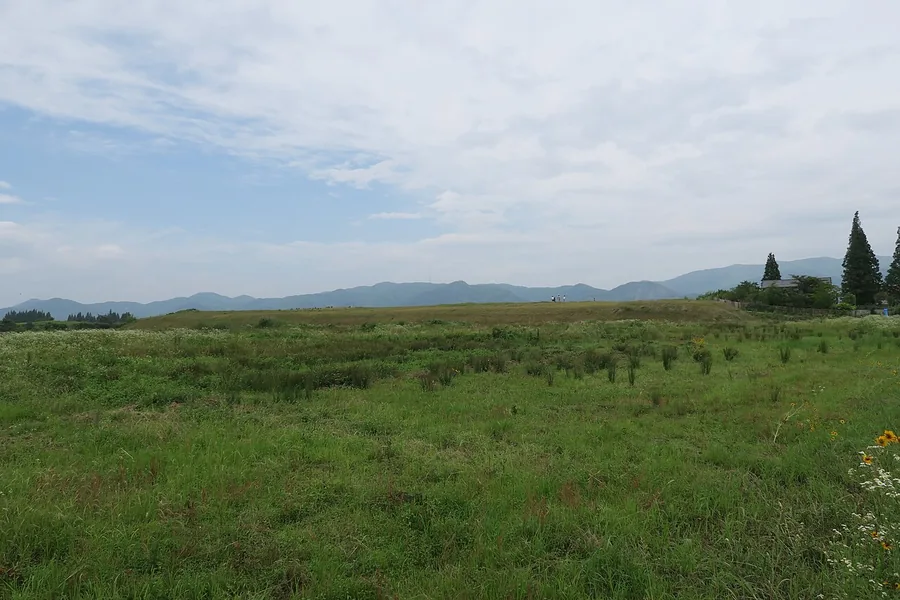 The Mojiaoshan earthen platform at Liangzhu Ancient City, June 2016.
Liangzhu culture良渚古城遗址
The archaeological park of Liangzhu City makes a prehistoric settlement visible through earthworks, platforms and the layout of its water-managed landscape. Mojiaoshan marks the raised palace area, while Fanshan is associated…
Read the place guide →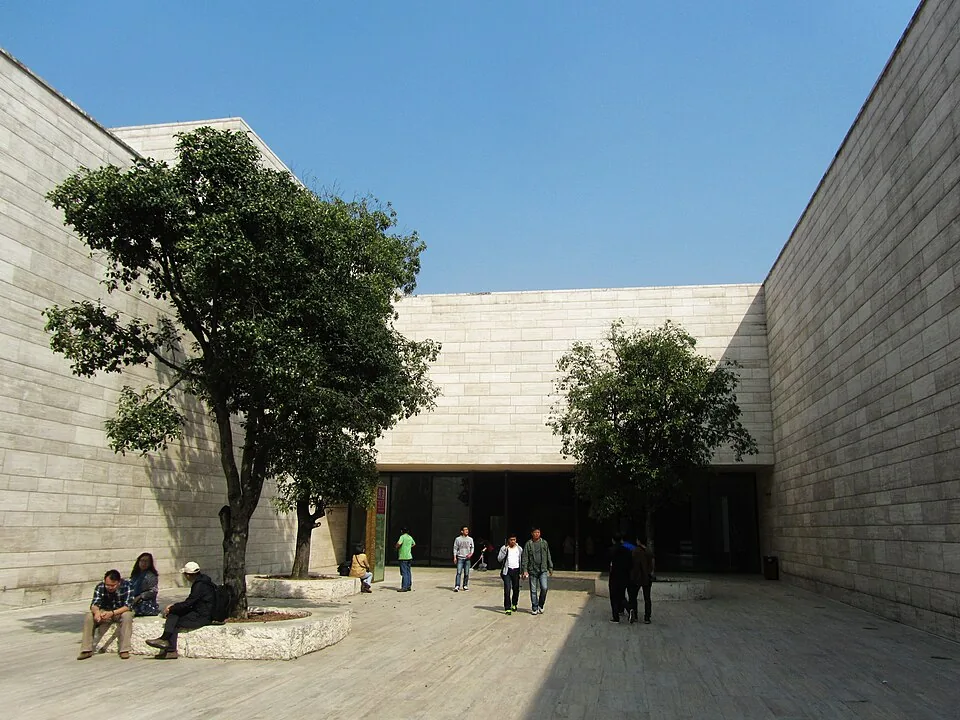 Liangzhu Museum · 良渚博物院. Photo: 2013-10-27 11:09:02.
Liangzhu Museum良渚博物院
Liangzhu Museum brings together jade, pottery, stone tools and other objects from the prehistoric culture whose city ruins lie nearby. Its long, stone-clad volumes, courtyards and water setting were designed by David…
Read the place guide →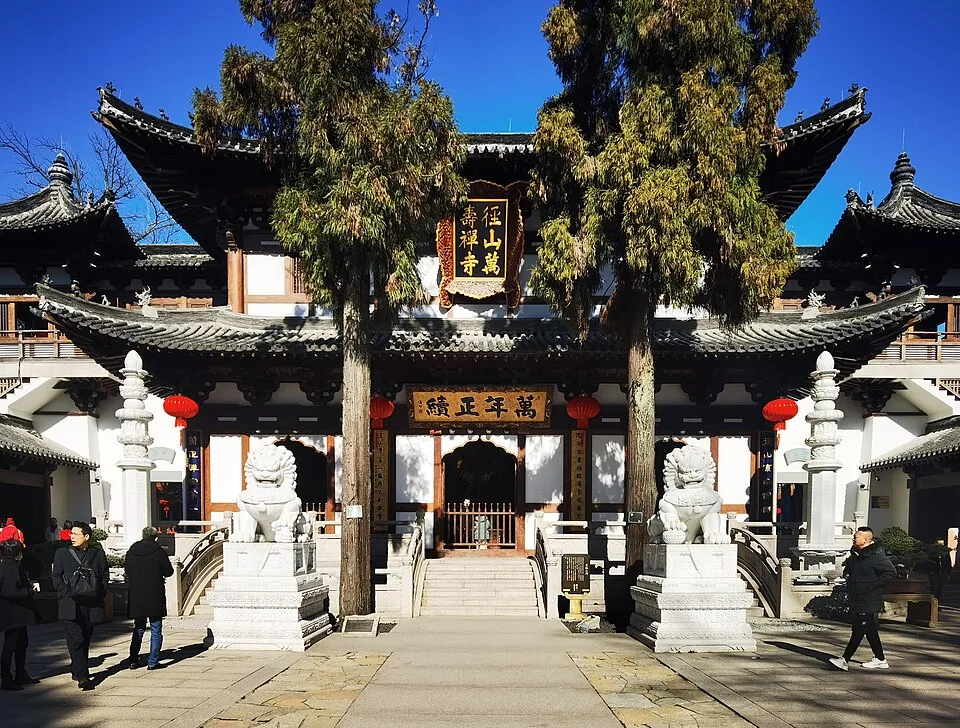 Jingshan Temple · 径山寺. Photo: 2023-02-26 09:33:42.
Jingshan Temple径山寺
Jingshan Temple occupies the summit of Jingshan in Hangzhou’s Yuhang district. Its foundations go back to the Tang period, and it later became an important Chan Buddhist monastery.
Read the place guide →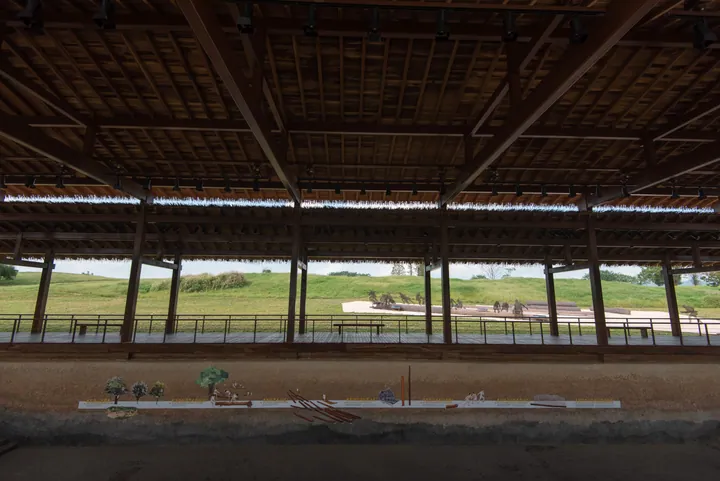 A covered viewing pavilion over the excavated mounds at Liangzhu Ancient City Archaeological Site · 余杭良渚古城遗址莫角山遗址展示棚 Source-recorded photograph date: 2021-10-07 09:33:56.
Liangzhu Ancient City Archaeological Park良渚古城遗址公园
Liangzhu Ancient City Archaeological Park introduces the remains of a late Neolithic urban centre in the Hangzhou area.
Read the place guide →Local life & food
Yuhang District local specialties
余杭区特色美食 · 1 specialties to discover
 Cangqian mixed-lamb pot 仓前掏羊锅AI dish illustration / AI 菜品示意图
It is a strongly lamb-flavoured meal with contrasting textures, from soft meat to firmer offal and gelatinous feet.
Source ↗Read the dish guide →All dish names · 全部菜名 (1)
More dishes from across Zhejiang are in the Zhejiang food guide.
Plan your visit
Getting there
Yuhang District is about 50 km in a straight line from central Hangzhou. Search for 余杭区 in a map app to find stations and your accommodation.
Where to stay →Build your route
Liangzhu culture and Liangzhu Museum are about 4 km apart in a straight line. The linked place guides have entrance and visit details.
Continue with Hangzhou →More in Hangzhou
Sources & geographic information
Administrative names and parent areas: Official geographic directory · Reference date 2026-09-06.
Some facts checked against 余杭区 — Wikipedia contributors, CC BY-SA 4.0.
Some facts checked against 径山寺 — Wikipedia contributors, CC BY-SA 4.0.
Photo: Liangzhu culture · Siyuwj · CC BY-SA 4.0. Proportionally resized and converted to WebP without cropping, retouching or changing the photographed subject.

Photo: Liangzhu Museum · 猫猫的日记本 · CC BY-SA 3.0. Converted to WebP and resized without changing the subject or cropping the source frame.

Photo: Jingshan Temple · User:CatOnMars · CC BY-SA 4.0. Converted to WebP and resized without changing the subject or cropping the source frame.

Photo: Liangzhu Ancient City Archaeological Park · Siyuwj · CC BY-SA 4.0. Full frame retained; proportionally resized and converted to WebP. No retouching or changes to the photographed subject. Card displays may crop the view.

Map data © OpenStreetMap contributors. Pins mark approximate centres, not entrances or boundaries.