


Get to know Gongshu District

- Administrative area
- District · 市辖区
- Part of
- Hangzhou
- Chinese name
- 拱墅区
- Local areas
- District guide
Area & population
- Area
- 69.25 km²
- Population · 2022
- 361,609
Source: English Wikipedia, as of the dates shown.
A district reshaped in 2021
Gongshu is a current district of Hangzhou, Zhejiang. On 9 April 2021, the former Gongshu District and former Xiacheng District were abolished and their combined territory became the new Gongshu District. “Xiacheng” is therefore useful as a historical locator, not a present-day district name; the old and new Gongshu boundaries are not interchangeable.
For visitors, two different urban experiences now sit within this one administrative unit. The Grand Canal quarter around Gongchen Bridge is known for historic waterside streets and museums in reused industrial buildings. Farther into the former Xiacheng area, central Hangzhou’s commercial streets and dense everyday city life provide a more contemporary contrast. A district is not a single attraction or entrance: choose a destination within it rather than navigating to “Gongshu District” as if it were a venue.
Walk the canal heritage quarter
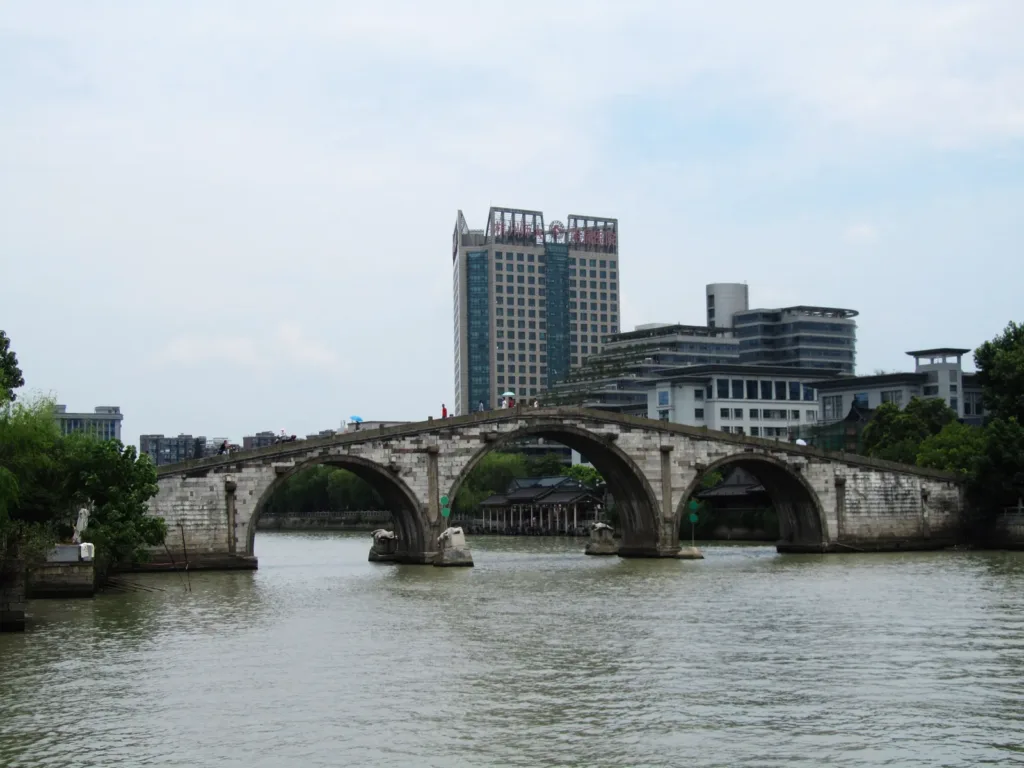
Start at Gongchen Bridge (拱宸桥), the stone crossing that anchors this canal-side visit. Walk across and look back along the water to understand the bridge as both a crossing and a marker of the Grand Canal’s arrival in Hangzhou. On the west bank, the Qiaoxi Historic and Cultural Block (桥西历史文化街区) has narrow lanes and former factory compounds. Four distinct institutions occupy adapted industrial buildings: Hangzhou Arts and Crafts Museum (杭州工艺美术博物馆), China Knife, Scissors and Sword Museum (中国刀剪剑博物馆), China Fan Museum (中国扇博物馆) and China Umbrella Museum (中国伞博物馆). They interpret craft traditions and industrial history; they are separate museums within a museum group, not different names for one attraction. The group’s exhibits include Hangzhou-associated scissors, fans and silk umbrellas, while demonstration studios and hands-on activities may be available when scheduled. Ask the museum about that day’s demonstrations rather than expecting a craft session on every visit.
Then continue to Xiaohe Straight Street Historic and Cultural Block (小河直街历史文化街区), a separate canal-side neighborhood. Its preserved houses and small lanes make a slower counterpoint to the museum galleries. Notice how shopfronts, doorways and ordinary residential buildings share the water’s edge. Keep voices low in residential lanes, do not enter private courtyards, and ask before photographing residents. The museum cluster and Xiaohe are separate destinations; allow time to walk between them rather than assuming they share one entrance.
The district also includes the Dadou Road historic area (大兜路历史街区), a different canal-side urban quarter, and Banshan National Forest Park (半山国家森林公园) on its northeastern side. They are not part of the Gongchen Bridge museum compound. Choose them as separate stops and verify their own current access before setting out.
Getting around
For the Gongchen Bridge–Qiaoxi cluster, Hangzhou Metro Line 5 serves Grand Canal Station (大运河站). Use Exit D and walk about ten minutes toward the museum quarter. Published local visitor guidance lists buses 1, 15, 58, 65, 98, 129 and 1231 to Gongchenqiao West (拱宸桥西), and buses 15, 61, 63, 70, 129, 185, 513 and 578 to Dengyun Road–Xiaohe Road Intersection (登云路小河路口). Route numbers and stop service can change, so confirm the live stop display before boarding.
For a taxi or ride-hail to the west-bank museum cluster, enter 杭州工艺美术博物馆,杭州市拱墅区小河路334号. This is the museum’s published address, not a guarantee that a vehicle can stop at the entrance; alight only at a legal roadside location and follow the museum signs. The wider district has many destinations and no single district-wide taxi drop-off point.
The Wulinmen Passenger Wharf (武林门码头) has a rebuilt passenger center on the east side of the Xihu Culture Square bridge (西湖文化广场桥). Zhejiang Online reported its reopening in September 2023 for water-bus and sightseeing-boat use. A water-bus trip is an optional canal approach only if the operator’s current notice lists a sailing to Gongchen Bridge Wharf (拱宸桥码头). If it does, disembark there and walk across Gongchen Bridge toward Qiaoxi; return by a currently operating boat only if a return sailing is confirmed, or use the bus/metro options above. Current route, departure times, ticketing and return service were not confirmed for this guide, so do not plan around a boat without checking the operator on the day.
Before you go
Museum hours, reservations, demonstrations and special exhibitions can change. The local report cited below lists a general museum schedule, but it is dated 2023 and is not a current-day operating confirmation. Check the museum group’s current notice before travelling, especially on a Tuesday or public holiday. The bridgeside streets are public places, while individual museum entry and activities are governed by each institution’s current arrangements.
Explore Gongshu District
Core places to explore, with English and Chinese names.
Gongchen Bridge 拱宸桥
China Knife, Scissors and Sword Museum 中国刀剪剑博物馆
Zhejiang Museum of Natural History 浙江自然博物院杭州馆
Beijing-Hangzhou Grand Canal Museum 中国京杭大运河博物馆
Beijing–Hangzhou Grand Canal (Hangzhou Section) 京杭大运河拱宸桥片区
Hangzhou Arts and Crafts Museums 中国杭州工艺美术博物馆群
Qiaoxi Historic and Cultural Block 桥西历史文化街区
Xiaohe Straight Street 小河直街
Places to explore around Gongshu District
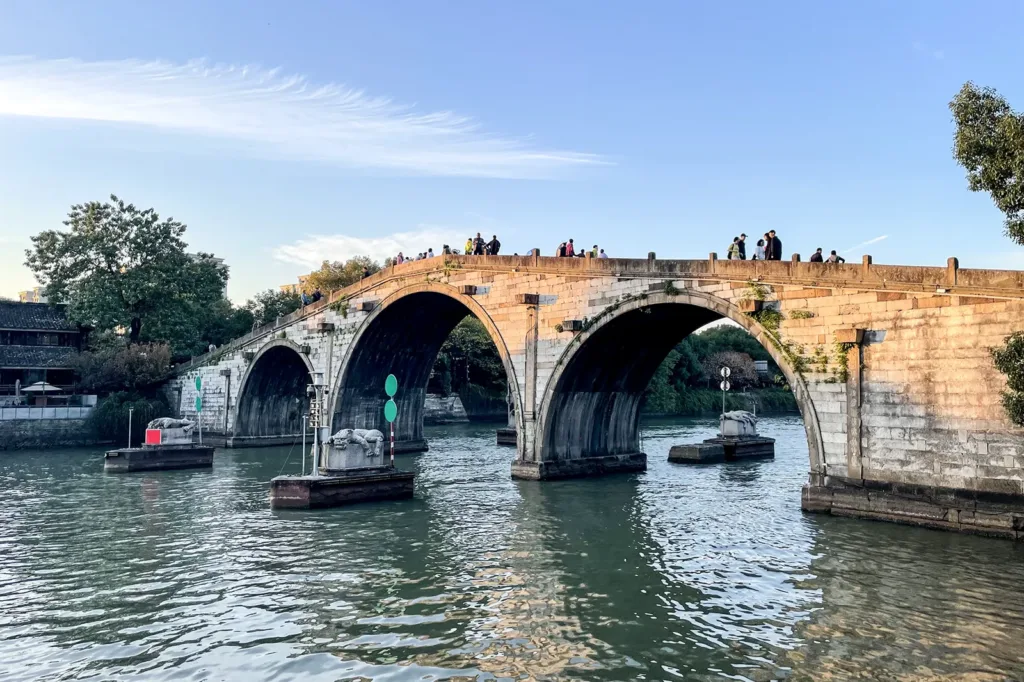 Gongchen Bridge’s stone arches span the Grand Canal. Photo: Windmemories · CC BY-SA 4.0
Gongchen Bridge拱宸桥
A three-arch stone bridge over Hangzhou’s Grand Canal, Gongchen Bridge connects the east-bank Canal Cultural Square with the Qiaoxi historic waterfront on the west. Cross it for close views of its arches, the canal, and the different streets on either bank.
Read the place guide → The shared entrance building of the China Knife, Scissors and Sword Museum and China Umbrella Museum in Hangzhou; 20 July 2013.
China Knife, Scissors and Sword Museum中国刀剪剑博物馆
A focused museum on Chinese knives, scissors and swords in Hangzhou’s canal-side Qiaoxi museum quarter, where historic blades, household tools and craft traditions meet.
Read the place guide →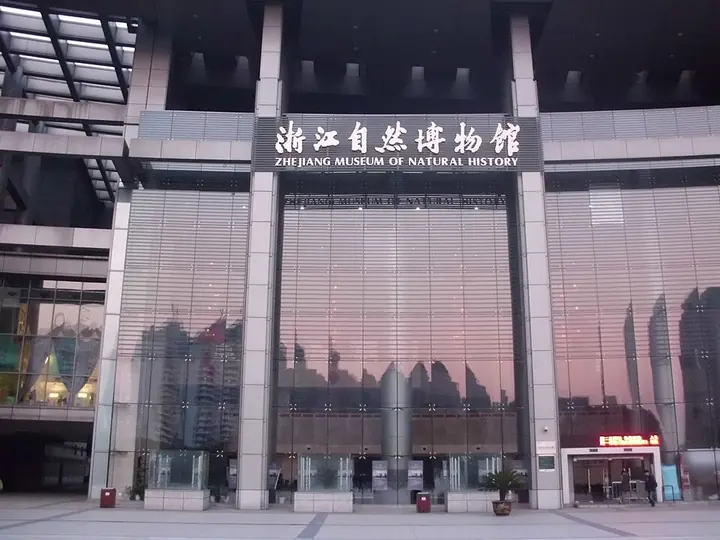 Entrance to Zhejiang Museum of Natural History, Hangzhou branch · 浙江自然博物院杭州馆入口 Photograph date recorded by the source: 5 December 2012, 16:51:56.
Zhejiang Museum of Natural History浙江自然博物院杭州馆
Explore Zhejiang’s natural world and the story of life through fossil halls, biodiversity displays and regional ecology at this central Hangzhou museum.
Read the place guide →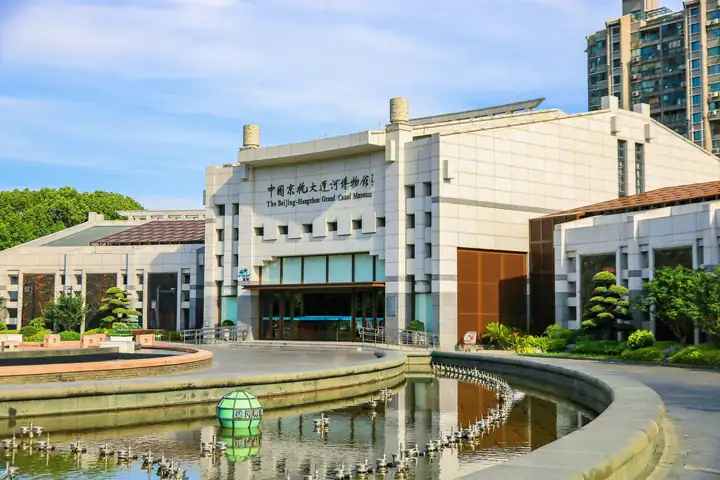 Beijing-Hangzhou Grand Canal Museum · 中国京杭大运河博物馆
Beijing-Hangzhou Grand Canal Museum中国京杭大运河博物馆
A focused introduction to the Grand Canal’s engineering, freight, and role in Hangzhou, set on the canal’s east bank beside historic Gongchen Bridge.
Read the place guide →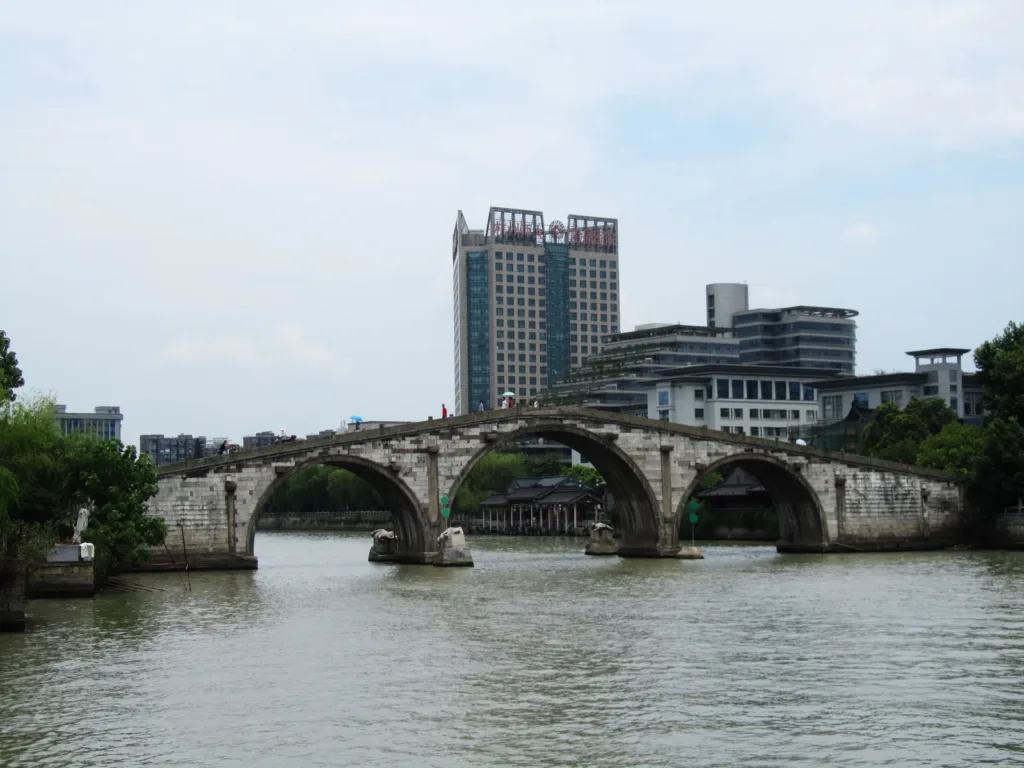 Gongchen Bridge over the Grand Canal, viewed from the south. Photo: 猫猫的日记本 · CC BY-SA 3.0
Beijing–Hangzhou Grand Canal (Hangzhou Section)京杭大运河拱宸桥片区
Follow Hangzhou’s living Grand Canal from Gongchen Bridge and its former industrial lanes to museums, working boats, and everyday waterfront streets in Gongshu District.
Read the place guide → Entrance of the Fan Museum, part of the Hangzhou Arts and Crafts Museums cluster. Photo: 猫猫的日记本 · CC BY-SA 3.0
Hangzhou Arts and Crafts Museums中国杭州工艺美术博物馆群
A cluster of four museums in reused industrial buildings beside the Grand Canal, where displays of craft objects connect Hangzhou’s making traditions with the working history of the canal neighbourhood.
Read the place guide →Qiaoxi Historic and Cultural Block桥西历史文化街区
On the west bank of Hangzhou’s Grand Canal, Qiaoxi preserves a compact streets-and-lanes neighborhood where canal commerce, industrial memory, museums in reused factory buildings, and residents’ everyday life meet.
Read the place guide →Xiaohe Straight Street小河直街
A compact canal-side historic street in Gongshu District, where narrow stone lanes, late-Qing and early-Republic-era houses, waterside trading history and everyday residential life meet.
Read the place guide →Plan your visit
Getting there
Gongshu District is about 9 km (straight-line distance) from central Hangzhou. Search for 拱墅区 in a map app to find stations and your accommodation.
Where to stay →Build your route
Gongchen Bridge and China Knife, Scissors and Sword Museum are less than 1 km apart. The linked place guides have entrance and visit details.
Continue with Hangzhou →More in Hangzhou
Sources & geographic information
Administrative names and parent areas: Official geographic directory (dmfw.mca.gov.cn) · Reference date 2026-09-06.
Background text adapted from Gongshu, Hangzhou — Wikipedia contributors, under CC BY-SA 4.0. Text has been shortened and reorganized; source revision 1324369713.
Photo: China Knife, Scissors and Sword Museum · 猫猫的日记本 · CC BY-SA 3.0. Resized for the web; the photo itself has not been edited.

Photo: Zhejiang Museum of Natural History · Huandy618 · Huandy618 — Westlake_Cultural_Square_9.JPG — CC BY-SA 3.0 · CC BY-SA 3.0. Resized for the web; the photo itself has not been edited. Thumbnails may show a cropped view.

Photo: Beijing-Hangzhou Grand Canal Museum · gs.ctrip.com. Resized for the web; the photo itself has not been edited.
Map data © OpenStreetMap contributors. Pins mark approximate centres, not entrances or boundaries.
Image credits & notes (2)
- Gongshu neighbourhoods seen from Wangchen Pavilion in Gongshu District, Hangzhou. Photograph date recorded by the source: 2018-07-03 11:31:59.Photo: Cangminzho · CC BY-SA 4.0Resized for the web; the photo itself has not been edited. Thumbnails may show a cropped view.
- Gongchen Bridge, seen from the south. Photo: 猫猫的日记本Photo: CC BY-SA 3.0
