

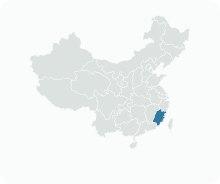
Get to know Luoyuan County
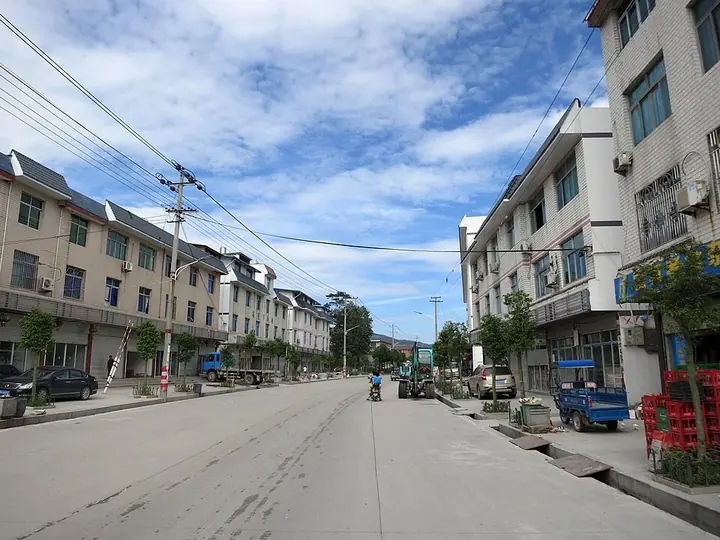
- Administrative area
- County · 县
- Part of
- Fuzhou
- Chinese name
- 罗源县
- Local areas
- County guide
Area & population
- Area
- 1,187.00 km²
- Population · 2020
- 255,214
- Administrative seat
- Fengshan
Source: English Wikipedia, as of the dates shown.
Luoyuan County is a mountain-and-sea county in northeast coastal Fujian, best understood through its deep bay, She communities, and surviving timber architecture rather than as a single compact attraction. The landscape brings steep inland slopes close to a sheltered coast, while Luoyuan Bay links present-day port activity with older stories of ceramics, salt, and coastal trade.
What makes Luoyuan worth the detour
Treat Luoyuan as a county-scale outing. The most rewarding day moves between the county seat and its surrounding villages, using the road itself as part of the experience: wooded hills give way to bay views, then to settlements where local history is still embedded in ordinary streets. In the bay area, look for the contrast between working waterfronts and the restored coastal landscape. Recent reporting describes shoreline restoration, wetlands, mangrove planting, and wintering waterbirds around the bay; these are landscape observations, not a promise that every viewpoint or habitat is open as a formal attraction on the day you visit.
Bajing Village 八井村, in Songshan Town, is a useful introduction to Luoyuan's She heritage. A Fuzhou government profile describes it as a mountain-and-sea village about 8 km from the county seat and a purely She administrative village. Its public-facing village spaces include a She culture exhibition hall, a She revolutionary-history exhibition hall, cultural parks, old timber houses, and streets painted with She motifs. Walk slowly and read the displays before photographing details. Ask before entering homes or taking portraits, and remember that the village is a lived-in community rather than a performance set. The same profile links local heritage work with She medicine and the traditional making of the Liu-shen meridian bone-pain remedy; treat that as cultural context, not as medical advice or a product recommendation.
For architecture, continue to Chen Taiwei Palace 陈太尉宫 in Ganxi Village 乾溪村, Zhongfang Town 中房镇. The county government describes it as a timber complex made up of a main hall, side halls, and a stage, with no nails used in the structure. Add time to look at how the building is assembled rather than reducing the visit to a single “ancient temple” photograph. The complex brings Song, Yuan, Ming, and Qing-period building work together, and it has been a National Key Cultural Relics Protection Unit since 2001.
Luoyuan Bay gives the county a second, more maritime story. A detailed local-history account connects the bay's deep-water harbour to the movement of ceramics and salt, including the former kiln activity at Bajing's Wanyao-li area and the salt-making tradition of Jianjiang. It also records the historic “Caociao night market” image of fish being brought into the county town by boat. These accounts are best used as a lens for reading the coast and local museums or displays; they do not mean that an historic market or a working kiln survives as a current visitor attraction.
Getting there and moving on
From Fuzhou, search for trains to 罗源站 (Luoyuan Station). The station is in Baihua Village, Songshan Town, outside the county-seat streets. After arrival, one published route description for 罗源5路 lists a fixed-departure shuttle between 罗源火车站 Luóyuán Huǒchēzhàn and 建行环岛 Jiànháng Huándǎo, via 松山派出所 Sōngshān Pàichūsuǒ, 松山卫生院 Sōngshān Wèishēngyuàn, 信号交叉口 Xìnhào Jiāochākǒu, and 富丰小区 Fùfēng Xiǎoqū. The same route is described in both directions, so it can also be used for the return to the railway station; verify the day's departures at the station or locally because the published timetable may change.
For Bajing Village and Chen Taiwei Palace, the railway-station bus is only a way into the county's built-up area, not a direct rural sightseeing service. From your accommodation or the county-seat bus terminus, use Amap/Gaode to enter 八井村 Bājǐng Cūn or 罗源县中房镇乾溪村陈太尉宫 Luóyuán Xiàn Zhōngfáng Zhèn Qiánxī Cūn Chén Tàiwèi Gōng as the Chinese destination, then confirm the final road access and opening situation locally. I found no reliable current source for a dedicated tourist shuttle, a universal visitor timetable, or a guaranteed foreign-passport ticketing process for these village sites, so do not infer those details from the existence of a map pin. Arrange the return before leaving the rural area; a taxi or ride-hail back to the county seat or to 罗源站 is the practical fallback when local bus information is unclear.
Luoyuan is most satisfying when you leave room for that slower scale. Bring enough daylight for the rural approach, keep village visits quiet, and separate what you can see in the landscape today from the historical stories that explain why the bay and its settlements matter.
Guide sources
Explore Luoyuan County
Core places to explore, with English and Chinese names.
Luoyuan County 罗源县
Plan your visit
Getting there
Luoyuan County is about 55 km (straight-line distance) from central Fuzhou. Search for 罗源县 in a map app to find stations and your accommodation.
Where to stay →More in Fuzhou
Sources & geographic information
Administrative names and parent areas: Official geographic directory (dmfw.mca.gov.cn) · Reference date 2026-09-06.
Background text adapted from Luoyuan County — Wikipedia contributors, under CC BY-SA 4.0. Text has been shortened and reorganized; source revision 1365277595.
Map data © OpenStreetMap contributors. Pins mark approximate centres, not entrances or boundaries.
