


Get to know Jiguan District
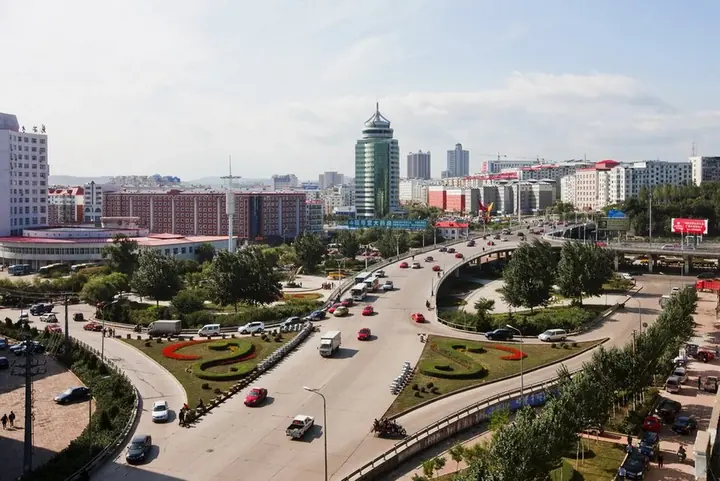
Photo adjustments
Full frame retained; proportionally resized and converted to WebP. No retouching or changes to the photographed subject. Card displays may crop the view.
- Administrative area
- District · 市辖区
- Part of
- Jixi
- Chinese name
- 鸡冠区
- Local areas
- District guide
Area & population
- Area in the source
- 144.00 km²
- Population · 2020 census
- 402,345
- Administrative seat
- Hongjunlu Subdistrict
Source: cited geographic source, as of the dates shown.
Setting and landscape
The district government gives Jiguan an area of 153.2 square kilometres and describes a mid-temperate continental monsoon climate with four distinct seasons, in which rain and summer heat arrive together. The Muling River crosses the Jixi area from west to east before joining the Ussuri (乌苏里江). Besides seven urban subdistricts, the district has two rural townships, Hongxing (红星乡) and Xijiao (西郊乡).
History
The mountain gave the whole city its name. Chinese Wikipedia explains that Jixi means 'west of Jiguan Mountain', and that the name first appeared when Sijiamei station (四甲没站), today's Jixi Station, opened on 15 December 1935 and was called 'Jixi station' because it stood west of the mountain. On 18 December 1956 the State Council decided to create the prefecture-level city of Jixi, with Jiguan as one of its five districts; the district itself was formally set up in March 1957.
What to see
The district government calls Jiguan the political, economic and cultural centre of Jixi. It holds colleges including the Heilongjiang University of Technology (黑龙江工业学院) and the Heilongjiang Technician College (黑龙江技师学院), and large shopping centres such as Wanda Plaza (万达广场) and Dashang New Mart (大商新玛特). On the suburban edge, the district has developed a farm-tourism belt around Apricot Blossom Hill (杏花山) in Hongxing township and has held eight Apricot Blossom Hill tourism festivals.
Food and local products
Jixi is one of the traditional homes of China's Korean community, and over several decades cold noodles (冷面), a Korean speciality, have grown there into a distinctive local food culture. In Jixi the word covers both the noodles and the spicy side dishes eaten with them. The noodles are made only from buckwheat and wheat and pressed to order, and the side dishes run to more than fifty kinds, among them dried tofu, bellflower root and pollock.
Getting oriented
The district government lists the Hegang–Dalian Expressway (鹤大高速), the Jianji Expressway (建鸡高速) and a branch of China National Highway 201 among the routes crossing Jiguan. It also notes that two international passenger and freight routes, from Jixi to Ussuriysk and Dalnerechensk, have been opened through the Mishan (密山) and Hulin (虎林) border ports.
Highlights
- Apricot Blossom Hill 杏花山: Hill in Hongxing township at the centre of the district's suburban farm-tourism belt; eight tourism festivals held.
- Jixi cold noodles 鸡西冷面: Buckwheat and wheat noodles pressed to order, served with more than fifty spicy side dishes.
Sources for this guide
鸡冠区人民政府 | 鸡冠简介 · Jiguan District People's Government
鸡冠区人民政府 | 地域文化 · Jiguan District People's Government
鸡冠区 - 维基百科,自由的百科全书 · Wikipedia (Chinese) · CC BY-SA 4.0
鸡西市 - 维基百科,自由的百科全书 · Wikipedia (Chinese) · CC BY-SA 4.0
Original English written from the listed sources and checked sentence by sentence against quoted extracts by a separate reviewer. Updated 2026-09-24.
Explore Jiguan District
Core places to explore, with English and Chinese names.
Jiguan District 鸡冠区
Plan your visit
Getting there
Jiguan District covers the centre of Jixi. Search for 鸡冠区 in a map app to find stations and your accommodation.
Where to stay →More in Jixi
Sources & geographic information
Administrative names and parent areas: Official geographic directory · Reference date 2026-09-06.
Some facts checked against 鸡冠区 — Wikipedia contributors, CC BY-SA 4.0.
Some facts checked against 鸡西市 — Wikipedia contributors, CC BY-SA 4.0.
Map data © OpenStreetMap contributors. Pins mark approximate centres, not entrances or boundaries.