


Get to know Suifenhe
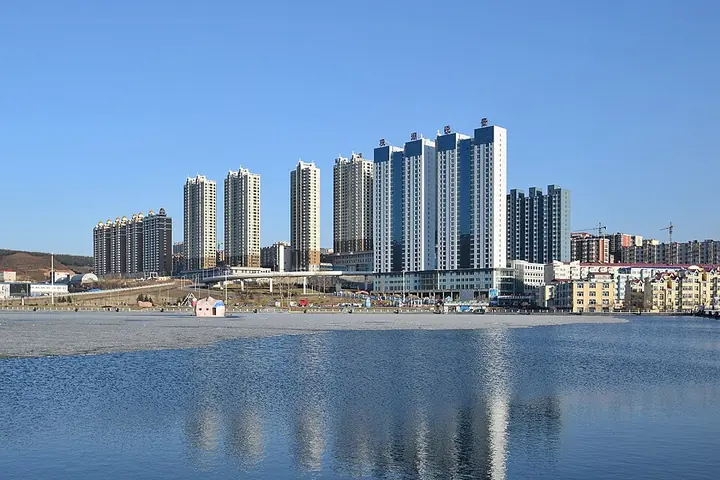
Photo adjustments
Full frame retained; proportionally resized and converted to WebP. No retouching or changes to the photographed subject. Card displays may crop the view.
- Administrative area
- County-level city · 县级市
- Part of
- Mudanjiang
- Chinese name
- 绥芬河市
- Local areas
- County-level city guide
Area & population
- Area in the source
- 460.00 km²
- Administrative seat
- Suifenhe Town (绥芬河镇)
Source: cited geographic source, as of the dates shown.
Setting and landscape
The city covers 422 square kilometres and is ringed by hills. Its two main rivers are the Xiao Suifen River (小绥芬河) and the Hancong River (寒葱河), which flows into it, and the city government puts forest cover at 75.85 percent. The name Suifen comes from a Manchu word for an awl, after a snail with a sharp, awl-like shell that lives in the Suifen River.
History
The area became a border region after the 1860 Treaty of Peking. Russian railway builders first put their station at Sanchakou (三岔口) in Dongning County (东宁县), then moved it 50 kilometres north to the present site. Between 1903 and 1933 envoys and merchants from 18 countries gathered here, and the flags over the streets earned it the nickname "Flag Town" (旗镇). After the Japanese army took the town in 1933 the railway link was cut, and trade with the Soviet Union stopped in 1935. More than 50 Communist revolutionaries, among them Zhou Enlai (周恩来), travelled through Suifenhe to and from Moscow for the party's Sixth Congress. The State Council made Suifenhe a city in 1975 and named it one of the first border cities opened to trade in 1992.
What to see
The historic district runs along Zhanqian Road (站前路), Guanghua Road (光华路), Yingxin Street (迎新街) and neighbouring streets, mostly around the Big White Building (大白楼). It holds six buildings under national protection, among them the old railway station, the Orthodox church, the former Russian émigré school, the Chichagov tea house and the former Soviet consulate.
The station, begun in 1899, closed in December 2015 after 116 years and now houses the Chinese Eastern Railway Memory Museum (中东铁路记忆馆). People's Daily's weekly describes it as the only station building left on the line with a large-span steel-beam roof. The Suifenhe Museum (绥芬河市博物馆) occupies the old émigré school and shows more than 3,000 objects in history, nature, art and modern sections.
At the road port, the National Gate scenic area (国门景区) has an old gate finished in 1991 and a 51.8-metre new gate in use since late 2014. Near the rail border, Tunnel No. 3 (三号洞), built in 1899, carries a double-gauge track: Russian-gauge outer rails, Chinese-gauge inner rails, still in use. A Russian bread bakery (列巴坊) on Dazhi Road (大直路) dates from 1910.
Highlights
- Suifenhe historic district 绥芬河口岸城市历史街区: Qing and Republican-era buildings around the Big White Building, six of them under national protection.
- Chinese Eastern Railway Memory Museum 中东铁路记忆馆: In the 1899 station building, which closed in 2015 after 116 years.
- Suifenhe Museum 绥芬河市博物馆: In the former Russian émigré school; more than 3,000 objects.
- National Gate scenic area 国门景区: Old gate of 1991 and new 51.8-metre gate at the road port.
- Tunnel No. 3 三号洞: 1899 railway tunnel with a double-gauge Russian and Chinese track, still in use.
Sources for this guide
基本市情_绥芬河市人民政府 · Suifenhe Municipal People's Government
历史沿革_绥芬河市人民政府 · Suifenhe Municipal People's Government
自然地理_绥芬河市人民政府 · Suifenhe Municipal People's Government
百年口岸_绥芬河市人民政府 · Suifenhe Municipal People's Government
在百年绥芬河站旧址感悟历史 · People's Weekly (People's Daily)
Original English written from the listed sources and checked sentence by sentence against quoted extracts by a separate reviewer. Updated 2026-09-24.
Explore Suifenhe
Core places to explore, with English and Chinese names.
Places to explore around Suifenhe
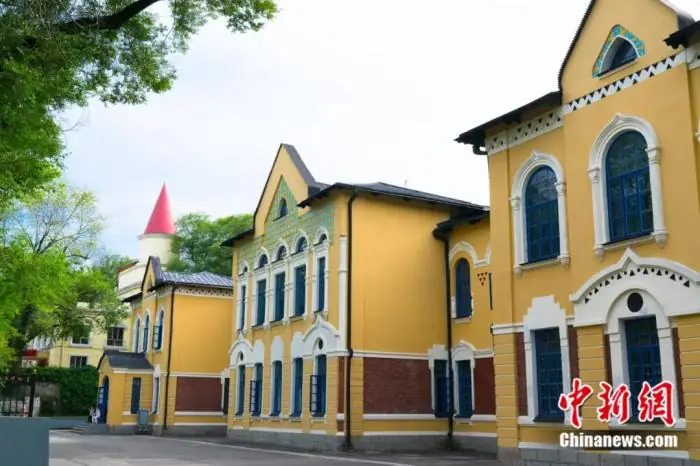 Suifenhe Port City Historic District ·
 Plan your visit
Getting there
Suifenhe is about 120 km in a straight line from central Mudanjiang. Search for 绥芬河市 in a map app to find stations and your accommodation.
Where to stay →Build your route
Start with Suifenhe Port City Historic District. The linked place guides have entrance and visit details.
Continue with Mudanjiang →More in Mudanjiang
Sources & geographic information
Administrative names and parent areas: Official geographic directory · Reference date 2026-09-06.
Photo: Suifenhe Port City Historic District · Source photographer · License not provided. EXIF orientation normalized; resized without changing aspect ratio; converted to WebP. No subject edits.
Map data © OpenStreetMap contributors. Pins mark approximate centres, not entrances or boundaries.