


Get to know Qinhuai District
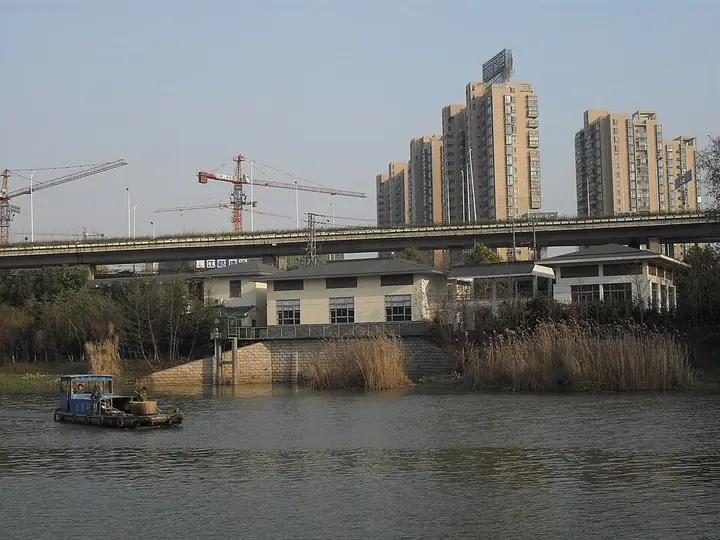
Photo adjustments
Full frame retained; proportionally resized and converted to WebP. No retouching or changes to the photographed subject. Card displays may crop the view.
- Administrative area
- District · 市辖区
- Part of
- Nanjing
- Chinese name
- 秦淮区
- Local areas
- District guide
Area & population
- Area in the source
- 49.11 km²
- Population · 2018
- 1,032,000
Source: cited geographic source, as of the dates shown.
History
The area's recorded history begins with the Yue city built by King Goujian of Yue (越王勾践) in 472 BC. In 229 the Eastern Wu made Jianye (建业) its capital, the first time Nanjing served as a Chinese capital; under the Eastern Jin and the Southern Dynasties the Qinhuai riverside grew into the wealthy quarter later remembered as 'the ten li of Qinhuai'. After the Ming made Nanjing its capital, the area became the city's core, with Confucian buildings and, around the Confucius Temple, taverns, teahouses and pleasure houses. Many old buildings were lost in the war against Japan, and from the 1980s the city restored the temple quarter as a historic tourist area. The present district was formed in 2013 by merging the old Qinhuai and Baixia (白下区) districts.
Writers from Li Bai (李白) to Du Mu (杜牧) and Zhu Ziqing (朱自清) visited and wrote about the area; the district government lists works such as Mooring on the Qinhuai (泊秦淮) and The Peach Blossom Fan (桃花扇) among them.
What to see
The Confucius Temple and Qinhuai River scenic belt (夫子庙—秦淮风光带) is a 5A scenic area and includes the Jiangnan Examination Hall (江南贡院), where the Nationalist government set up the Nanjing special municipality in 1927. The Zhonghua Gate barbican (中华门瓮城) is part of the Nanjing city wall. Laomendong (老门东), the old east-of-the-gate quarter, holds the Mustard Seed Garden (芥子园). The district government also lists the Gan Xi residence (甘熙宅第), the Wuchaomen site (午朝门遗址), the Great Bao'en Temple ruins (大报恩寺遗址), Chaotian Palace (朝天宫) and Zheng He Memorial Park (郑和遗址公园).
Chenguang 1865 (晨光1865), in the south of the district, occupies the Jinling Arsenal (金陵机器制造局) founded by Li Hongzhang (李鸿章) in 1865 and is now a creative-industry park. The 40th Qinhuai Lantern Festival (秦淮灯会) was lit at Bailuzhou Park (白鹭洲公园) on 21 January 2026.
Getting oriented
The district borders Jiangning (江宁区) to the east, reaches the outer Qinhuai River and Jianye (建邺区) in the west, and meets Xuanwu (玄武区) and Gulou (鼓楼区) along Zhongshan East Road and Hanzhong Road. It includes the Xinjiekou (新街口) and Confucius Temple shopping areas. Metro Lines 1, 2 and 3 meet in the district, and Nanjing South railway station lies next to it. Nanjing University of Aeronautics and Astronautics (南京航空航天大学) is among its 13 colleges.
Highlights
- Confucius Temple and Qinhuai River scenic belt 夫子庙秦淮风光带: 5A scenic area along the river, restored as a historic quarter from the 1980s.
- Zhonghua Gate barbican 中华门瓮城: Barbican gate on the Nanjing city wall.
- Laomendong 老门东: Old quarter east of the gate, with the Mustard Seed Garden.
- Great Bao'en Temple ruins 大报恩寺遗址: Listed by the district government among its main historic sights.
- Qinhuai Lantern Festival 秦淮灯会: Held for the 40th time in 2026, lit at Bailuzhou Park.
Sources for this guide
秦淮区 - 维基百科,自由的百科全书 · Chinese Wikipedia · CC BY-SA 4.0
秦淮简介 · Qinhuai District People's Government, Nanjing
第40届秦淮灯会点亮金陵拉开新春文旅序幕 · Qinhuai District Culture and Tourism Bureau
Original English written from the listed sources and checked sentence by sentence against quoted extracts by a separate reviewer. Updated 2026-09-25.
Explore Qinhuai District
Core places to explore, with English and Chinese names.
Places to explore around Qinhuai District
 Zhonghuamen Fortress · 中华门城堡
Zhonghuamen Fortress中华门城堡
Zhonghuamen Fortress (中华门城堡) is a Ming city gate whose three enclosed inner barbicans reveal how Nanjing's walls were designed to resist an attack.
Read the place guide →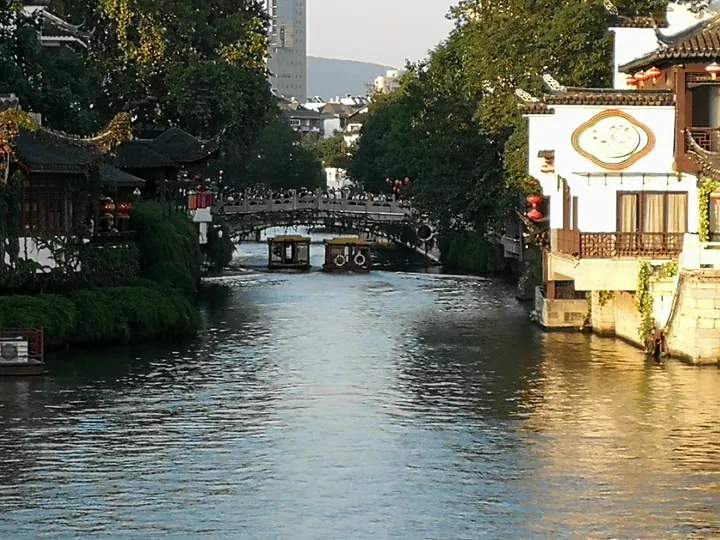 A canal in the Qinhuai River Scenic Belt by Fuzi Miao, with an arched stone bridge and riverside buildings, Qinhuai District, Nanjing · 南京市秦淮区夫子庙秦淮风光带,秦淮河石桥与沿岸建筑 Source-recorded photograph date: 2018-08-24 17:44:51.
Confucius Temple and Qinhuai River Scenic Area夫子庙秦淮风光带
The Confucius Temple–Qinhuai Scenic Area (夫子庙秦淮风光带) brings together temple courtyards, examination heritage and commercial streets along Nanjing's inner Qinhuai River.
Read the place guide → AI illustration · AI 示意图(仅供参考,非该地点实拍)
Dabao'en Temple Site Museum大报恩寺遗址博物馆
The Dabao'en Temple Site Museum (大报恩寺遗址博物馆) is a modern museum built over the archaeological remains of one of Ming Nanjing's major Buddhist complexes.
Read the place guide → Laomendong Historic District · 老门东
Laomendong Historic District老门东
Restored lanes inside Nanjing's south wall east of Zhonghua Gate, with a late-Qing merchant house, Li Yu's rebuilt garden and old-brand shops.
Read the place guide →Plan your visit
Getting there
Qinhuai District is about 7 km in a straight line from central Nanjing. Search for 秦淮区 in a map app to find stations and your accommodation.
Where to stay →Build your route
Zhonghuamen Fortress and Confucius Temple and Qinhuai River Scenic Area are both listed here. The linked place guides have entrance and visit details.
Continue with Nanjing →More in Nanjing
Sources & geographic information
Administrative names and parent areas: Official geographic directory · Reference date 2026-09-06.
Some facts checked against 秦淮区 — Wikipedia contributors, CC BY-SA 4.0.
Photo: Zhonghuamen Fortress · 东京村子 · CC BY-SA 3.0. EXIF orientation normalized; resized without changing aspect ratio; converted to WebP. No subject edits.

Photo: Confucius Temple and Qinhuai River Scenic Area · Liuxingy · CC BY-SA 4.0. Full frame retained; proportionally resized and converted to WebP. No retouching or changes to the photographed subject. Card displays may crop the view.

Photo: Laomendong Historic District · 西安兵马俑 · CC BY-SA 4.0. EXIF orientation normalized; resized without changing aspect ratio; converted to WebP. No subject edits.

Map data © OpenStreetMap contributors. Pins mark approximate centres, not entrances or boundaries.