


Get to know Qixia District
- Administrative area
- District · 市辖区
- Part of
- Nanjing
- Chinese name
- 栖霞区
- Local areas
- District guide
Area & population
- Area
- 395.44 km²
- Population · 2019
- 735,900
Source: English Wikipedia, as of the dates shown.
Qixia District (栖霞区, Qīxiá Qū) covers Nanjing's north-east, on the south bank of the Yangtze, and it holds more of the city's edges than any other district: the maple slopes and Buddhist rock carvings of Qixia Mountain, the riverside rocks and ferries of the Muyan belt, the container port at Longtan, the campuses and malls of Xianlin, and, out in the river, the market-garden island of Baguazhou. It measures 395.44 km² and counted 987,835 residents at the 2020 census; the district's own 2025 bulletin gives 1,027,800 residents, 94.06% of them urban.
Two things follow for a visitor. Nothing here is a walk from the city centre — Xianlin University Town alone is 15 km from Xinjiekou — and the district is not one destination. Plan separate outings rather than a single loop, and use the metro to move between them.
How the district divides
The land rises in the south and flattens in the north: rolling hills of roughly 50–300 m on the southern side, low riverside plain and river islands under 10 m on the northern side, and no low mountain above 300 m anywhere in the district. The Yangtze frontage runs over 80 km, the longest of any Nanjing district, and much of the district's identity sits along it.
- Xianlin 仙林 — the western quarter: the campuses of Nanjing University, Nanjing Normal University, Nanjing University of Posts and Telecommunications, Nanjing University of Finance and Economics and others, in a university town founded in February 2002. Metro Lines 2 and 4 run through it, and the district government sits at 文枢东路1号 in 仙林街道.
- Maigaoqiao and Yanziji 迈皋桥·燕子矶 — the north-west river edge: an older city fringe, the northern end of Line 1, and the Muyan riverside belt with Yanziji Park.
- Yaohuamen, Dingjiazhuang and Wanshou 尧化门·丁家庄·万寿 — centre-north: Line 7 territory, with the Line 6/7 interchange at 万寿 and the Nanjing East rail yard close by.
- Qixia Mountain and Ganjiaxiang 栖霞山·甘家巷 — the east: the mountain and its temple, the rebuilt Qixia old town, Happy Valley, and the Southern Dynasties stone carvings scattered through the lanes around Ganjiaxiang. Line 6 ends here.
- Longtan 龙潭 — the far east: the river port and most of the district's rice fields, with a summer lotus season at the 水一方 area.
- Baguazhou 八卦洲 — the island in the river: 56 km², seven villages and one community, about 37,000 people, reached by bridge, tunnel and ferry.
- Maqun and Xigang 马群·西岗 — the south-east: Line 2's 马群 station, the eastern end of Line 4, and the village of Huashu.
Distances are district-scale, not neighbourhood-scale. The eastern and western halves are more than an hour apart by metro, and the island and the far-east villages are bus or car trips.
Qixia Mountain: the temple, the cliff carvings and the maples
Qixia Mountain (栖霞山) is a national forest park of 1,019 hectares with 94.6% forest cover, three peaks and the main peak, Fengxiang Peak, at 286 m. More than eighty historical sites are recorded on it, and it carries a 4A rating; the district government quotes the Qianlong Emperor's phrase for it, "the first elegant mountain of Jinling".
The mountain's fame rests on two very different things. One is Qixia Temple (栖霞寺) at its western foot, founded in 489 — the seventh year of the Southern Qi Yongming era — on the private house of the recluse Ming Sengshao, from whose courtesy name the temple and later the district take their name. It became the ancestral temple of the Three Treatise school (三论宗); in the Tang dynasty it was known as Gongde Temple and counted among the "four great monasteries"; it was destroyed by war in 1130, rebuilt by the Ming founder in 1392 with more than 1,300 mu of granted fields, burned again in 1853 during the Taiping war, and rebuilt from 1919 by the monk Zongyang. Since 1983 it has been a Major Buddhist Temple of National Importance in Han Chinese Areas, and the Chinese Buddhist Academy's Qixia Mountain branch was founded there in the same year.
The second is the stone. Behind the halls stands the Thousand Buddha Cliff (千佛崖), begun in 489 and cut across several dynasties, with 515 figures still counted; the Sui-dynasty octagonal five-storey sarira stone pagoda (舍利塔) stands in the temple yard; and the Ming Zhengjun stele (明征君碑) stands at the front. The pagoda was listed as a national key cultural relic in 1988 and the cliff carvings and stele followed in 2001. When you look at the cliff, the point is the scale change: a few large seated figures with smaller rows packed in above and beside them, cut into the rock where it allowed. A wall painting found in the cliff in 2000, a "Qixia flying apsara", remains the only intact mural discovered in the grottoes.
The temple is also remembered for the winter of 1937, when, according to the account in its Chinese Wikipedia entry, about 20,000 refugees were taken in at Qixia Temple during the Nanjing Massacre; the story was filmed as Qixia Temple 1937 in 2005.
Walking it. The main approach is the west entrance on 栖霞街, where a tall timber-and-stone archway marks the gate. The temple halls rise in stages against the slope, the pagoda stands south-east of Pilu Hall, and paths continue up the mountain past the cliff carvings and on to the maple terraces and viewpoints higher up. An English-language guide puts the temple circuit at about an hour at a calm pace and recommends the western trail as the quieter way up.
When the maples turn. Colour starts in late October and usually peaks between mid-November and early December, shifting by one or two weeks with the first cold snap. The 2026 maple season opened on 18 October and runs to the end of the year, with performances, markets and an evening programme added around the mountain and the old town.
Tickets and hours. The district government's own page gives ¥50 on ordinary days and ¥80 during the maple festival. In the 2026 season the scenic area was selling a ¥99 daytime pass valid to 31 December for unlimited entry between 07:00 and 17:00 (evening sessions excluded), an ¥80 package combining one entry with a drink, and half-price entry for students below postgraduate level; entry was free for visitors aged 60 and over on 18 October 2026. Treat all of these as indicative and confirm on the official channel, because the mountain's pricing moves with the season.
Getting to the mountain. Metro Line 6, which opened on 29 September 2026, ends at 栖霞山 Qixiashan station on the north side of 栖霞大道, about 500 m from the scenic-area entrance and across the Jiu Township River (九乡河) from the mountain; the station's No. 1 exit is built in the shape of a sinan compass whose handle points at the mountain gate. Buses 138, 194, 195, 196, 206, 326 and 327 stop at 栖霞山站. Drivers should navigate to 栖霞山景区西门 — the west gate; the west and south gates are different entrances and the district lists parking near the west gate.
The river edge: Yanziji, Muyan and the water
The Muyan riverside belt (幕燕滨江风貌区), rated 3A, runs along the south bank from 上元门 in the west to Yanziji in the east, threaded by 永济大道 and backed by Mufu Mountain, the "ten-li long hill". The belt is about 6 km long and the district describes a 3.5 km cherry strip of more than forty varieties and about 5,000 trees along the water — the only river-view cherry avenue in China, by its account, flowering in spring.
Yanziji Park (燕子矶公园, 临江街3号, ¥10) is built around the rock that gives it its name: a spur of stone over the river, likened to a swallow about to fly, with three sides hanging over the water. Inside are the viewing points named in the park's own list — 燕矶临流, 燕矶夕照, 吞江醉石 — a pavilion holding a Qianlong inscription, cliff inscriptions, the "think before you die" stone written by the educator Tao Xingzhi, and the memorial to the victims of the Nanjing Massacre at the Yanziji riverbank. Buses 8, 101 and 125 stop at 燕子矶公园, and Line 1's 燕子矶 station serves the surrounding area.
Along the same road, the Yangtze Guanyin scenic area (长江观音景区, 永济大道9号, ¥30) gathers 观音阁, 头台洞, 二台洞, 三台洞 and a courtyard of its own; the Damo cave (达摩古洞, 永济大道19号, ¥30) is cut into the hillside above the river, with the "hundred Damo" carvings and a light-and-sound installation. The district's directions are: Metro Line 3 to 上元门, exit 2, then bus 307 to 五马渡, or bus 8 to 燕子矶 and bus 101 to 五马渡.
Five Horses Crossing (五马渡) is the old river crossing where, by tradition, the future Eastern Jin founder Sima Rui came ashore in 307. Its pier, 五马渡游轮码头 at 永济大道18号, is the departure point for the Yangtze Legend cruise: a 27 km daytime run of about two hours past Yanziji, Baguazhou, the Yangtze River Bridge and the old wharves, and a night route of about 30 km, at ¥128 per person. A ferry link between the Yanziji side and Baguazhou, the 燕八线, is also mentioned by the district government; check the current timetable at the pier rather than assuming a departure.
The Southern Dynasties carvings around Ganjiaxiang
Qixia District holds nearly half of all surviving Southern Dynasties spirit-way carvings, including all four complete stone steles of the period. Twenty-nine such sites survive in total — seventeen in Nanjing, twelve in Zhenjiang — and all are national key cultural relics. Most of the Nanjing group stands in Qixia's fields, parks, schoolyards and factory compounds.
They are not one site and cannot be seen in one stop. The named groups in the district include:
- Xiao Xiu (萧秀墓) at 甘家巷154号, in the grounds of the former Ganjiaxiang primary school — the fullest surviving group of its kind, with two stone lions, two columns and four steles.
- Xiao Dan (萧憺墓) and Xiao Hui (萧恢墓), both in Ganjiaxiang Park (甘家巷公园) off 岗龙线 and 恒祥路: two lion pairs set 19.6 m apart in one case, and the Xiao Dan stele, the Southern Dynasties stele with the most surviving text.
- Xiao Jing (萧景墓) beside 栖霞大道 at 十月村路 — the best-known of them, with a column and a single lion. Its east lion was adopted as the emblem of Nanjing city, and its 6.5 m column, cut with 24 flutes and a 23-character inscription in reversed script, is the best-preserved spirit-way column of the period. A line drawing of a monk on the column's panel, found during 1950s conservation work, is often cited as the finest surviving Buddhist drawing of the era.
- Xiao Hong (萧宏墓) in a small park in the university town, where the carvings stand on grass among apartment blocks; its east lion is regarded as the finest of the hornless stone beasts of the period, and it became the model for Nanjing University's emblem.
- Xiao Wei (萧伟墓) in a pocket park at 仙新路 and 恒飞路 in 尧化街道, where one column survives in part; Xiao Rong (萧融墓) inside the refinery primary school at 张家库; Xiao Zhengli (萧正立墓) on the Jiangsu Maritime Institute campus; Xiao Ying (萧暎墓) at 董家边村 north of Ganjiaxiang.
- The pair at Shizichong (狮子冲), south-east of Ganjiaxiang — a two-horned tianlu and a one-horned qilin in a valley — is now generally identified as the tomb of Xiao Tong, the Liang crown prince who compiled the Wen Xuan anthology, and his mother Consort Ding, rather than the tomb of the Chen emperor Wen it was once taken for.
Practically: no metro station stands beside any of them, and several sit inside school or factory grounds, so a car or taxi is the workable approach — give the driver the Chinese name of the tomb and ask at the gate before walking in. A cross-city protection regulation for these carvings, agreed by Nanjing and Zhenjiang, took effect on 1 March 2026; do not climb on the stone, touch it or take rubbings. The district's own conservation programme includes a security project for the Southern Dynasties carvings and reinforcement work at the Thousand Buddha Cliff, so individual carvings may be fenced or covered when you arrive.
Qixia old town, Happy Valley and Xianlin
At the foot of the mountain, beside the Jiu Township River, Qixia old town (栖霞古镇) opened in October 2023: a rebuilt lane-and-canal quarter with more than thirty businesses — the bookshop 钟书阁, 南京设计廊, 云几书房, cafés and teahouses — used for performances, markets and seasonal events. The district describes the old settlement as a river crossing and market town with some 2,000 years of history, tied to the Qin-dynasty ferry at Jiangcheng recorded in the Records of the Grand Historian.
Happy Valley (南京欢乐谷), rated 3A, sits east of the mountain in the Nanjing Economic and Technological Development Zone at 欢乐谷北路8号. It has six themed zones, more than forty rides and a "forest-and-sea" animal hall with over 200 species. The district's directions are Metro Line 2 to 经天路, exit 1, or Line 4 to 仙林湖, exit 2, then the park's shuttle; buses 344 (欢乐谷总站–九乡河西路总站) and 328 (欢乐谷总站–经天路地铁站西) also serve it.
Xianlin is the district's campus and retail quarter. The university town began in February 2002, and Nanjing's commerce bureau now groups its shopping cluster among the city's newer commercial districts, listing 金鹰湖滨天地, 万达茂 and 南京城北万象汇 among the malls that carry the area's youth-oriented events and, in winter, its ice rinks. The most interesting piece of station design in the district is at 万寿 Wanshou, the Line 6/Line 7 interchange: the station is built into the 万象汇 complex, with three exits opening onto the mall and its sunken plaza and two leading straight into its basement shops.
Baguazhou, Longtan and Huashu village
Baguazhou (八卦洲) is a 56 km² island in the Yangtze, described by the subdistrict government as the river's third-largest island and known locally as the "green island in the river" and "China's first township of lühao" — Artemisia selengensis, the spring vegetable sold in Nanjing as 八卦洲芦蒿. The island has seven villages, one community and about 37,000 residents, and sits roughly 9 km from the city centre. It is linked to the south bank by the Baguazhou Yangtze Bridge and the 和燕路过江通道 tunnel, and to the north bank by 浦仪公路; village buses in the 481–484 and 522–524 series run on the island. The district's 2025 figures put the lühao crop at 42,000 tonnes worth ¥430 million, now cold-chain graded and sold in city supermarkets. Note that the ranking is not settled: the island's Chinese Wikipedia entry calls it the fourth-largest in the Yangtze, behind Chongming, Yangzhong and Changxing.
Longtan (龙潭) in the far east is the district's port and farming edge — the container port is described by the district as the deepest inland river port in China, and most of Qixia's rice (the varieties 南粳5055 and 南粳46) is grown here. The 水一方 area holds a lotus season in summer, and the district's year runs through spring blossom at the mountain and temple, a Xianlin half-marathon, summer dragon boats and lotus, an autumn agricultural fair on Baguazhou and the maple festival, and a food festival in winter.
Huashu village (桦墅村) in 西岗街道 is the district's rural day out: 8.8 km² with 7,700 mu of hill woodland, a 70,000 m² reservoir, tree cover above 80%, an 11 km ridge trail, and small remains including 石佛庵, 点将台, 状元井 and 秦公桥. It is free to enter, and Metro Line 4's 西岗桦墅 station is at the village entrance; the district also lists bus 329 from Line 2's 经天路 station to 周村.
Getting there and around
Metro. Five lines serve the district. Line 6 opened on 29 September 2026 and runs from 南京南站 to 栖霞山, with 万寿 as its interchange with Line 7; the district's Qixia-side stations are 万寿, 燕江新城, 兴学路, 兴智街, 十月广场, 金陵石化 and 栖霞山. Line 1's northern extension (opened 28 December 2022) comes down the river edge through 八卦洲大桥南, 笆斗山, 燕子矶, 吉祥庵 and 晓庄, where it meets Line 7, then 迈皋桥. Line 7 begins at 仙新路 and runs through 尧化门, 尧化新村, 丁家庄南, 丁家庄, 万寿 and 晓庄. Line 2 runs east through 马群, 金马路 (interchange with Line 4), 学则路, 仙林中心, 羊山公园 and 南大仙林校区 to 经天路. Line 4 ends at 仙林湖, the district's only elevated metro station, with 西岗桦墅 serving the village of the same name.
From the airport. Line 6 and Line S1 run through as one service, so a train from 禄口国际机场 can reach 栖霞山 without a change at 南京南站 — on weekdays at peak hours some services also run a shorter 栖霞山–禄口机场 pattern. First trains leave 栖霞山 and 南京南站 at 06:00; the last train from 栖霞山 is at 23:00 and the last from 南京南站 towards the mountain at 23:38.
Rail. 仙林站 (Xianlin station) on the Shanghai–Nanjing intercity line stands at 学海路 and 宁镇公路 (G312), near Nanjing Technician College in the north of the university town. It is a small station with very few stops — the city's transport bureau put it at five trains a day — so check the timetable before building a plan on it. Nanjing's two main stations, 南京站 and 南京南站, are both outside the district and reached by metro.
Buses. 138, 194, 195, 196, 206, 326 and 327 to 栖霞山站; 8, 101 and 125 to 燕子矶公园; 101 and 307 to 五马渡; 344 and 328 for Happy Valley; 329 for Huashu village; the 481–484 and 522–524 series on Baguazhou.
Taxi or ride-hailing. There is no single drop-off for the district; give the driver the exact site in Chinese. Useful destinations: 栖霞山景区西门 (west gate), 栖霞古镇, 栖霞寺, 燕子矶公园, 长江观音景区, 达摩古洞, 五马渡游轮码头, 南京欢乐谷, 仙林中心地铁站, 桦墅村, 八卦洲街道, 萧景墓石刻 (甘家巷·十月村路) and 萧秀墓石刻 (甘家巷).
When to go, and how long to give it
Give Qixia two days as a minimum. One day for the mountain, the temple and the old town; a second for either the river edge — Yanziji, the Guanyin and Damo caves, a ferry or the river cruise — or the Southern Dynasties carvings, which need a car and half a day of short hops between lanes. Xianlin needs an evening at most unless you are visiting a campus. Baguazhou and Huashu are half-day trips each.
Autumn is the busiest season by a distance: the maple festival fills the mountain from late October, and the quietest hours are the first ones after the 07:00 opening on a weekday. Spring brings the cherry strip along the Muyan belt and the district's blossom festival; summer is hot, with lotus at the river and on the island; winter is bare and calm apart from the district's food festival and New Year temple visits.
Where to stay
Xianlin is the practical base, because Lines 2 and 4 meet there and the district's shops and restaurants are concentrated around it. The clearest internationally bookable property inside the district is the Holiday Inn Express Nanjing Happy Valley (南京欢乐谷智选假日酒店) at 官窑山路8号, run by IHG, which names 万达茂 as its nearest mall and runs a daily shuttle to Happy Valley. Staying near the mountain instead puts you at the gate for the 07:00 opening in maple season.
Guide sources
- 栖霞区 — 维基百科
- 南京市第七次全国人口普查公报 — 南京市统计局
- 2025年栖霞区国民经济和社会发展统计公报 — 栖霞区统计局
- 栖霞寺 — 维基百科
- 栖霞山 — 南京市栖霞区人民政府
- 南京栖霞山国家森林公园 — 江苏生态文明网
- 南京地铁6号线 — 维基百科
- 南京地铁6号线今日开通初期运营 — 南京市人民政府
- 全线开通!跟随规划视角读懂地铁6号线 — 南京市规划和自然资源局
- 南京地铁1号线 — 维基百科
- 南京地铁7号线 — 维基百科
- 南京地铁4号线 — 维基百科
- 南京地铁2号线 — 维基百科
- 幕燕滨江风貌区 — 南京市栖霞区人民政府
- 栖霞:传承千年文脉,讲好“长江故事” — 南京市栖霞区人民政府
- 守护神兽!全国首例石刻文物跨区域协同法规正式施行 — 扬子晚报·紫牛新闻
- 南京栖霞的南朝石刻 — 《民主》杂志
- 文学人文课程活动——“文学之都”六朝石刻访古 — 南京大学艺术学院
- 桦墅村 — 南京市栖霞区人民政府
- 八卦洲街道 — 南京市栖霞区人民政府
- 欢乐谷 — 南京市栖霞区人民政府
- 仙林大学城 — 维基百科
- 仙林站 — 维基百科
- 2026年南京栖霞山红枫系列活动汇总 — 南京本地宝
- “江山入戏”栖霞山2026红枫系列活动10月18日启幕 — 中国江苏网
- Qixia Mountain, Nanjing: Autumn Maple Temple Grove — China Travel Places
- 南京欢乐谷智选假日酒店 — IHG
- 迎接2026|“潮”商圈上新“景”,解锁迎新新体验 — 南京市商务局
- 八卦洲 — 维基百科
- Qixia, Nanjing — English Wikipedia
Explore Qixia District
Core places to explore, with English and Chinese names.
Places to explore around Qixia District
 AI illustration · AI
Plan your visit
Getting there
Qixia District is about 25 km (straight-line distance) from central Nanjing. Search for 栖霞区 in a map app to find stations and your accommodation.
Where to stay →Build your route
Start with Qixia Mountain and Qixia Temple. The linked place guides have entrance and visit details.
Continue with Nanjing →More in Nanjing
Sources & geographic information
Administrative names and parent areas: Official geographic directory (dmfw.mca.gov.cn) · Reference date 2026-09-06.
Background text adapted from Qixia, Nanjing — Wikipedia contributors, under CC BY-SA 4.0. Text has been shortened and reorganized; source revision 1365449603.
Map data © OpenStreetMap contributors. Pins mark approximate centres, not entrances or boundaries.
Image credits & notes (1)
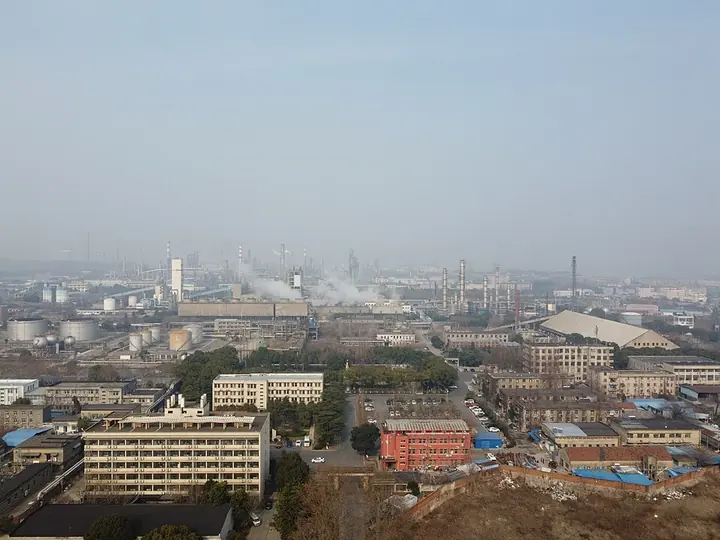
- Nanjing Refinery in Qixia District, Nanjing. Photograph date recorded by the source: 2022-01-16 13:45:31.Photo: 西安兵马俑 · CC BY-SA 4.0Resized for the web; the photo itself has not been edited. Thumbnails may show a cropped view.
