


Get to know Gulou District
- Administrative area
- District · 市辖区
- Part of
- Nanjing
- Chinese name
- 鼓楼区
- Local areas
- District guide
Area & population
- Area
- 54.18 km²
- Population · 2018
- 1,109,600
Source: English Wikipedia, as of the dates shown.
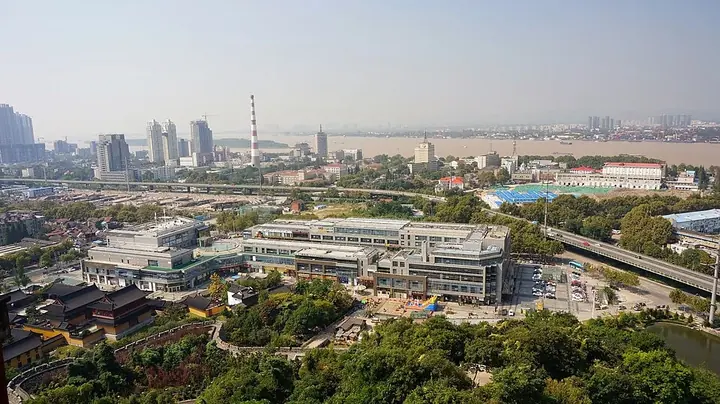
Gulou District (鼓楼区) is the part of central Nanjing that faces the Yangtze. The provincial government, several university campuses, the Republican-era villa streets around Yihe Road and the drum tower the district is named after all sit inland, while the river runs along its western and northern edge for about 12 km of the main city's frontage. The district took its present shape in 2013, when the old Gulou and Xiaguan districts were merged.
Where it sits
The district covers 54.18 km² on the south bank of the lower Yangtze, in the north-west of Nanjing's main city. Zhongyang Road (中央路) and Zhongshan Road (中山路) form its eastern edge against Xuanwu District; Hanzhong Road (汉中路) and Hanzhongmen Avenue (汉中门大街) close it to the south against Qinhuai and Jianye; the river does the rest, with Pukou opposite. The centre is hilly — Qingliang Hill (清凉山), Lion Hill (狮子山), Mufu Hill (幕府山) and smaller ridges — while the north and south of the district are flatter river plain.
Administratively it is 13 subdistricts (街道) and 120 communities. Two of them carry most of what a visitor comes for: Hunan Road (湖南路街道) inland, with Nanjing University, the Drum Tower and the surrounding hospital, office and shopping cluster; and Xiaguan (下关街道) on the river, with Yuejiang Tower, Lion Hill, Jinghai Temple and Tianfei Palace.
Three areas, not one
Gulou is too large to walk end to end. The riverside, the Republican-era core and the southern riverfront sit four to six kilometres apart, so plan them as separate outings and use the metro between them.
1. The inland quarter: the Drum Tower, Yihe Road and the campuses
The Drum Tower (南京鼓楼) was built in 1382 on the rise west of Beijige and was used for beating the hours and for ceremonial occasions. Its brick base is the Ming original — 44 m long, 8.9 m high, with three arched gateways through each of its north and south faces — while the timber hall above it was destroyed after the Ming fell and rebuilt in 1684 as Changguan Lou (畅观楼), named for the stele inside that records the Kangxi emperor's visit to Nanjing. The tower has stood in a public park since 1923 and is a nationally protected site.
West of it lies the Yihe Road historic district (颐和路公馆区), Nanjing's largest protected historic quarter. Its 285 courtyard buildings include 264 with Republican-era features and 225 under heritage protection: 24 former embassy compounds, eight legation sites and nine sites later used by embassies of countries along the Belt and Road. The streets themselves — Yihe Road (颐和路), Ninghai Road (宁海路), Jiangsu Road (江苏路), Guling Road (牯岭路) — are lined with plane trees and garden walls, and much of the housing is still in use as homes and offices. Two zones have been restored and opened: the Twelfth Zone, which received a UNESCO Asia-Pacific heritage award in 2014, and the Eleventh Zone, now an open courtyard used for exhibitions, cafés and restaurants. English-language guides treat the area as a street-level walk — walls, setbacks, street trees, villa gardens — rather than a set of interiors to tick off, and close-up photography of residents is not welcome.
The provincial government sits in the same quarter, and Nanjing University's Gulou campus, Hohai University, Nanjing Arts Institute and Nanjing Normal University's Suiyuan campus are all in or beside it. For shopping and eating, Hunan Road (湖南路) and Shanxi Road (山西路) are the district's commercial strip, with Shiziqiao Food Street (狮子桥美食街) running 330 m off Hunan Road past around 40 restaurants, teahouses and noodle shops. Hunan Road has been through a long redevelopment cycle: a road and utilities restoration project along roughly 1,073 m between Zhongyang Road and Zhongshan North Road was written into the city's 2026 work report, so parts of the street can be a worksite when you visit. Line 5 now connects the street's western end with Qingchun Square station (青春广场站).
2. The southern edge: Qingliang Hill, Stone City and the Qinhuai riverfront
Qingliang Hill (清凉山) and the old Stone City (石头城) stretch of the city wall stand on the district's south-western side, with the Qinhuai River running below them. Ninghai Road subdistrict, which reaches this far south, also contains the Shuimu Qinhuai art-and-food strip (水木秦淮艺术街区) on the riverbank — an evening option if you are staying inland. Line 2 runs along Hanzhong Road here, with Hanzhongmen (汉中门) and Shanghailu (上海路) stations on that stretch; because the road is the district boundary, exits can put you on either side of it.
3. The riverside: Lion Hill, Jinghai Temple and the Yangtze
The former Xiaguan area is now a single subdistrict: Xiaguan (下关街道) covers 3.74 km² from the Dabaonan Road and Jianning Road junction out to the riverbank at Jiangbian Road, and contains Yuejiang Tower, Lion Hill, Jinghai Temple, Tianfei Palace, a stretch of Ming city wall and the old Jiangnan Naval Academy.
Lion Hill (狮子山) is a 78.4 m hill with a 2 km circumference, and the Yuejiang Tower scenic area groups three sights on and around it: Yuejiang Tower (阅江楼), Tianfei Palace (天妃宫) and Jinghai Temple (静海寺). The tower was completed in 2001, giving built form to a project the Hongwu emperor ordered in 1374 and left unbuilt. As published by the scenic area, the tower costs ¥40, Tianfei Palace and Jinghai Temple are free, the tower opens 08:00–17:30 with last tickets at 17:00, Tianfei Palace 08:00–17:30, and Jinghai Temple 09:00–17:00, closing on Mondays. Students pay half at the tower with a student card, children under 1.40 m and visitors aged 70 and over enter free, and groups are asked to telephone a day ahead. The operator's own notices have also mentioned the south-gate hillside lift going out of service for maintenance, so check the current notice if steps are a problem.
Jinghai Temple (静海寺, 建宁路288号) is the historical heavyweight of the pair: founded in the Yongle period to mark Zheng He's voyages, it is where Chinese and British negotiators met in August 1842 before the Treaty of Nanjing was signed aboard HMS Cornwallis. It is now the Nanjing Jinghai Temple Memorial Hall, with a Zheng He hall, the Chaoyin Pavilion, the Sansuyan rock and the 1416 Tianfei Palace stele in its north courtyard, and it has been free to enter since 2008.
Down on the bank, Jiangbian Road links the glass walkway (玻璃栈道), the Xiaguan Railway Theme Park (下关火车主题公园) and Zhongshan Wharf (中山码头). The riverside park at the bridge's south tower — Nanjing Bridge Park, or Nanbao Park (南京长江大桥南堡公园) — has been closed for railway-safety reasons, since kites and drones are banned within 100 m of the line; provincial officials said in November 2024 that they were pushing to reopen it, but no date was set, so do not build a day around it.
The ferry between Zhongshan Wharf and Pukou Wharf (宁浦线) is a working commuter crossing rather than a cruise. From 1 October 2026 it runs 06:00–19:00: about every 20 minutes in the 07:00–09:00 and 16:00–19:00 peaks and about every 30 minutes at other times on weekdays, and every 30 minutes (hourly between 06:00 and 07:00) at weekends and on holidays, with 52 crossings a day. It lands beside the old Pukou railway station, which makes it a direct way to reach the far bank.
Also on the river side is the Memorial of the Victory of the Yangtze River Crossing Campaign (渡江胜利纪念馆) at 渡江路1号, which covers the 1949 crossing and the taking of Nanjing. It is free, opens Tuesday to Sunday 09:00–17:00 with last entry at 16:30, is closed on Mondays, and issues tickets against a passport or ID.
Putting a route together
A half-day inland: take Line 1 or Line 4 to Gulou station (鼓楼站), look at the Drum Tower, walk west along Beijing West Road into the Yihe Road loop, drop south to Hankou Road (汉口路) and Guangzhou Road (广州路) for the student streets, and finish at Shiziqiao for dinner.
A half-day on the river: take Line 5 to Jinghaisi station (静海寺站) for Jinghai Temple and Tianfei Palace, climb to Yuejiang Tower, then walk down to Jiangbian Road for the glass walkway and the railway theme park; either ride the G30 bus back or walk to Zhongshan Wharf and cross to Pukou by ferry.
Xuanwu Lake and Jiming Temple are one to three stops east of Gulou station on Lines 1 and 3, so the district pairs naturally with a lake-and-temple day; Fuzimiao and the Qinhuai district are a few stops south on Line 3 or Line 5.
Getting there and getting around
Metro. Six lines serve the district, and the interchanges make most combinations easy.
- Lines 1 and 4 meet at Gulou (鼓楼站), beside the Drum Tower.
- Line 4 runs west through Yunnanlu (云南路), Caochangmen (草场门) and Longjiang (龙江), the last near the Ming treasure-ship yard site.
- Line 5 runs from the river inland: Fangjiaying (方家营), Nanjing West Railway Station (南京西站), Jinghaisi (静海寺), Xiaguan (下关), Yancangqiao (盐仓桥), Fujianlu (福建路), Hongqiao (虹桥), Qingchun Square (青春广场, at the west end of Hunan Road), Yunnanlu (云南路, interchange with Line 4), Wutaishan (五台山) and Shanghailu (上海路).
- Line 7 crosses the district north to south: Mufushan (幕府山), Wutang Square (五塘广场), Mufuxi Lu (幕府西路), Zhongfulu (钟阜路), Fujianlu (福建路), Gupinggang (古平岗), Caochangmen (草场门) and Qingliangshan (清凉山).
- Line 3 clips the northern edge at Xiaoshi (小市) and Wutang Square (五塘广场) on its way to Nanjing Railway Station.
- Line 2 runs along the southern boundary road at Hanzhongmen (汉中门) and Shanghailu (上海路).
Rail. Nanjing Railway Station (南京站), in neighbouring Xuanwu District, is on Line 1 three stops north of Gulou station; Nanjing South Railway Station (南京南站), the high-speed hub, is on the same line to the south. Nanjing West Railway Station (南京西站) inside the district no longer handles passengers.
Bus. The G30 sightseeing line was added in August 2025 to link the riverside sights. It runs between Nanbao Park West (南堡公园西) and Changjiang Daqiao North (长江大桥北), calling at 玻璃栈道, 锦绣华府北, 下关火车主题公园, 中山码头北 and 阅江楼风景区东, from 09:00 to 17:00 in one direction and 09:40 to 17:40 in the other, at a flat ¥2. For the crossing memorial, buses 91, 104 and 133 stop at Zhenghe Nanlu (郑和南路), or take Line 4 to Longjiang and change to bus 91 or 133.
Taxi and ride-hailing. Give the driver a specific gate rather than the district name: 阅江楼景区东门 (Jianning Road), 静海寺 (建宁路288号), 南京鼓楼公园 (北京西路), 颐和路公馆区 (宁海路环岛) or 渡江胜利纪念馆 (渡江路1号). There is no drop-off at the bridge park, which is closed.
Ferry. Zhongshan Wharf (中山码头) is the district's water link to Pukou; see the timetable above.
Where to stay
The Hunan Road and Shanxi Road area is the most practical base: the subdistrict alone counts six star-rated hotels, and it sits between Gulou station on Lines 1 and 4 and Qingchun Square on Line 5, with Shiziqiao for eating. Longjiang, on Lines 4 and 7, is quieter and closer to the river-side museums. The Line 5 riverside stations (Xiaguan, Nanjing West Railway Station) put the Yangtze outside the door, though this is a working port and road corridor rather than a leisure strip.
Practical notes
Jinghai Temple and the crossing memorial both close on Mondays. Campus access is controlled and varies by university: Nanjing University's Gulou campus runs timed visitor reservations through its information portal (entry 08:30–17:00 in its first winter pilot, bookable up to seven days ahead), and in summer 2025 the university also admitted visitors without a booking on a plane or train ticket to or from Nanjing dated within three days; Hohai University asks visitors to have an internal contact arrange entry. Lion Hill and Qingliang Hill both involve steps, and the riverside is exposed in summer heat.
Guide sources
- 南京市鼓楼区人民政府 · 走进鼓楼(区位、面积、长江岸线)
- 南京市人民政府 · 区划人口
- 鼓楼区 (南京市) · 维基百科
- 鼓楼区人民政府 · 街道概况:湖南路街道
- 鼓楼区人民政府 · 街道概况:下关街道
- 鼓楼区人民政府 · 街道概况:宁海路街道
- 南京鼓楼 · 维基百科
- 人民网 · “双面”颐和路:历史建筑如何“活”在当下?
- ChinaGoTrip · Nanjing Travel Guide
- 狮子桥 (南京) · 维基百科
- 扬子晚报 · 助力商圈重回繁华 南京湖南路道路设施恢复即将启动
- 南京地铁2号线 · 维基百科
- 南京阅江楼风景区官网 · 首页
- 南京阅江楼风景区官网 · 票务服务
- 静海寺 · 维基百科
- 南京市交通运输局 · 新辟公交G30路观光线
- 新华日报 · 政风热线:南京大桥公园何时能重开?
- 轮渡宁浦航线运营时间调整(南京公交集团运营服务部)
- 南京市文化和旅游局 · 渡江胜利纪念馆
- 南京地铁官网 · 1号线线路简介
- 南京地铁5号线 · 维基百科
- 南京地铁7号线 · 维基百科
- 南京地铁4号线 · 维基百科
- 南京地铁3号线 · 维基百科
- 南京大学 · 南京大学开放校园参观预约
- 南京大学 · 高校大门,该如何“敞之有道”?
Explore Gulou District
Core places to explore, with English and Chinese names.
Places to explore around Gulou District
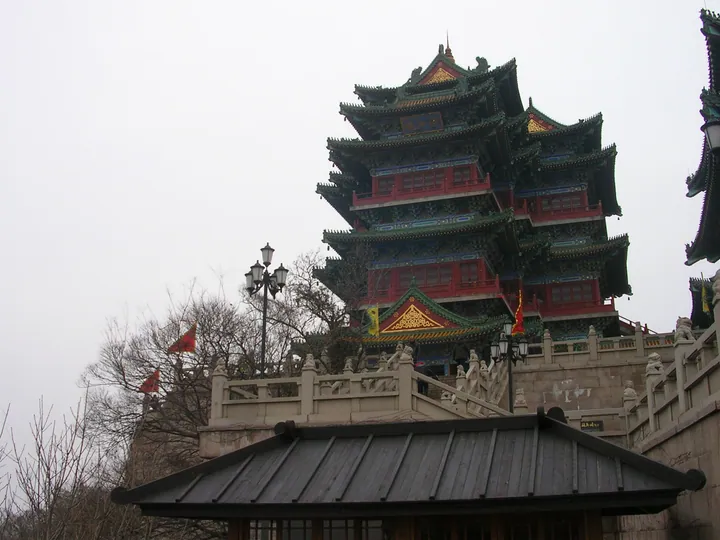 The multi-tiered tower of Yuejiang Lou, Gulou District, Nanjing · 南京鼓楼区阅江楼楼阁 Source-recorded photograph date: Taken on 8 February 2012.
Yuejiang Tower阅江楼
A modern, seven-tier tower on Nanjing’s Shizi Hill, built in 2001 to realize a Ming-era literary project and known for views over the Yangtze and Nanjing Yangtze River Bridge.
Read the place guide →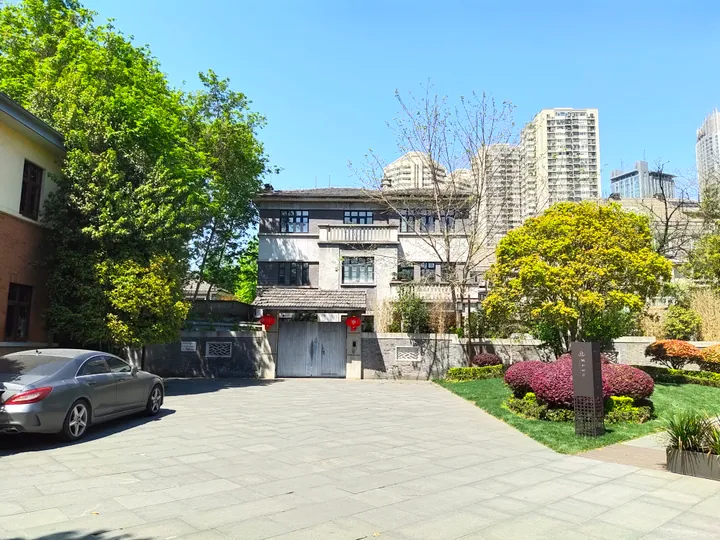 A restored Republican-era mansion in the Yihe Road Mansion District, Gulou, Nanjing · 南京鼓楼区颐和路公馆区内一栋修复后的民国建筑 Source-recorded photograph date: 2021-04-04 13:14:50.
Yihe Road Mansion District颐和路公馆区
A 13-sector historic quarter in Nanjing’s Gulou District, where Republican-era garden houses, courtyards and tree-lined streets form a residential landscape rather than one single mansion or gated attraction.
Read the place guide →Plan your visit
Getting there
Gulou District covers the centre of Nanjing. Search for 鼓楼区 in a map app to find stations and your accommodation.
Where to stay →Build your route
Yuejiang Tower and Yihe Road Mansion District are about 4 km apart (straight-line distance). The linked place guides have entrance and visit details.
Continue with Nanjing →More in Nanjing
Sources & geographic information
Administrative names and parent areas: Official geographic directory (dmfw.mca.gov.cn) · Reference date 2026-09-06.
Background text adapted from Gulou, Nanjing — Wikipedia contributors, under CC BY-SA 4.0. Text has been shortened and reorganized; source revision 1340342816.
Photo: Yuejiang Tower · 东京村子 · CC BY-SA 3.0. Resized for the web; the photo itself has not been edited. Thumbnails may show a cropped view.

Photo: Yihe Road Mansion District · 西安兵马俑 · CC BY-SA 4.0. Resized for the web; the photo itself has not been edited. Thumbnails may show a cropped view.

Map data © OpenStreetMap contributors. Pins mark approximate centres, not entrances or boundaries.
Image credits & notes (1)
- Urban neighbourhoods in Gulou District, Nanjing. Photograph date recorded by the source: 26 October 2014 (original upload date).Photo: Ben Bender · CC BY-SA 3.0Resized for the web; the photo itself has not been edited. Thumbnails may show a cropped view.
