


Get to know Chengcheng County

- Administrative area
- County · 县
- Part of
- Weinan
- Chinese name
- 澄城县
- Local areas
- County guide
Area & population
- Area
- 1,121.00 km²
- Population · 2017
- 393,224
Source: English Wikipedia, as of the dates shown.
For a first look at Chengcheng, use the county town as your practical base and then make the south-western trip to Yaotou Village. The Yaotou kiln complex (尧头窑) is about 10–11 km southwest of the county town. It is not just a single exhibition hall: the protected heritage landscape and the cultural-tourism park sit within a living village, so a useful visit combines the marked visitor facilities with quiet observation of lanes, homes and workshop fronts.
A county experience built around clay and fire
Recent reports count 129 kiln sites, 78 pottery workshops, 75 old dwellings, 17 temples and ancestral halls, and three pottery-shard deposits in the Yaotou heritage landscape. Do not turn that count into 129 separate attractions or assume that every kiln is open. Instead, look for the relationships that made the settlement work: brick-vaulted cave homes against the slopes, walls built from stacked saggars (the protective firing containers used around vessels), workshop spaces and the lanes connecting them. These details make pottery legible as a village economy rather than as one isolated display.
At an explicitly open kiln or courtyard, look at the firing marks on the walls and at the difference between a working space and a protected structure. A recent report describes heat-made marks that local guides read as landscape-like forms and a dragon-and-phoenix impression; treat these as firing effects and local interpretation, not as guaranteed painted murals. Yaotou remains a lived village. Ask before entering a private courtyard, active religious space or restricted heritage structure, and do not photograph residents or interiors without permission.
Reading the craft
The written history needs a careful distinction. Local records trace ceramic production to the Tang period, but a 2025 report notes that no securely identified Tang-period product has yet been found in the kiln area; the better-attested story becomes clearer in later periods, especially the Ming and Qing. The site is associated with black-glazed everyday wares, while white, celadon, blue-and-white and other products were also made. The four traditional kiln lines are described as bowl, jar, black-glazed and sand kilns.
If a workshop or non-heritage demonstration is running, follow the sequence rather than expecting a complete display of all 72 steps. The documented process includes selecting and kneading local clay, throwing and trimming a form, drying it, preparing and applying glaze, decorating, and firing in an inverted-flame, domed mantou kiln. Local accounts describe mineral and plant-based glaze materials and the way hand pressure, clay body, glaze and kiln atmosphere affect the result. The craft was added to China’s first national representative intangible-cultural-heritage list in 2006.
Compare ordinary forms first: vats, basins, bowls, jars and stoves explain why a northern folk kiln served daily life. Black-glazed animal-shaped jars, child seats, tea ware and small decorative pieces are documented examples, not a promise that every current workshop or sales display will stock them. Demonstrations, hands-on sessions and merchandise can change by day.
Access, entry and return
Keep the Chinese destinations ready in a map app: 澄城县 Chéngchéng Xiàn for the county town; 尧头窑文化旅游生态园区 Yáotóu Yáo Wénhuà Lǚyóu Shēngtài Yuánqū, 尧头窑 Yáotóu Yáo, or 陕西省渭南市澄城县尧头镇尧头村 Shǎnxī Shěng Wèinán Shì Chéngchéng Xiàn Yáotóu Zhèn Yáotóu Cūn for the kiln area. The park has been developed with a visitor service centre, a black-ware sales centre and a study base, but the accessible interiors and active workshops are not guaranteed on every date.
A public reference page lists a tourist bus line from the Weiyun Group Chengcheng Passenger Transport Branch on Dongliu Road (东六路). I could not verify a current route number, timetable, operating-day rule or return departure from an operator page, so treat this as a lead to check before relying on it. From Chengcheng town, a taxi or ride-hailing car showing the full Chinese destination is the practical final-leg option. Ask the driver to confirm the currently operating visitor entrance rather than dropping you at a generic village pin. Arrange the return car before walking into the wider village, or ask the operating visitor facility where a local vehicle can be called. Current minutes and fares are not stated because they were not independently verified.
There is no applicable metro station. A Weinan transport report names Weinan North Railway Station (渭南北站), Weinan Railway Station (渭南站) and other regional stations, but it does not establish a current onward rail or coach connection to Yaotou; do not treat any of those stations as the kiln-site entrance. Confirm the intercity leg to Chengcheng and the return connection before departure.
A public reference entry also lists 09:00–17:00 and free admission, but that page is not a current operator notice. Check opening hours, admission, reservations, the availability of kiln interiors and any passport or registration procedure for your travel date.
Explore Chengcheng County
Core places to explore, with English and Chinese names.
Places to explore around Chengcheng County
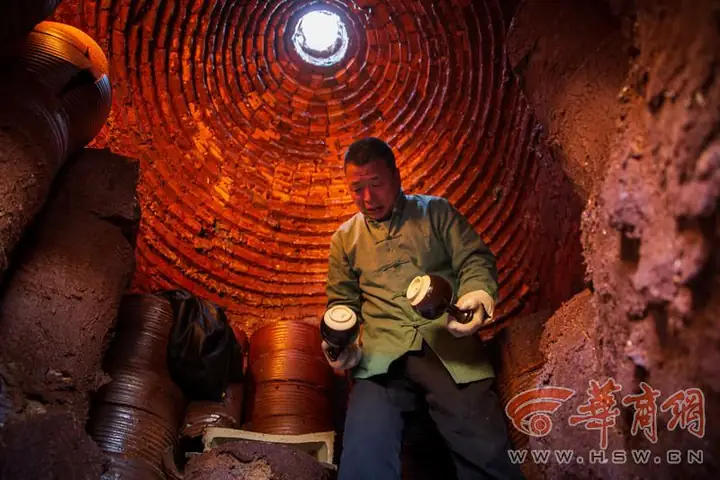 Yaotou Kiln Site ·
Plan your visit
Getting there
Chengcheng County is about 90 km (straight-line distance) from central Weinan. Search for 澄城县 in a map app to find stations and your accommodation.
Where to stay →Build your route
Start with Yaotou Kiln Site. The linked place guides have entrance and visit details.
Continue with Weinan →More in Weinan
Sources & geographic information
Administrative names and parent areas: Official geographic directory (dmfw.mca.gov.cn) · Reference date 2026-09-06.
Background text adapted from Chengcheng County — Wikipedia contributors, under CC BY-SA 4.0. Text has been shortened and reorganized; source revision 1331072070.
Photo: Yaotou Kiln Site · news.hsw.cn. Resized for the web; the photo itself has not been edited.
Map data © OpenStreetMap contributors. Pins mark approximate centres, not entrances or boundaries.
Image credits & notes (1)
- Representative view in Chengcheng County · 澄城县代表景观。村落中的古塔与树木Photo: huorensishi · CC BY-SA 3.0Resized for the web; the photo itself has not been edited.
