


Get to know Pucheng County
- Administrative area
- County · 县
- Part of
- Weinan
- Chinese name
- 蒲城县
- Local areas
- County guide
Area & population
- Area
- 1,583.58 km²
- Population · 2022
- 761,776
Source: English Wikipedia, as of the dates shown.
A county shaped by tablelands and imperial tombs
Pucheng is not a compact old town that can be covered on foot. The county lies where the Loess Plateau and the Guanzhong Plain meet. The official county profile describes a landscape dominated by tablelands, with higher ground in the northwest, lower river valleys to the east, and the Luo River and its tributaries running through the county. When travelling between the county seat and outlying sites, watch how the horizon changes from broad cultivated tablelands to the northern hills; that transition is part of the place, not just background scenery.
The county’s name also preserves its connection with the Tang imperial tombs. The government profile records that the county was renamed Fengxian in 716, taking its name from the idea of serving the imperial tomb at Fengshan, and returned to Pucheng in 971. This makes the tomb landscape more than a detached monument: it is part of the county’s historical identity.
Reading Qiaoling on foot
Qiaoling (桥陵), the tomb of Tang Emperor Ruizong Li Dan, is the county’s clearest first stop. On the approach, walk the spirit way slowly rather than treating it as a photo corridor. Look for the spacing and scale of the stone guardians, horses, human figures, lions and other animals, then compare the weathered surfaces with the open hills behind them. A People’s Daily report describes more than fifty surviving large stone sculptures, including thirty-eight arranged along a spirit way about 625 metres long and 110 metres wide.
The site is an exposed heritage landscape, not a reconstructed palace. Stay on marked paths, do not climb or touch the sculptures, and allow extra time for sun, wind and uneven ground. Current entrance arrangements, opening hours, tickets and any visitor restrictions were not established in the sources read for this county article, so check the official venue information before setting out. Qiaoling’s separate place guide should be used for the day’s site-specific details.
Beyond one mausoleum
The county profile lists four Tang imperial tombs and more than twenty associated burial mounds, together with memorial museums for Wang Ding, Lin Zexu and Yang Hucheng. It also lists the Beijing Time Museum and several natural areas, including Yaoshan and the Longshouba Black Canyon. These are a menu of possible extensions, not a promise that every venue is open on the same day. Choose one indoor museum or memorial stop if weather makes a long outdoor visit uncomfortable, and verify its current hours separately.
Pucheng also remains a working agricultural county. The official profile lists wheat and maize alongside apples, pears, dates, persimmons and other crops. In the county seat or a town market, notice the practical relationship between grain foods, orchard produce and daily shopping rather than expecting a staged “ancient town” performance. If you want a local food search, use the exact Chinese name 蒲城椽头馍 Púchéng Chuántóu Mó on Meituan (美团) or Amap/Gaode Maps (高德地图), then check the current menu, reviews, opening information and that day’s supply; this is a search method, not an endorsement of a particular shop.
Getting in and moving around
Pucheng County is a dispersed destination. A documented rail arrival is 蒲城东站 (Pucheng East Railway Station), a passenger station on the Baoxi Railway in Yaoshan Town’s Majia Village. A current station listing records two local connections from 蒲城火车东站 Púchéng Huǒchē Dōngzhàn: 蒲城2路 towards 中化蓝天公司站 Zhōnghuà Lántiān Gōngsī Zhàn and 蒲城副2路 towards 陈庄火车站 Chénzhuāng Huǒchēzhàn. The listing gives 06:50–19:00 as the operating window in the information it records, but that timetable is not a same-day guarantee.
Those bus endpoints do not by themselves prove a direct stop at your county-centre accommodation or at Qiaoling. For Qiaoling and other scattered sites, enter the exact Chinese destination—桥陵 Qiáolíng or the full name of your accommodation—into Amap/Gaode Maps and arrange a taxi or ride-hailing leg when needed. Before leaving, check the next train from 蒲城东站 Púchéng Dōng Zhàn and the return bus or taxi plan; do not assume a late evening local connection after the published bus window. No precise exit, journey time or fare is stated here because the opened evidence did not establish one.
International visitors should also confirm the current passport and ticketing procedure with China Railway 12306 or the station before travel. The sources read for this county confirm the station and local connections, but do not establish a passport-specific booking or station-entry rule.
Guide sources
Explore Pucheng County
Core places to explore, with English and Chinese names.
Places to explore around Pucheng County
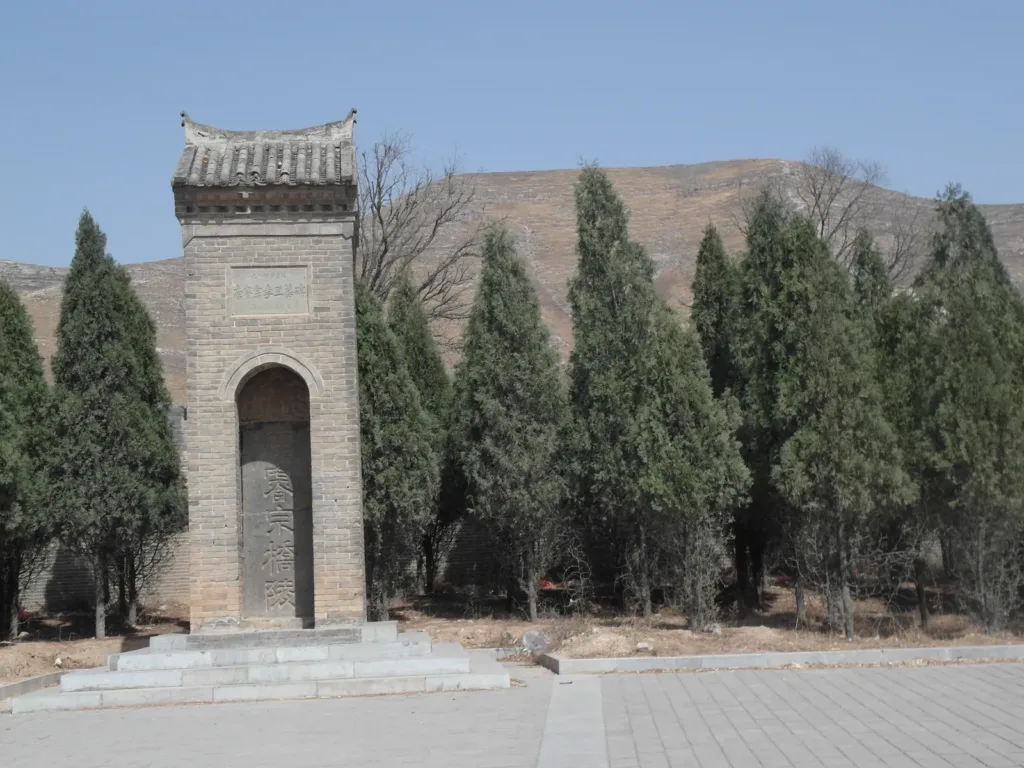 A gate structure bearing the inscription “Tang Ruizong Qiaoling” stands against Mount Feng at Qiaoling Mausoleum. Photo:
Plan your visit
Getting there
Pucheng County is about 50 km (straight-line distance) from central Weinan. Search for 蒲城县 in a map app to find stations and your accommodation.
Where to stay →Build your route
Start with Qiaoling Mausoleum. The linked place guides have entrance and visit details.
Continue with Weinan →More in Weinan
Sources & geographic information
Administrative names and parent areas: Official geographic directory (dmfw.mca.gov.cn) · Reference date 2026-09-06.
Background text adapted from Pucheng County, Shaanxi — Wikipedia contributors, under CC BY-SA 4.0. Text has been shortened and reorganized; source revision 1331070510.
Map data © OpenStreetMap contributors. Pins mark approximate centres, not entrances or boundaries.
Image credits & notes (1)
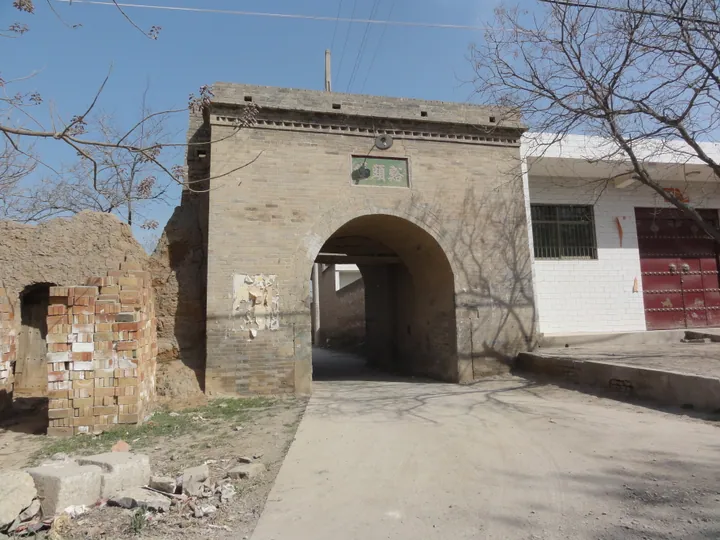
- The historic Xitoubao gate in Pucheng County · 蒲城县谿头堡门楼 Source-recorded photograph date: Taken on 4 April 2012.Photo: xfzxxd12 · CC BY-SA 3.0Resized for the web; the photo itself has not been edited. Thumbnails may show a cropped view.
