


Get to know Xindu District
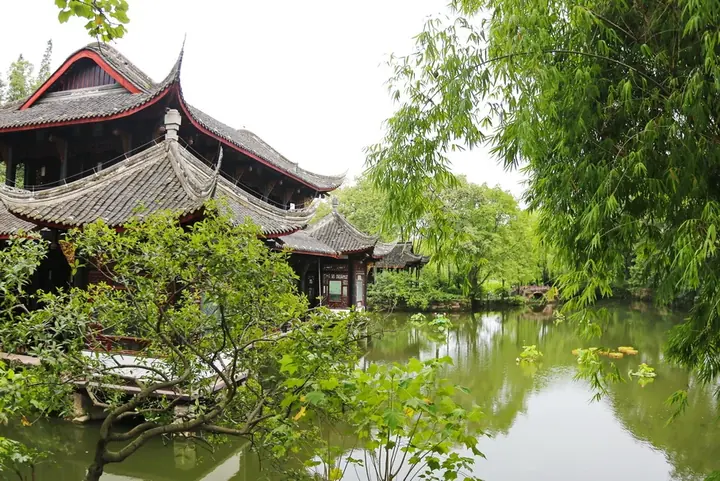
Photo adjustments
Full frame retained; proportionally resized and converted to WebP. No retouching or changes to the photographed subject. Card displays may crop the view.
- Administrative area
- District · 市辖区
- Part of
- Chengdu
- Chinese name
- 新都区
- Local areas
- District guide
Area & population
- Area in the source
- 497.00 km²
- Population · 2020 census
- 1,558,466
- Administrative seat
- Guihu Subdistrict
Source: cited geographic source, as of the dates shown.
Setting and landscape
The district lies on the western Sichuan plain (川西平原) within the gravity-fed irrigation area of Dujiangyan (都江堰), and has long been known as a grain and oil producing area. The Qingbai River (清白江) runs through the north, the Pi River (毗河) through the south, and a branch canal of the Jinshui River (锦水河) through the middle.
History
Tradition holds that the Kaiming (开明) rulers of Shu built a new capital here around the seventh century BC, naming it to set it apart from the older capital at Pi (郫). The Qin state set up Xindu County in 221 BC. People's Daily calls Xindu one of the "three capitals of ancient Shu" (古蜀三都), with more than 2,800 years as a town. The county became a district of Chengdu with State Council approval in 2001, and the district formally came into being on 1 January 2002.
What to see
Guihu Park (桂湖公园), a classical garden of more than 70 mu, keeps a stretch of Ming-dynasty city wall about 800 m long. It was the study garden of Yang Shen (杨慎), known as Yang Sheng'an, the only Ming top-ranked imperial examination graduate from Sichuan, who grew lotus there; his memorial hall stands in the park. Together as the Yang Sheng'an Shrine and Guihu (杨升庵祠及桂湖) they are a nationally protected heritage site.
Baoguang Temple (宝光寺) was listed as a national key heritage site in 2001. Its 13-tier relic pagoda, first built in the Tang dynasty, leans and is called the "leaning tower of the East"; the Arhat Hall holds 557 figures of bodhisattvas, arhats and patriarchs. Longzang Temple (龙藏寺) is also nationally protected, and Xinfan Donghu (新繁东湖), the East Lake at Xinfan, is a provincial heritage site. Xindu Museum (新都博物馆) holds 1,601 items or sets, 37 of them first-grade relics, including an Eastern Han pottery storyteller figure and Han stone coffins.
Food and local products
Xinfan palm-fibre weaving (新繁棕编) is on the third national list of intangible cultural heritage. Local products include the Xindu pomelo (新都柚), five-spice Jingou dried tofu (五香金钩豆腐干), which won a gold medal at the 1915 international exposition in San Francisco, almond sweet bean paste (杏仁甜豆瓣), Qingliu pressed duck (清流板鸭), Xinfan pickles (新繁泡菜) and Baoguang Chan tea (宝光禅茶).
Getting oriented
The Xi'an–Chengdu high-speed railway stops at Xindu East station and the Baoji–Chengdu railway at Xindu station. Chengdu Metro lines 3 and 5 reach the district, as do the Chengdu–Mianyang section of the Beijing–Kunming expressway and the Chengdu ring expressway.
Highlights
- Guihu Park 桂湖公园: Classical garden with about 800 m of Ming city wall and the memorial hall of Yang Shen.
- Baoguang Temple 宝光寺: National key heritage site since 2001, with a leaning Tang-era relic pagoda and an Arhat Hall of 557 figures.
- Xinfan Donghu 新繁东湖: Provincial heritage site in the Xinfan area.
- Xindu Museum 新都博物馆: 1,601 items or sets, 37 of them first-grade relics.
- Xinfan palm-fibre weaving 新繁棕编: On the third national intangible heritage list.
Sources for this guide
新都区 - 维基百科,自由的百科全书 · Wikipedia (Chinese) · CC BY-SA 4.0
唱响历史文化IP,焕新城市文脉活力_人民日报 · People's Daily
宝光寺 - 维基百科,自由的百科全书 · Wikipedia (Chinese) · CC BY-SA 4.0
Original English written from the listed sources and checked sentence by sentence against quoted extracts by a separate reviewer. Updated 2026-09-25.
Explore Xindu District
Core places to explore, with English and Chinese names.
Places to explore around Xindu District
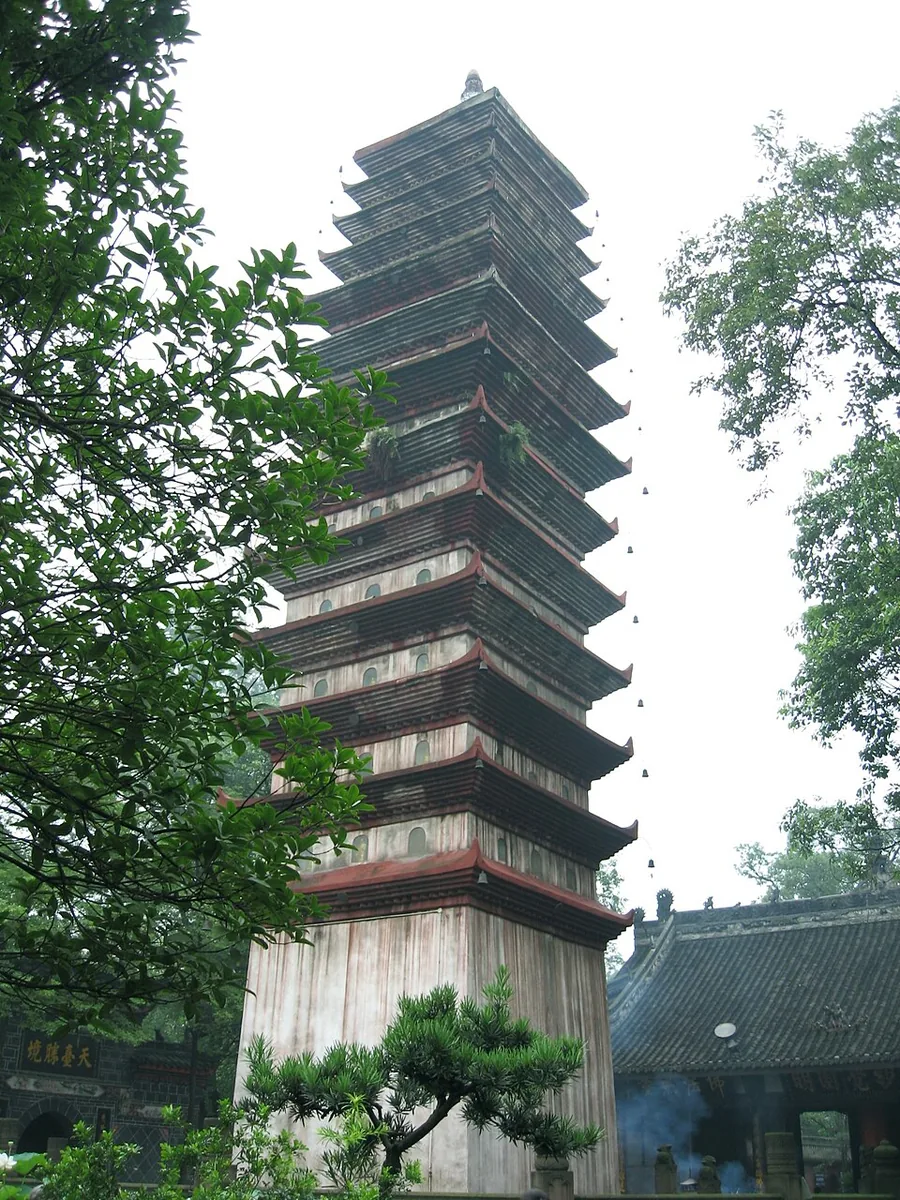 Baoguang Temple · 宝光寺. Photo: 2006-08-19.
Baoguang Temple宝光寺
Baoguang Temple in Xindu is recognised by its central multi-eaved stupa and a large arhat hall. The solid pagoda is viewed from outside, where the closely spaced roofs and slight lean are visible. Inside the Arhat Hall, clay…
Read the place guide →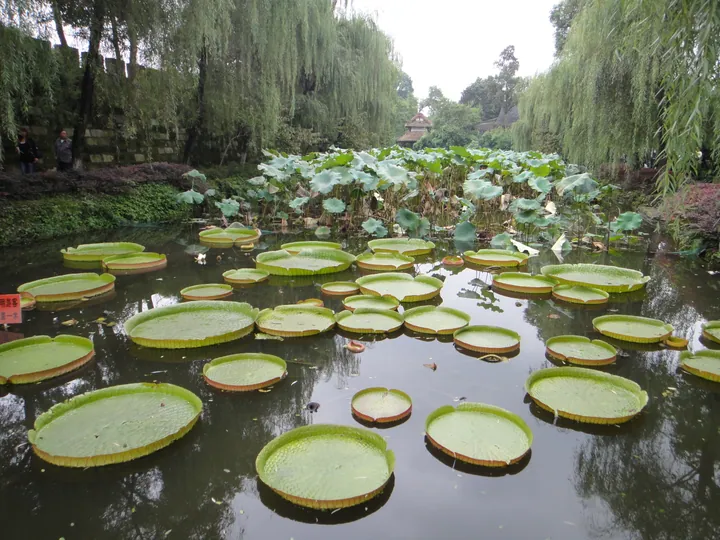 Giant water lily pads on the pond at Guihu Park, Xindu District · 新都区桂湖公园池塘中的王莲 Source-recorded photograph date: Taken on 2 October 2012.
Guihu Park桂湖公园
Guihu is Xindu’s historic garden associated with the Ming scholar Yang Shen, also known as Yang Sheng’an. The lake, covered links and pavilions create a compact classical garden, while the museum introduces Yang Shen, his wife…
Read the place guide →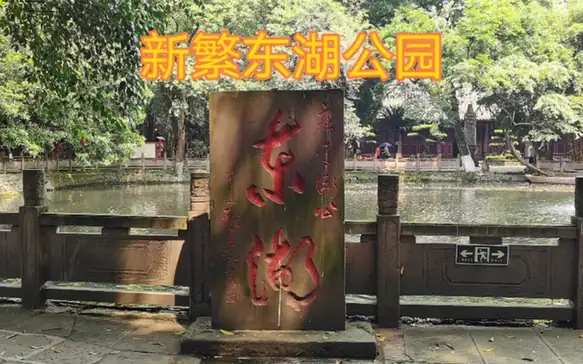 Xinfan East Lake Garden · 新繁东湖
Xinfan East Lake Garden新繁东湖
Xinfan East Lake is a small historic garden whose lake, pavilions and memorial halls connect landscape with local literary memory. It is traditionally associated with Tang statesman Li Deyu, although the attribution is disputed…
Read the place guide → Nibatuo Scenic Park · 泥巴沱风景区
Nibatuo Scenic Park泥巴沱风景区
Nibatuo occupies a bend of the Pi River south of Xindu, where the water curves around a peninsula. The old river-trade setting has become a recreation landscape with bamboo, woodland and waterside paths. The river bend is the…
Read the place guide → Baoguang Temple and Guihu Lake (宝光寺与桂湖), Xindu District. Photograph: "Sheng".
Baoguang Temple and Guihu Lake宝光寺与桂湖
Baoguang Temple stands on Baoguang Avenue in Xindu District, Chengdu: a Chan Buddhist monastery said to have been founded in the Eastern Han, already called Baoguang under the Tang, and destroyed and rebuilt repeatedly between the Tang and the Ming; most of the buildings standing today are Qing work.
Read the place guide →Plan your visit
Getting there
Xindu District is about 20 km in a straight line from central Chengdu. Search for 新都区 in a map app to find stations and your accommodation.
Where to stay →Build your route
Baoguang Temple and Guihu Park are about 1 km apart in a straight line. The linked place guides have entrance and visit details.
Continue with Chengdu →More in Chengdu
Sources & geographic information
Administrative names and parent areas: Official geographic directory · Reference date 2026-09-06.
Some facts checked against 新都区 — Wikipedia contributors, CC BY-SA 4.0.
Some facts checked against 宝光寺 — Wikipedia contributors, CC BY-SA 4.0.
Photo: Baoguang Temple · BenBen · CC BY-SA 2.5. Converted to WebP and resized without changing the subject or cropping the source frame.

Photo: Guihu Park · C.M. Osman · CC BY-SA 3.0. Full frame retained; proportionally resized and converted to WebP. No retouching or changes to the photographed subject. Card displays may crop the view.

Photo: Xinfan East Lake Garden · Source photographer · License not provided. EXIF orientation normalized; resized without changing aspect ratio; converted to WebP. No subject edits.
Photo: Nibatuo Scenic Park · Source photographer · License not provided. EXIF orientation normalized; resized without changing aspect ratio; converted to WebP. No subject edits.
Photo: Baoguang Temple and Guihu Lake · 本本一世 · CC BY-SA 3.0. Full frame retained; EXIF orientation normalized, proportionally resized to at most 800 pixels and converted to WebP. No generated pixels or subject changes. Cards may crop the display.

Map data © OpenStreetMap contributors. Pins mark approximate centres, not entrances or boundaries.