


Get to know Emeishan
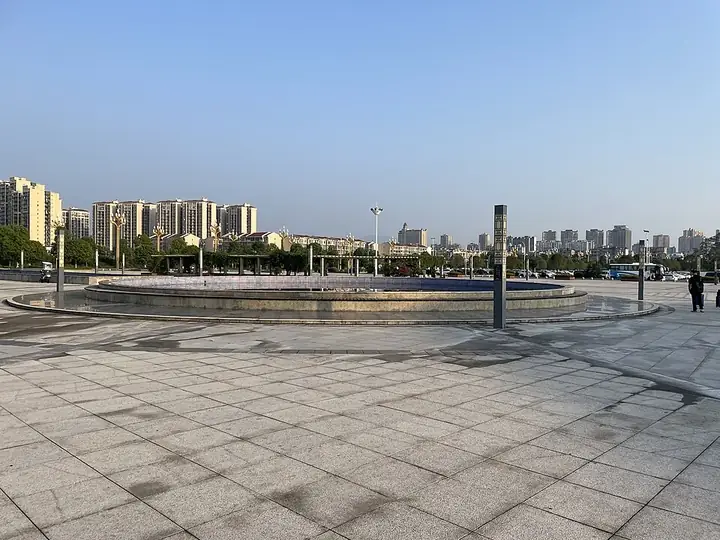
Photo adjustments
Full frame retained; resized proportionally to a maximum dimension of 960 pixels and converted to WebP quality 88. No crop, retouch, generated elements, or subject alteration. Final website rendition: full frame retained, proportionally resized to at most 720 pixels and converted to WebP. No additional retouching or subject alteration. Card displays may crop the view.
- Administrative area
- County-level city · 县级市
- Part of
- Leshan
- Chinese name
- 峨眉山市
- Local areas
- County-level city guide
Area & population
- Area in the source
- 1,151.40 km²
- Population · 2020
- 419,107
- Administrative seat
- Suishan
Source: cited geographic source, as of the dates shown.
History
Emei County was created under the Sui in 593 and became a city in September 1988. Mount Emei, one of China's four famous Buddhist mountains, was inscribed as a World Cultural and Natural Heritage site in December 1996. The city government names Li Bai (李白), Lu You (陆游) and Xu Xiake (徐霞客) among the figures of the past who lingered on the mountain and left lines about it.
Setting and landscape
The scenic area on Mount Emei covers 154 square kilometres. Its highest peak, Wanfo Ding (万佛顶), rises to 3,099 metres, while the Golden Summit (金顶) at 3,077 metres is the highest point most visitors reach. Because the mountain is so steep, its climate changes with height, and land above 2,000 metres is usually under snow and ice from October to April. The city government counts more than 3,700 wild plant species, about a tenth of China's total, and notes that a giant panda was found in Suishan (绥山镇) in 1992.
What to see
Baoguo Temple (报国寺), at the foot of the mountain, is the usual gateway. Founded in the Wanli years of the Ming, it was renamed by the Kangxi emperor; its halls climb one behind another along a central axis. Qingyin Pavilion (清音阁) stands at 710 metres where the Black and White streams meet; at the confluence below it lies a large rock shaped like an ox heart, Niuxin Rock (牛心石). On the summit, Huazang Temple (华藏寺) dates from the Tang, and the Golden Summit is the place for the sunrise, the sea of clouds and the "Buddha's glory" (佛光) halo.
The five national protected sites in the city include the Feilai Hall (飞来殿), the bronze and iron Buddhas of Wannian Temple (万年寺), and the bronze pagoda and bronze bell of Shengji Temple (圣积寺). Emei martial arts (峨眉武术) is on the national intangible-heritage list. Besides the 5A scenic area of the mountain, the Great Buddha Monastery (大佛禅院) is a 4A scenic area. Southwest Jiaotong University has an Emei campus at the foot of the mountain.
Food and local products
Emei sweet rice cake (峨眉糕), Emeishan tea (峨眉山茶), Emeishan Zhuyeqing tea (峨眉山竹叶青茶) and Emeishan snow konjac (峨眉山雪魔芋) are all Chinese geographical-indication products.
Highlights
- Golden Summit 金顶: At 3,077 metres, the viewpoint for sunrise, the sea of clouds and the Buddha's glory.
- Baoguo Temple 报国寺: Ming temple at the foot of Mount Emei, renamed by the Kangxi emperor.
- Qingyin Pavilion 清音阁: Temple at 710 metres where the Black and White streams meet.
- Wannian Temple 万年寺: Its bronze and iron Buddhas are a national protected site.
- Great Buddha Monastery 大佛禅院: 4A scenic area of Buddhist culture.
- Emei sweet rice cake 峨眉糕: Chinese geographical-indication product.
Sources for this guide
峨眉山市地情概况 · Emeishan City People's Government
峨眉山 - 维基百科,自由的百科全书 · Wikipedia (Chinese) · CC BY-SA 4.0
峨眉山市 - 维基百科,自由的百科全书 · Wikipedia (Chinese) · CC BY-SA 4.0
Original English written from the listed sources and checked sentence by sentence against quoted extracts by a separate reviewer. Updated 2026-09-25.
Explore Emeishan
Core places to explore, with English and Chinese names.
Mount Emei 峨眉山
Baoguo Temple 报国寺
Wannian Temple 万年寺
Golden Summit 金顶
Emeishan Great Buddha Monastery 大佛禅院
Fuhu Temple 伏虎寺
Hongchunping Temple 洪椿坪
Xixiangchi Temple 洗象池
Xianfeng Temple 仙峰寺
Leiyin Temple 雷音寺
Chunyang Hall 纯阳殿
Huayanding Temple 华严顶
Qingyin Pavilion Scenic Area 清音阁风景区
Bailong Cave Temple 白龙洞寺院
Mount Emei Museum 峨眉山博物馆
Jieyin Hall 接引殿
Places to explore around Emeishan
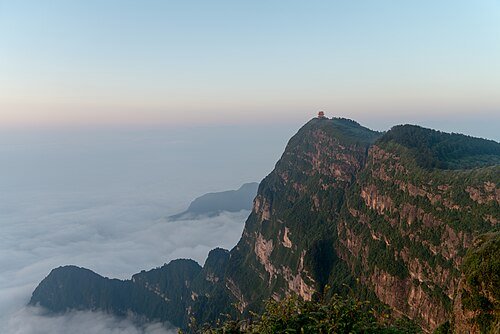 Wanfo Summit on Mount Emei above a sea of clouds.
Mount Emei峨眉山
Mount Emei combines Buddhist pilgrimage places with a large, varied mountain landscape. Temples occur at different elevations, so a visit can concentrate on religious architecture, forest walking or the high mountain, each with…
Read the place guide → The entrance of Baoguo Temple at Mount Emei, Sichuan; 19 September 2017.
Baoguo Temple报国寺
Baoguo Temple stands in the visitor area at the foot of Mount Emei. Its sequence of halls moves from Maitreya to the principal Buddhist figures and the Seven Buddha Hall, making it a useful introduction to the mountain’s…
Read the place guide →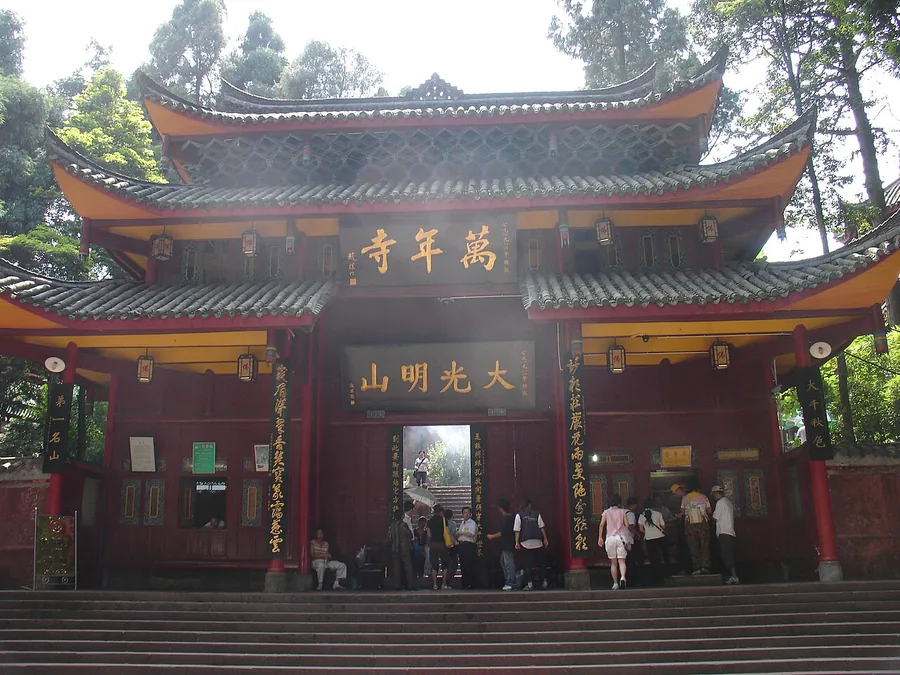 The entrance hall of Wannian Temple on Mount Emei, June 2006.
Wannian Temple万年寺
Wannian Temple’s defining building is the Beamless Brick Hall: a domed masonry structure whose walls imitate details normally made in wood. Inside, the bronze Samantabhadra rides an elephant beneath the dome. The contrast…
Read the place guide →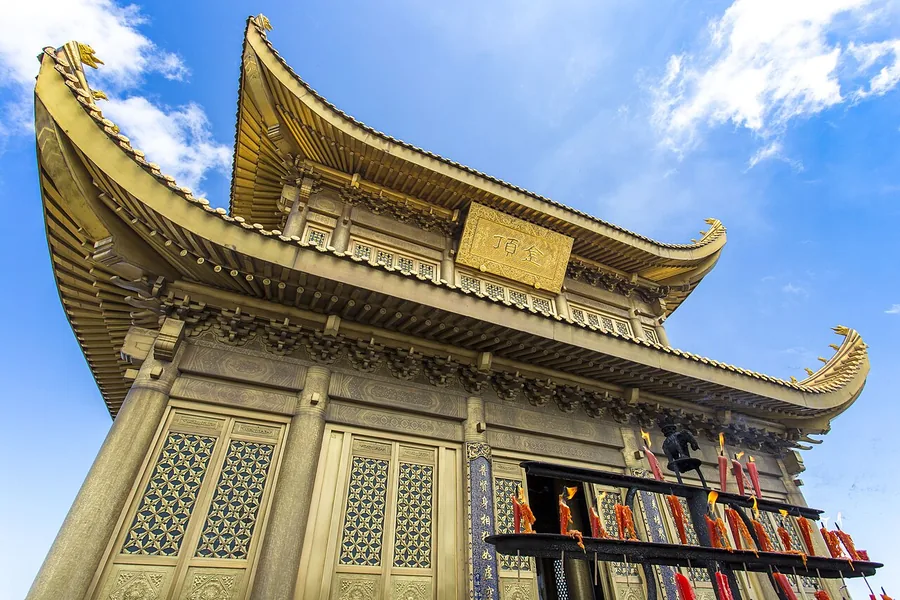 A gilded Buddhist hall on Golden Summit, Mount Emei, Sichuan; 7 August 2016.
Golden Summit金顶
The Golden Summit is Mount Emei’s high visitor precinct, combining broad mountain views with the Huazang Temple complex. The large Ten-faced Puxian monument marks the lower part of the religious axis, followed by the main hall…
Read the place guide →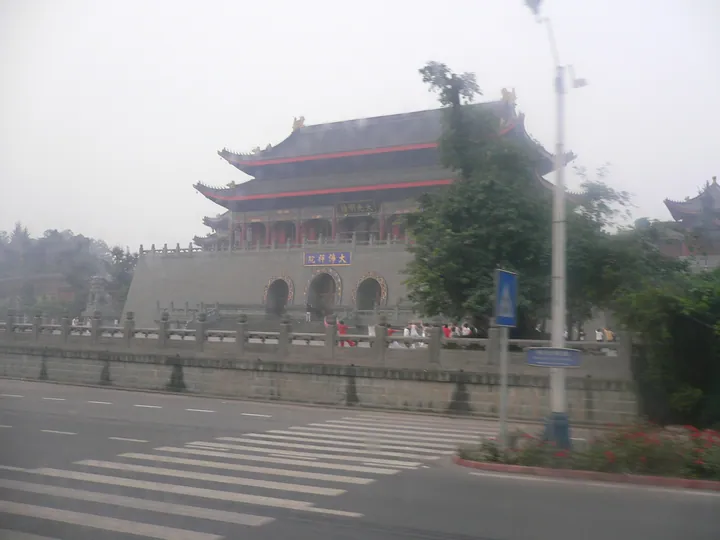 The main gate hall of Emeishan Great Buddha Monastery · 峨眉山市大佛禅院山门 Source-recorded photograph date: Taken on 16 July 2005.
Emeishan Great Buddha Monastery大佛禅院
Dafo Monastery is a large Buddhist complex in Emeishan city, separate from the Giant Buddha carved into the cliffs at Leshan. The present southern-city complex opened in 2008 as a reconstruction of a monastery with earlier…
Read the place guide →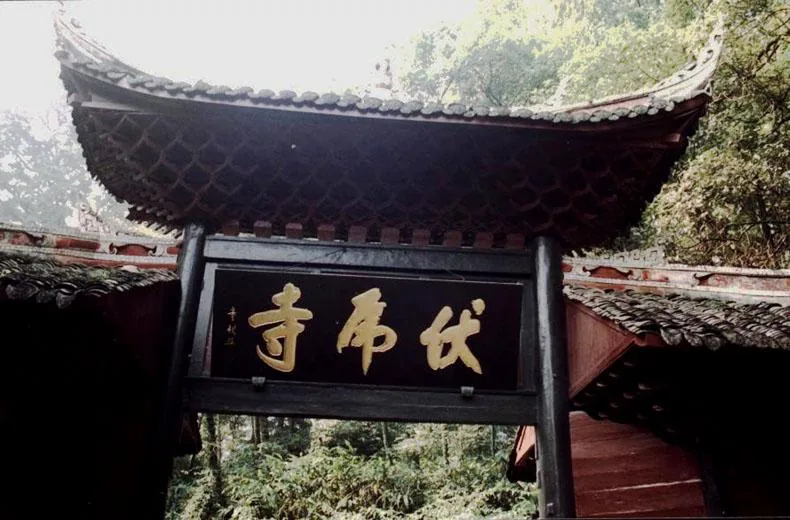 The name-bearing entrance gate of Fuhu Temple on Mount Emei, October 2006.
Fuhu Temple伏虎寺
Fuhu Temple sits in the lower forests of Mount Emei near Baoguo Temple, making it a rewarding introduction to the mountain’s monastic landscape without travelling to the summit. The halls follow a ceremonial sequence through the…
Read the place guide → The forest approach and entrance gateway at Hongchunping Temple on Mount Emei. Photographed on 26 April 2014.
Hongchunping Temple洪椿坪
Hongchunping, also called the Thousand Buddha Monastery, is a forest temple on Mount Emei’s longer western walking route. Its name recalls the old chun trees associated with the site, while the arrangement of Guanyin, main and…
Read the place guide → Snow-covered roofs at Xixiangchi, the Elephant Bathing Pool monastery on Mount Emei. Photographed on 1 April 2006.
Xixiangchi Temple洗象池
Xixiangchi, the Elephant Bathing Pool, is an upper-mountain temple associated with a story of Samantabhadra washing his white elephant in a six-sided stone pool. The story explains the name; it is a religious tradition rather…
Read the place guide → Xianfeng Temple · 仙峰寺
Xianfeng Temple仙峰寺
Xianfeng Temple is a remote-feeling stage of Mount Emei’s forest ascent, associated with the scenic name Jiulao Xianfu and the nearby Jiulao cave. The temple’s surviving historic buildings and mountain setting make it a cultural…
Read the place guide → AI illustration · AI 示意图(仅供参考,非该地点实拍)
Leiyin Temple雷音寺
Leiyin Temple stands on Jietuo Slope beneath Yunu Peak, along Mount Emei’s lower walking route above Fuhu Temple. Its alternative name, Jietuo Hermitage, connects the place with the idea of release from worldly troubles. The…
Read the place guide →AI illustration · AI 示意图(仅供参考,非该地点实拍)Chunyang Hall纯阳殿
Chunyang Hall preserves a name associated with Lü Dongbin, the Daoist immortal also known as Chunyangzi, within the predominantly Buddhist landscape of Mount Emei. That history gives the small forest-side site an interpretive…
Read the place guide →AI illustration · AI 示意图(仅供参考,非该地点实拍)Huayanding Temple华严顶
Huayanding is a small temple on a distinct mid-mountain peak, rather than the main Golden Summit. Its position opens views across the surrounding folds of Mount Emei when clouds allow, making the contrast between the compact…
Read the place guide →AI illustration · AI 示意图(仅供参考,非该地点实拍)Qingyin Pavilion Scenic Area清音阁风景区
Qingyin Pavilion brings temple architecture, flowing water and paired stone bridges together at one of Mount Emei’s best-defined lower-mountain settings. The bridges flank the pavilion above the meeting streams, while the…
Read the place guide →AI illustration · AI 示意图(仅供参考,非该地点实拍)Bailong Cave Temple白龙洞寺院
Bailongdong is a small temple on the walking connection between Qingyin Pavilion and Wannian Temple. Despite the English “cave” in its name, the useful visitor experience is the temple and its wooded setting, not a developed…
Read the place guide →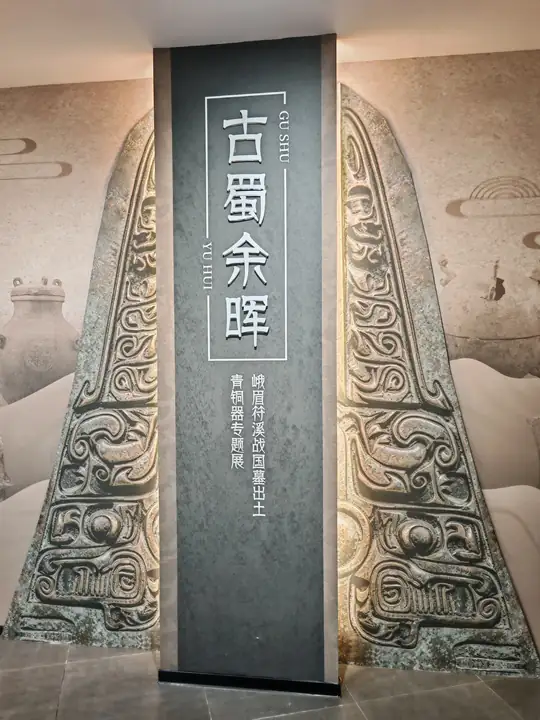 Mount Emei Museum · 峨眉山博物馆
Mount Emei Museum峨眉山博物馆
Mount Emei Museum explains why the mountain is recognised for both natural and cultural heritage. Geological specimens and interpretation introduce the mountain’s formation; animal displays and ecological scenes show its…
Read the place guide →AI illustration · AI 示意图(仅供参考,非该地点实拍)Jieyin Hall接引殿
Jieyin Hall is the upper-mountain temple beside the lower station of the Golden Summit cableway. Its name evokes welcoming pilgrims, and its position still makes it a threshold between the climb from Leidongping and the final…
Read the place guide →Local life & food
Emeishan local specialties
峨眉山市特色美食 · 1 specialties to discover
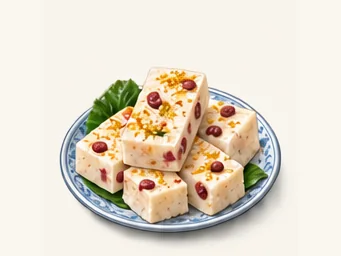 Emei sweet rice cake 峨眉糕AI illustration · AI 示意图
The cake is gently sweet and tender-crumbly rather than stretchy, with a dry enough texture to suit tea.
Source ↗Read the dish guide →All dish names · 全部菜名 (1)
More dishes from across Sichuan are in the Sichuan food guide.
Plan your visit
Getting there
Emeishan is about 30 km in a straight line from central Leshan. Search for 峨眉山市 in a map app to find stations and your accommodation.
Where to stay →Build your route
Mount Emei and Baoguo Temple are about 15 km apart in a straight line. The linked place guides have entrance and visit details.
Continue with Leshan →More in Leshan
Sources & geographic information
Administrative names and parent areas: Official geographic directory · Reference date 2026-09-06.
Some facts checked against 峨眉山 — Wikipedia contributors, CC BY-SA 4.0.
Some facts checked against 峨眉山市 — Wikipedia contributors, CC BY-SA 4.0.
Photo: Mount Emei · George N · CC BY 2.0. Wikimedia thumbnail; fitted to the ranking-card frame.

Photo: Baoguo Temple · Siyuwj · CC BY-SA 4.0. Proportionally resized and converted to WebP without cropping, retouching or changing the photographed subject.

Photo: Wannian Temple · 张元柏 · CC BY-SA 3.0. Proportionally resized and converted to WebP without cropping, retouching or changing the photographed subject.

Photo: Golden Summit · 王计 · CC BY 2.5. Proportionally resized and converted to WebP without cropping, retouching or changing the photographed subject.

Photo: Emeishan Great Buddha Monastery · 江上清风1961 · CC BY 3.0. Full frame retained; proportionally resized and converted to WebP. No retouching or changes to the photographed subject. Card displays may crop the view.

Photo: Fuhu Temple · Gisling · CC BY-SA 3.0. Proportionally resized and converted to WebP without cropping, retouching or changing the photographed subject.

Photo: Hongchunping Temple · Zhangzhugang · CC BY-SA 4.0. Proportionally resized and converted to WebP without cropping, retouching or changing the photographed subject.

Photo: Xixiangchi Temple · McKay Savage from London, UK · CC BY 2.0. Proportionally resized and converted to WebP without cropping, retouching or changing the photographed subject.
.jpg)
Photo: Xianfeng Temple · 峨眉山 出版者: [中国银行总管理处经济研究室] 出版时间: [1935] 出版地点: [重庆] · Public domain. EXIF orientation normalized; resized without changing aspect ratio; converted to WebP. No subject edits.
![峨眉山 出版者: [中国银行总管理处经济研究室] 出版时间: [1935] 出版地点: [重庆]](https://commons.wikimedia.org/wiki/File%3A%E4%BB%99%E5%B3%B0%E5%AF%BA%E9%99%84%E8%BF%91%E9%A2%A8%E6%99%AF.jpg)
Photo: Mount Emei Museum · Source photographer · License not provided. EXIF orientation normalized; resized without changing aspect ratio; converted to WebP. No subject edits.
Map data © OpenStreetMap contributors. Pins mark approximate centres, not entrances or boundaries.