

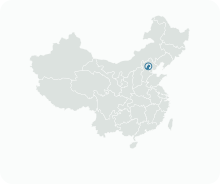
Get to know Shijingshan District

- Administrative area
- District · 市辖区
- Part of
- Beijing
- Chinese name
- 石景山区
- Local areas
- District guide
Area & population
- Area
- 86.00 km²
- Population · 2010
- 616,000
Source: English Wikipedia, as of the dates shown.
Shijingshan lies on Beijing’s western side, where the Western Hills foothills meet the Yongding River corridor. The north-side mountain park, the historic lanes around Moshikou and the former steelworks and riverfront are distinct visitor areas; the district name is not a useful single map pin. Plan a separate outing for each, rather than trying to cross the whole district on foot.
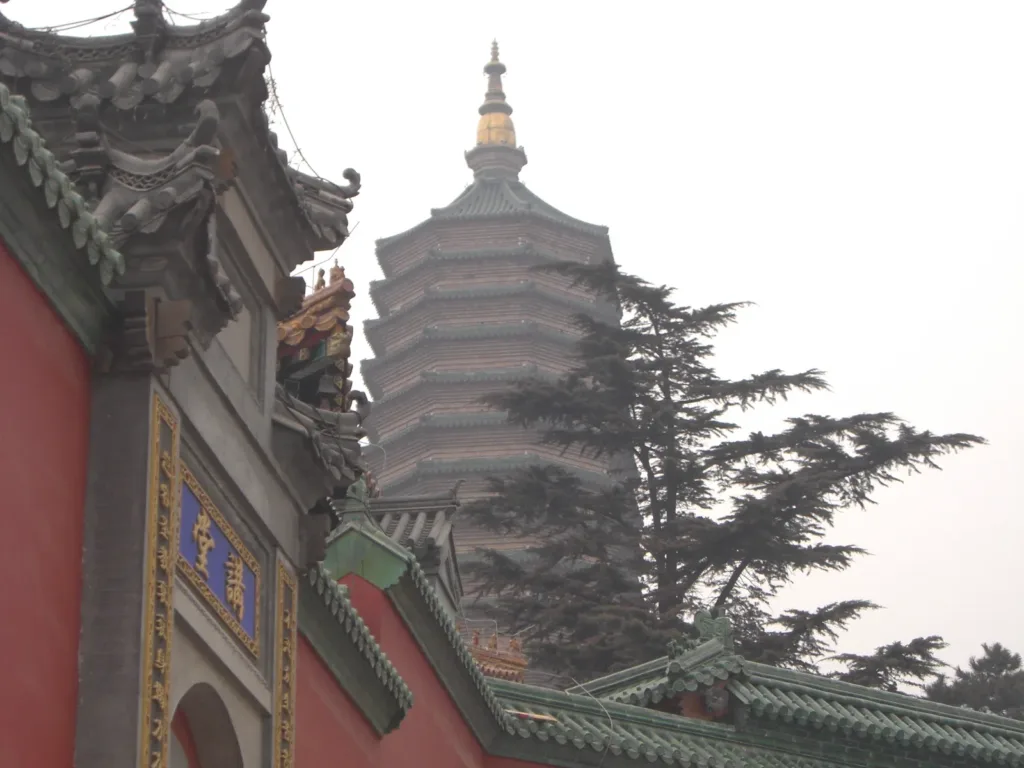
Badachu: temples on three wooded hills
Badachu Park occupies the northern part of Shijingshan. Its name refers to eight historic Buddhist temples set among the slopes of Tiger Head, Cuiwei and Qinglong hills. The park covers 332 hectares, and its highest peak reaches 464 metres. This is both a temple landscape and a proper uphill walk: follow the park paths between the compounds, pause for the views over the wooded slopes, and allow time for the ascent rather than treating the temples as roadside stops.
Suggested visit: allow about half a day for a relaxed walk; this is an editorial estimate, not a park-guaranteed duration. Set your map to Badachu Park (八大处公园). The district’s visitor information lists buses 347, 958, 972 and 489 to Badachu South stop, and buses 389 and 598 to Shixing North Street North Entrance stop. It also lists transfers from Xihuangcun or Yangzhuang on Subway Line 6, and from Bajiao Amusement Park on Line 1. Check the stop and service on the day you travel.
The district’s visitor page currently lists a full adult ticket at RMB 10 and a half-price ticket at RMB 5. Seasonal hours are 6:00–18:30 from March 16 to August 31, 6:00–18:00 from September 1 to November 15, and 6:00–17:30 from November 16 to March 15; ticket sales stop at closing time. Confirm holiday or temporary changes before setting out.
Moshikou and Fahai Temple: a street leading into a mural sanctuary
Moshikou’s historic street follows the old western approach known as the Camel Bell Road. The lanes and Fahai Temple make a coherent half-day visit, but the temple itself sits on the hillside above the street, so expect an uphill approach. Use Fahai Temple (法海寺), 48 Moshikou Street (模式口大街48号) as the map destination, then explore the nearby historic street at a comfortable pace.
Fahai Temple was founded in the Ming dynasty and preserves ten large mural panels inside its main hall. The 236.7 square metres of paintings use fine-line colour, layered shading and raised gilded detailing; the luminous surfaces and carefully rendered figures are the reason to visit, not just the exterior buildings. The temple also has a four-courtyard layout, a painted ceiling and old white-bark pines.
The district page checked on October 21, 2026 lists ordinary admission at RMB 20, with no advance booking required, and hours of 9:00–16:30, with ticket sales ending at 16:00; it lists Monday closure, except that holidays are open. To see the original murals, book a timed slot within seven days through the district’s “Shijingshan Wenlü” WeChat account or the “Shijingshan WenE” app; the listed mural ticket is RMB 100 and includes ordinary admission. Visitors without a mural booking can see full-size collotype reproductions in the third and fourth courtyards. These arrangements can change, so confirm them with the museum before travel.
Suggested visit: allow two to three hours for the street, the uphill approach and the temple; this is a planning suggestion, not an official visit duration. If the original murals are a priority, book that slot before travelling and arrive in time for the assigned entry.
Shougang and the Yongding River: industrial scale, open water and new routes
Shougang Park is best understood as a large industrial landscape reused for public, cultural and event spaces. The former works’ monumental structures and the Winter Olympics Big Air venue give this area a very different character from the quiet temple hills. The Shougang High Line Park repurposes an industrial pipeline as an elevated linear public space; Beijing’s tourism listing gives its length as 8.2 kilometres, so treat it as a route to sample rather than a small park loop.
Along the Shougang stretch of the Yongding River, the Yong Ding He Ji (永定河集) market and the riverside walk make a useful next stop. A district government update in September 2026 describes a 1.6-kilometre waterfront with food, coffee, art and outdoor-lifestyle businesses. The same update reports a sightseeing shuttle operating over 5.6 kilometres between Yong Ding He Ji and the ferry terminal at Yongding River Leisure Forest Park, with eight stops including the City Balcony, Riverside Sports Zone, Glacier Square, Lianshi Square and the park’s west gate. A separate 2.4-kilometre park train links five stops within the forest park.
A water shuttle from the forest-park terminal to Beijing Garden Expo Park was reported open in September 2026. The Garden Expo Park is across the river in Fengtai District, not within Shijingshan; it is an optional linked destination, not a Shijingshan attraction. Confirm current operating days, fares and service conditions for the sightseeing shuttle, train and ferry before setting out, as the source reports their launch but does not give a dependable year-round timetable or prices.
Suggested visit: set aside half a day or more if you want both the Shougang structures and a riverfront section. Choose a named destination such as Shougang Park (首钢园), Yong Ding He Ji (永定河集) or Shougang High Line Park (首钢高线公园) in your map app. The park is extensive, so confirm the route to the particular gate or facility you intend to visit. The official September 2026 transport guide identified Lines 1, 6, 11 and S1 as serving the Shougang area during CIFTIS; its special buses and event services were temporary, not routine visitor transport.
Choosing a Shijingshan day
For a mountain-and-temple day, start at Badachu and keep the outing within the park. For historic lanes and wall painting, make Moshikou and Fahai Temple the focus. For industrial heritage and an open-river landscape, pair Shougang with the Yongding River waterfront. These are different experiences in different parts of the district, so use the actual park or street as your destination and check each venue’s current access information before departure.
Guide sources
- Badachu Park Visitor Information, Shijingshan District Government
- Fahai Temple Visitor Information, Shijingshan District Government
- Beijing Fahai Temple Museum, Beijing Municipal Cultural Heritage Bureau
- New Riverside Spaces Along the Yongding River, Shijingshan District Government
- Enjoy a New Riverside Journey from Shougang Park, Shijingshan District Government
- Shougang High Line Park, Beijing Municipal Bureau of Culture and Tourism
- Beijing Garden Expo Park, Beijing Municipal Government
- CIFTIS 2026 Transport Guide, Shijingshan District Government
Explore Shijingshan District
Core places to explore, with English and Chinese names.
Places to explore around Shijingshan District
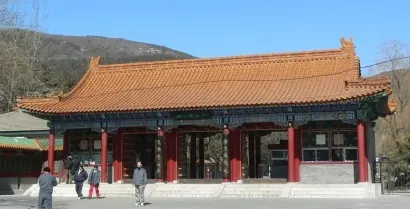 Badachu · 八大处大门
Badachu八大处
At Badachu Park in western Shijingshan, eight Buddhist temple sites are scattered through wooded Western Hills foothills rather than gathered into one courtyard. Start with Lingguang Temple’s relic pagoda, then choose how far to climb toward the hillside temples and viewpoints; the park’s cableway and alpine slide were reported reopened in September 2026, while individual temple access and ride operations should be checked for the day.
Read the place guide → The Mahavira Hall at Fahai Temple, photographed on 6 August 2009. Photo: Dirrival · CC BY-SA 3.0
Fahai Temple (Beijing)法海寺
At Fahai Temple in Shijingshan’s Moshikou area, a four-courtyard Ming Buddhist monastery holds ten exceptionally preserved murals in its Mahavira Hall. See the original paintings only with a separately reserved, timed ticket; a regular admission ticket covers the temple and its on-site mural reproductions.
Read the place guide →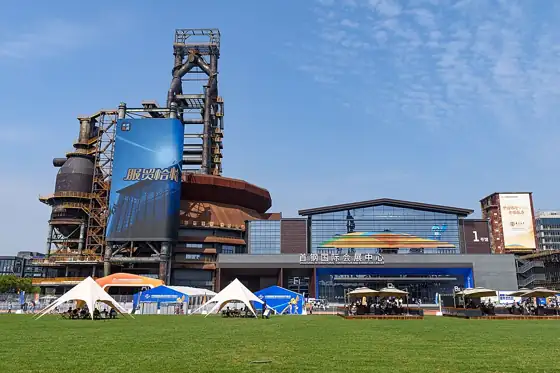 Shougang Park: the converted No. 4 Blast Furnace · 首钢园
Shougang Park首钢园
In western Beijing’s Shijingshan District, Shougang Park turns a former steelworks landscape into a large urban destination where industrial structures, the lakeside and the permanent Big Air Shougang venue sit alongside exhibition, cultural and commercial spaces. The strongest visit is a deliberate walk between a few clusters, not an attempt to cover the whole site; check access for individual buildings and activities before setting out.
Read the place guide → The pagoda and courtyard of Lingguang Temple, one of the eight temples of Badachu Park, Shijingshan District, Beijing · 北京石景山区八大处公园内灵光寺招仙塔及庭院 Source-recorded photograph date: 2025-04-27 09:52:56.
Badachu Park八大处公园
Badachu Park is a Buddhist temple landscape on the southern side of Beijing's Western Hills.
Read the place guide →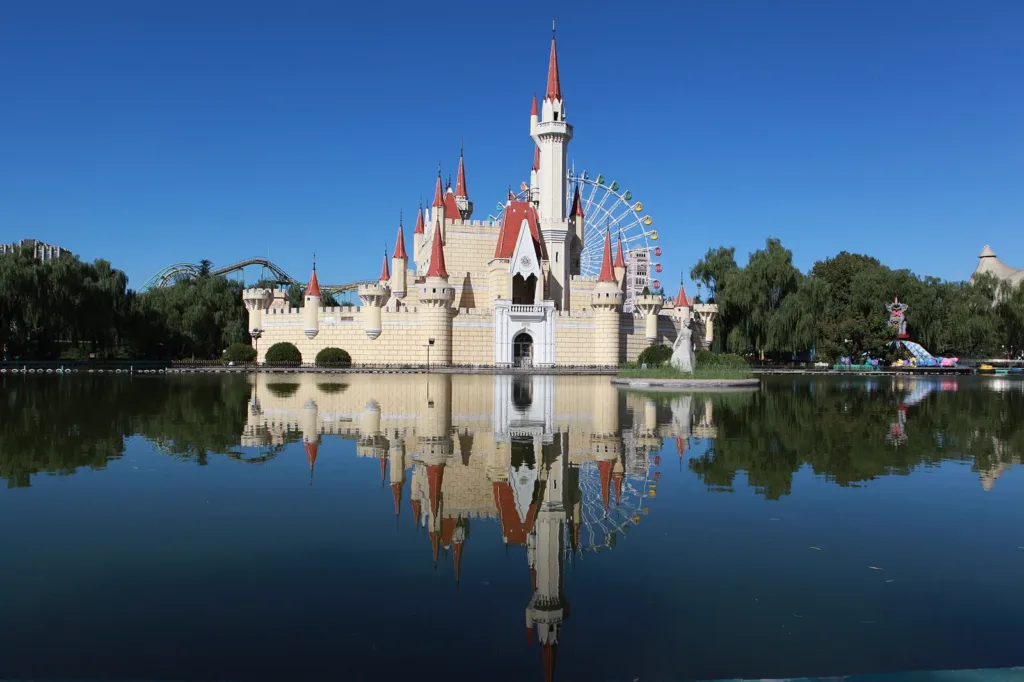 The castle and Ferris wheel at Shijingshan Amusement Park, seen across the lake. Photo: DuooSun · CC BY-SA 4.0
Shijingshan Amusement Park石景山游乐园
On Beijing’s western side, Shijingshan Amusement Park pairs a lakeside Cinderella Castle and Ferris wheel with family rides and more forceful attractions. Treat it as a half-day park rather than a single monument: the CNY 10 adult entry ticket is separate from most rides, and a Line 1 station closure changes the usual metro approach.
Read the place guide →Plan your visit
Getting there
Shijingshan District is about 15 km (straight-line distance) from central Beijing. Search for 石景山区 in a map app to find stations and your accommodation.
Where to stay →Build your route
Badachu and Fahai Temple (Beijing) are about 2 km apart (straight-line distance). The linked place guides have entrance and visit details.
Continue with Beijing →More in Beijing
Sources & geographic information
Administrative names and parent areas: Official geographic directory (dmfw.mca.gov.cn) · Reference date 2026-09-06.
Background text adapted from Shijingshan, Beijing — Wikipedia contributors, under CC BY-SA 4.0. Text has been shortened and reorganized; source revision 1353038535.
Photo: Badachu · The original uploader was 用心阁 at Chinese Wikipedia. · CC BY-SA 3.0. Resized for the web; the photo itself has not been edited.

Photo: Shougang Park · N509FZ · CC BY-SA 4.0. Resized for the web; the photo itself has not been edited.

Photo: Badachu Park · N509FZ · CC BY-SA 4.0. Resized for the web; the photo itself has not been edited. Thumbnails may show a cropped view.

Map data © OpenStreetMap contributors. Pins mark approximate centres, not entrances or boundaries.
Image credits & notes (2)
- Shijingshan Road west of Babaoshan station in Shijingshan District, Beijing. Photograph date recorded by the source: 2023-03-03 09:52:10.Photo: N509FZ · CC BY-SA 4.0Resized for the web; the photo itself has not been edited. Thumbnails may show a cropped view.
- Temple roofs and a pagoda at Badachu. Photo: KebailanPhoto: CC BY-SA 3.0
