

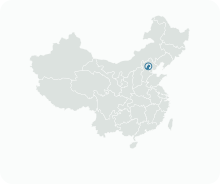
Get to know Haidian District
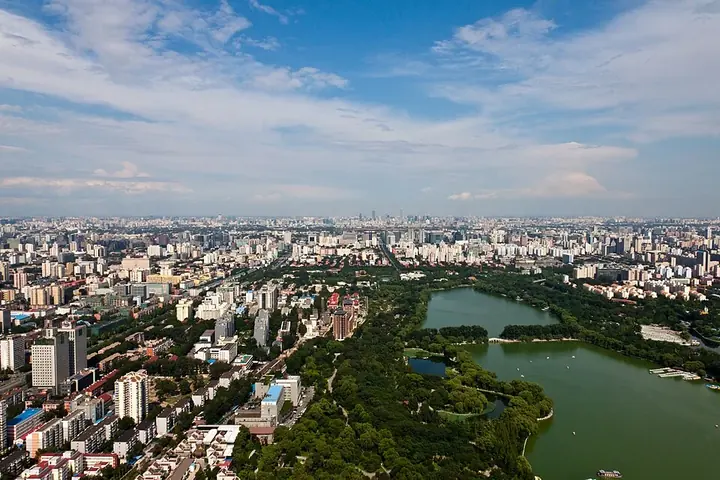
- Administrative area
- District · 市辖区
- Part of
- Beijing
- Chinese name
- 海淀区
- Local areas
- District guide
Area & population
- Area
- 431.00 km²
- Population · 2020
- 3,133,469
Source: English Wikipedia, as of the dates shown.
Haidian stretches across 430.77 square kilometres in northwestern Beijing. At the end of 2024 it had 3.122 million permanent residents. Its scale matters to visitors: “Haidian” is not a useful single map pin, and a route among its western gardens is not the same outing as time around the university and technology districts or the mountain parks.
The district’s best-known cultural landscape is the Three Hills and Five Gardens: Fragrant Hill, Jade Spring Hill and Longevity Hill, with the former imperial gardens of Jingyi, Jingming, Changchun, Yuanmingyuan and the Summer Palace. The gardens are a connected historical story, but not one continuous attraction; select a focused area and check each institution’s entrance and ticket separately.

The imperial-garden landscape
The Summer Palace (颐和园) is the clearest choice for a complete imperial-garden visit. Its layout joins the former palace and residential precinct, Longevity Hill’s steep sequence of halls and temples, and the much larger Kunming Lake landscape. The Long Corridor, the Hall of Dispelling Clouds and the Tower of Buddhist Incense are among the hill’s central landmarks; the West Causeway and South Lake Island shift the experience back toward water, open views and long walks. A useful first visit is to enter at the East Palace Gate and follow the official route through the Hall of Benevolence and Longevity and the Long Corridor toward the hill. Visitors who want the northern side can instead start at the North Palace Gate and make a separate loop by Suzhou Street and the Marble Boat.
The current municipal visitor page lists the East Palace Gate near Xiyuan Station and the North Palace Gate near Beigongmen Station, both on Metro Line 4. It lists the West Gate on the Xijiao Line. The park’s 2026 municipal listing gives a basic ticket of CNY 30 in peak season (April 1–October 31) and CNY 20 off season (November 1–March 31); some enclosed attractions have separate admission. It says tickets can be bought at the gate or booked one to seven days ahead through the official Summer Palace WeChat account. The municipal listing gives gate hours of 6:00–19:00 in peak season and 6:30–18:00 off season, with the whole park closing one hour later. These are changeable service details: check the official page before setting out.
Yuanmingyuan (圆明园), or the Old Summer Palace, is a separate visit rather than an extension inside the Summer Palace. The ruins park comprises the former Yuanmingyuan, Changchun Garden and Qichun Garden, spread over a much broader landscape. Its garden remains and waterways convey the scale of the former imperial complex; the Western Mansions area is a more concentrated stop, where stone fragments, fountain settings and the reconstructed maze make the Chinese-European garden experiment legible on foot. The Western Mansions were a small, distinctive part of the larger complex, so do not mistake that ruin zone for the whole of Yuanmingyuan.
The municipal visitor listing gives Yuanmingyuan’s address as 28 Qinghua West Road. As listed on October 21, 2026, ticketing runs 7:00–19:00 from April through October and 7:00–17:30 from November through March; closing times are 21:00 and 19:30 respectively. The main-entrance ticket is CNY 10, while the CNY 25 combined ticket includes the Western Mansions scenic zone and the model exhibition. The same listing says no advance reservation is required and tickets are sold on site. Check again before travel, particularly for event dates or separate exhibitions.
For a shorter greenway outing, the municipal route description runs from the west gates of Tsinghua University and Peking University by way of Haidian Park, then continues southwest toward the foothills and west toward Xiangshan Road. Haidian Park and the Three Hills and Five Gardens Cultural Arts Center beside it make a practical middle section for a neighbourhood-scale walk; the center sits at the park’s northwest corner on the former site of Changchun Garden’s western garden. The greenway continues far beyond this segment, so treat a full ride or walk as its own plan, not as a quick connector between ticketed parks.
This central Haidian area also shows the district’s modern character. Haidian is a major science-and-education district and the core area of Zhongguancun National Innovation Demonstration Zone; Peking University and Tsinghua University are prominent institutions in the area. The greenway passes their west gates, but that does not imply campus entry is unrestricted. Check each university’s current visitor rules before planning to go inside.
Western Hills: choose a mountain park
The western edge of Haidian calls for a separate half- or full-day plan. At Fragrant Hills Park (香山公园), the appeal is not only autumn foliage: this forested imperial garden also contains temples and historic sites, including Biyun Temple and Shuangqing Villa. A fitness route climbs from Qinzheng Hall through garden pavilions to Incense Burner Peak; a different plan combines the cable car uphill with a walk down, while the revolutionary-history route links Shuangqing Villa with nearby buildings. These routes involve slopes, so pick one rather than trying to cover every circuit.
As listed on the municipal visitor page checked October 21, 2026, Fragrant Hills opens 6:00–19:30 through November 15 and 6:00–19:00 from November 16 through March 31. Admission is CNY 10 in peak season and CNY 5 off season. The guide separately lists a cable-car option and routes through Biyun Temple and the Temple of Fragrant Hills; verify conditions and any extra charges for those services before setting out. Foreign visitors can use the park’s named official WeChat account to book with a passport. The Xijiao Line serves Fragrant Hills Station. Autumn foliage periods and transport arrangements change with conditions, so check the park’s official notices before visiting.
The China National Botanical Garden (国家植物园) is a different kind of western-Hills day: its North Garden combines plant collections, seasonal flower gardens, a conservatory, a bonsai garden and Wofo Temple, with the emphasis on horticulture, plant conservation and public education rather than mountain climbing. The North Garden is at the intersection of Xiangshan Road and Wofosi Road; the Xijiao Line’s Botanical Garden Station serves it. The national garden also has a South Garden elsewhere, so select the North Garden specifically if this is the foothills visit you intend. Check current opening, ticketing and access notices for the garden sections before arrival.
Getting around Haidian
Choose a named gate or park before choosing transport. For the Summer Palace, Line 4 serves the East and North Palace Gate areas, while the Xijiao Line serves the West Gate. For Fragrant Hills and the Botanical Garden, use the Xijiao Line and navigate to the park’s own station or entrance. Yuanmingyuan has its own Qinghua West Road address and separate admission; do not assume that the gardens share an entrance or that a district-wide journey is walkable.
Allow a substantial block of time for either major imperial garden, and plan Fragrant Hills or the Botanical Garden as a separate western outing. The times are itinerary advice, not a promise about how long any visit will take. Before departure, confirm seasonal schedules, booking rules, closures and event restrictions with the specific park or museum.
Guide sources
- Haidian District
- Haidian District Introduction
- Haidian Three Hills and Five Gardens Greenway
- Summer Palace Visitor Guide
- The Summer Palace
- Yuanmingyuan Ruins Park
- Historical and Cultural Value of the Western Mansions at Yuanmingyuan
- China National Botanical Garden Visitor Guide
- Fragrant Hills Park Visitor Guide
- Three Hills and Five Gardens
Explore Haidian District
Core places to explore, with English and Chinese names.
Summer Palace 颐和园
Fragrant Hills 香山
Old Summer Palace 圆明园
Beijing Botanical Garden 国家植物园北园
Purple Bamboo Park 紫竹院公园
Yuyuantan Park 玉渊潭公园
Dajue Temple 大觉寺
Military Museum of the Chinese People's Revolution 中国人民革命军事博物馆
Five Pagoda Temple 五塔寺
Wanshou Temple 万寿寺
Fenghuangling Nature Park in Haidian 凤凰岭
Central Radio & Television Tower 中央广播电视塔
Places to explore around Haidian District
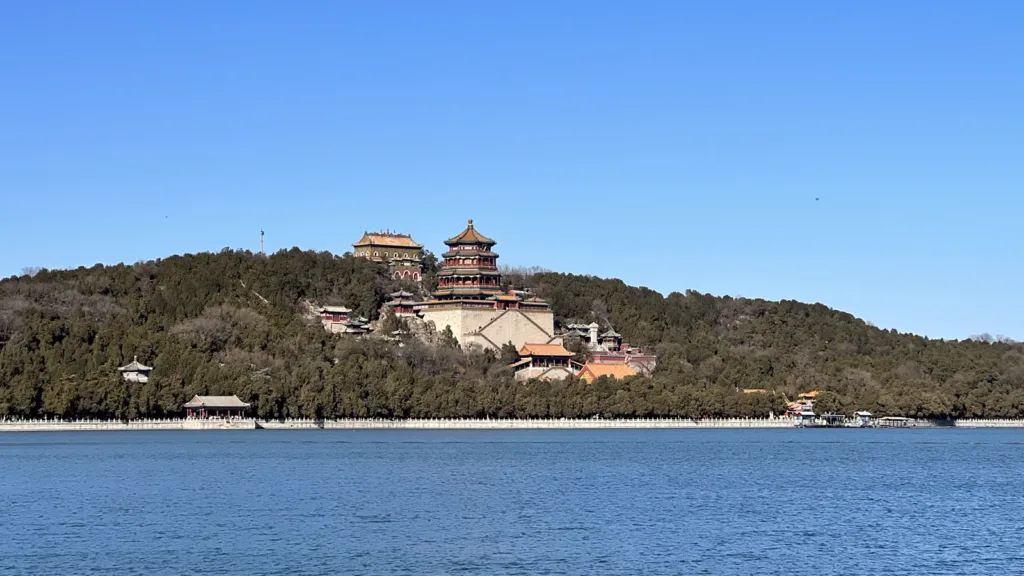 Longevity Hill and the Tower of Buddhist Incense above Kunming Lake, in a photograph made at the Summer Palace in 2022. Photo: Charlie fong · CC BY-SA 4.0
Summer Palace颐和园
The Summer Palace (颐和园) is a vast Qing imperial garden in Haidian, arranged around Longevity Hill and Kunming Lake. Follow the east-side palace courtyards for court life, climb toward the Tower of Buddhist Incense for the garden’s high point, or use the Long Corridor and lake shore to connect architecture with water and distant hills. Check the separate opening hours and tickets for enclosed sights before choosing an entrance.
Read the place guide →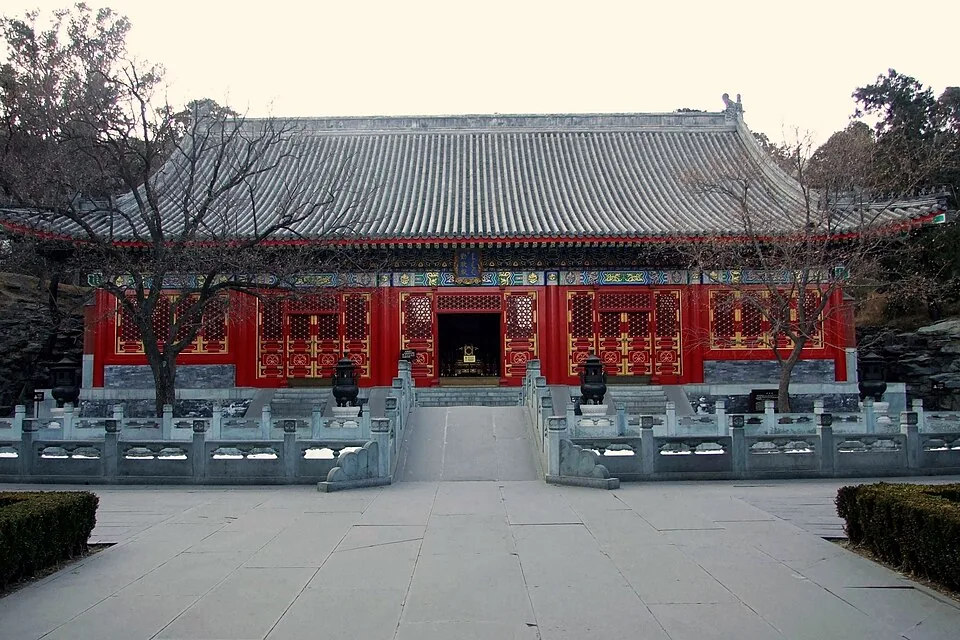 Qinzheng Hall in Fragrant Hills Park. Photo: 2009-01.
Fragrant Hills香山
Fragrant Hills (香山) is a large hillside park in Haidian, not a single summit viewpoint. Its Qing imperial garden, wooded paths, autumn color, Buddhist sites and 1949 revolutionary locations reward different kinds of visits. Choose a lower garden circuit or a longer climb to Incense Burner Peak; as checked on 21 October 2026, the cableway was temporarily out of service.
Read the place guide → The remains of Dashuifa and Yuanyingguan in Changchun Garden's Western Mansions area, photographed on 15 July 2012. Photo: 颐园新居 · CC BY-SA 3.0
Old Summer Palace圆明园
The Old Summer Palace, or Yuanmingyuan, is not just the famous stone ruins of its Western Mansions. The public heritage park spans the historic Yuanmingyuan, Changchun and Qichun gardens, where lakes, surviving garden traces and the remains of the 18th-century European-style waterworks reveal a far larger Qing imperial landscape. Start with one area in mind, then follow the current park map rather than trying to cover the whole 352-hectare site in a single hurried loop.
Read the place guide → The conservatory and planted approach at the former Beijing Botanical Garden, now the North Garden. The image is an older view, not a record of current landscaping. Photo: Daderot · Public domain
Beijing Botanical Garden国家植物园北园
At the foot of Beijing’s Western Hills in Haidian, the North Garden of the China National Botanical Garden pairs seasonal specialist gardens and a tropical conservatory with the ancient Wofo Temple, a Cao Xueqin memorial, and the wooded Cherry Valley. Treat it as a large park with distinct plant and heritage areas, not as a quick greenhouse stop; the temple and conservatory have separate ticket arrangements and Monday closures except on public holidays.
Read the place guide → A shaded view across the park’s water and lily-covered surface. Photo: Berling Family · CC BY 2.0
Purple Bamboo Park紫竹院公园
In Haidian, Purple Bamboo Park (Zizhuyuan) is a free municipal garden of lakes, islands, bridges and abundant bamboo, named for a historic temple once on its grounds. Start near the National Library side, follow the waterside paths across the central islands, and add the quieter bamboo-and-stone garden north of the Changhe if time and access allow.
Read the place guide →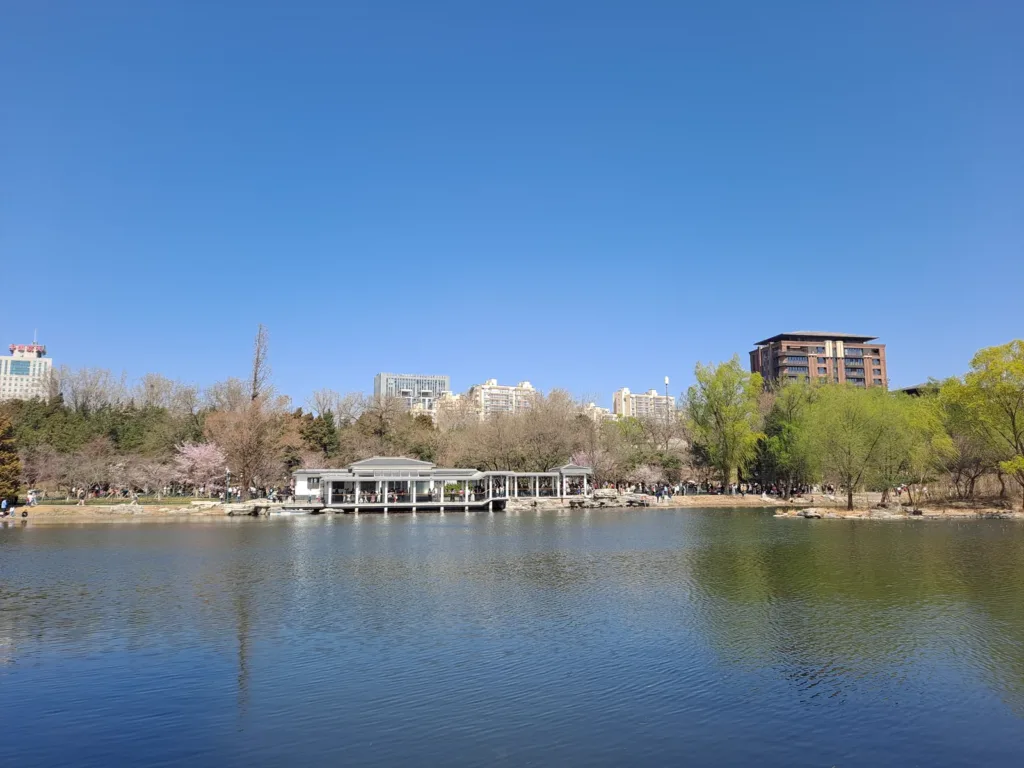 A lake and waterside pavilion at Yuyuantan Park, photographed on 22 March 2025. Photo: H2v5o68z · CC0 1.0
Yuyuantan Park玉渊潭公园
Yuyuantan Park is a large Haidian District landscape of linked lakes, woodland paths and one of northern China’s major cherry-blossom gardens. Come for a changing waterside walk as well as spring flowers: choose your gate by the lakeside area you want, and check the park’s current booking and construction notices before setting out.
Read the place guide → Dajue Temple · 大觉寺. Photo: 2026-05-21 16:47:59.
Dajue Temple大觉寺
Dajue Temple is a Liao-era Buddhist temple at the foot of Yangtai Mountain in Haidian, best understood as an east-to-west walk that climbs through successive courtyards. Its historic axis, the 1068 stele, a white stupa of uncertain date and purpose, old ginkgoes, and the quieter side compounds make the visit more than a quick look at a single hall. The temple’s operator lists daily opening from 09:00 to 17:00, last ticket sales at 16:30, and adult admission at CNY 20; check the official notice again before setting out.
Read the place guide → The main exhibition building, photographed on 19 September 2017. Photo: Tyg728 · CC BY-SA 4.0
Military Museum of the Chinese People's Revolution中国人民革命军事博物馆
The Military Museum of the Chinese People's Revolution pairs a landmark 1950s exhibition building with galleries on Chinese military history, revolutionary wars, weapons and military technology. Its aircraft, ships, missiles, tanks and smaller arms are spread across several floors, so use the Museum's current floor guide to choose a route rather than expecting to see every display in a quick pass. Admission is free, and the Museum provides real-name reservations.
Read the place guide → The Diamond Throne Pagoda at Zhenjue Temple, commonly called Five Pagoda Temple. Photo: ScareCriterion12 · CC0 1.0
Five Pagoda Temple五塔寺
At Beijing’s Five Pagoda Temple, the surviving Ming-dynasty Diamond Throne Pagoda rises from a broad carved stone platform crowned by five smaller towers. The site is also the Beijing Stone Carving Art Museum: look closely at the pagoda’s Buddhist imagery, then continue through indoor interpretation and outdoor displays of Beijing stonework. It is in Haidian, on the north bank of the Chang River near National Library station.
Read the place guide → Wanshou Temple in Beijing seen above a busy road at dusk.
Wanshou Temple万寿寺
Wanshou Temple is a Ming–Qing imperial Buddhist compound on the north bank of the Changhe in Haidian. Today it operates as Wanshou Temple Museum, where a three-part layout of temple halls, an abbot’s courtyard and former palace grounds frames exhibitions on the site’s history, Buddhist sculpture and traditional arts. Allow time to read the buildings as well as the displays; the museum’s open rooms and service details can change.
Read the place guide →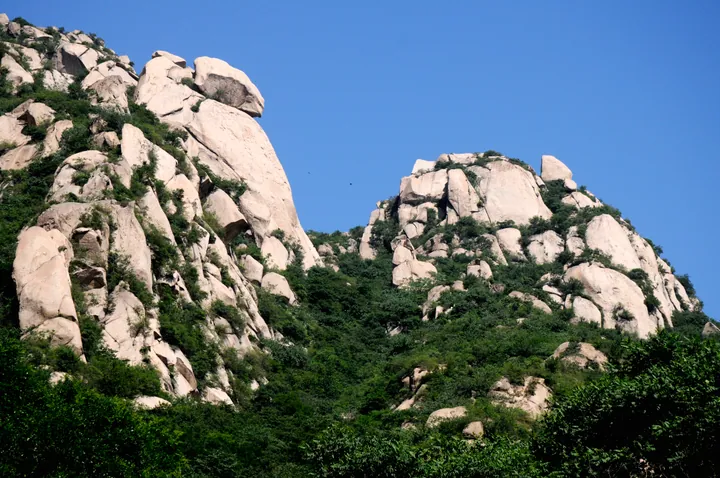 Rocky granite peaks and ridgelines at Fenghuangling Nature Park, Haidian District · 海淀区凤凰岭自然风景区的花岗岩峰峦 Source-recorded photograph date: Taken on 30 May 2013.
Fenghuangling Nature Park in Haidian凤凰岭
Northwest of central Haidian, Fenghuangling pairs wooded granite slopes, caves and springs with Buddhist and Daoist sites. Choose one of its north, central or south routes for a focused mountain visit: the north is the most rugged, the central line centers on Longquan Temple, and the south adds historic religious sites near Cheerying Village.
Read the place guide →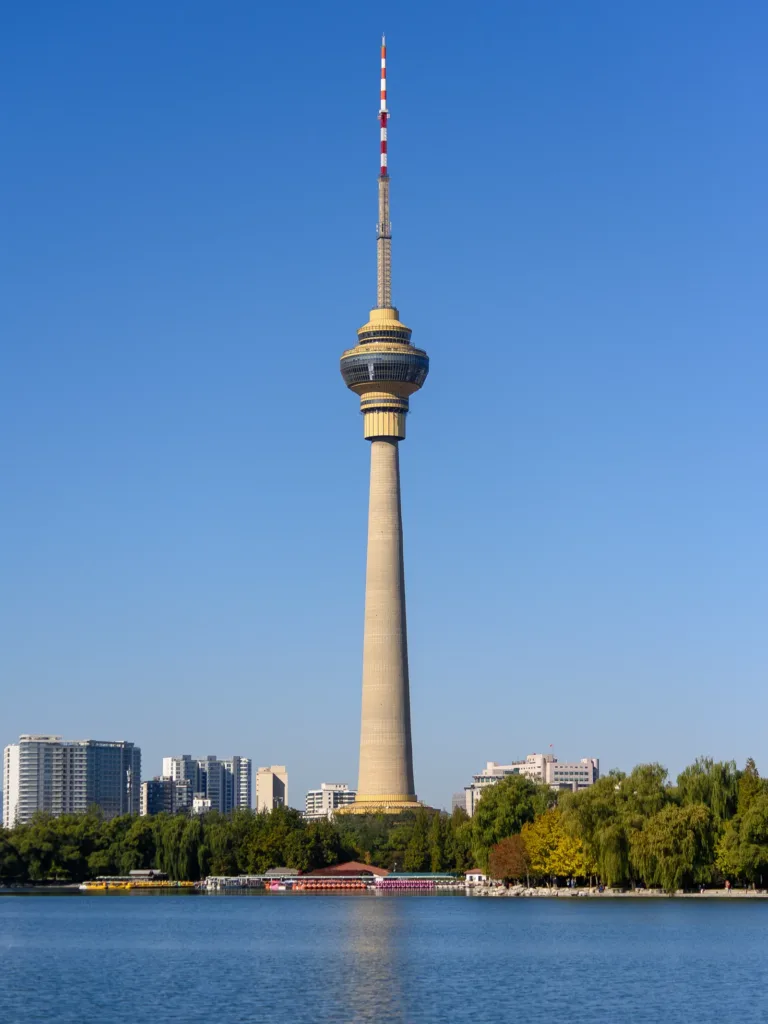 Central Radio & Television Tower viewed from Yuyuantan, 22 October 2021. Photo: N509FZ · CC BY-SA 4.0
Central Radio & Television Tower中央广播电视塔
In Haidian, the Central Radio & Television Tower combines a continuing broadcast role with an observation visit: its outdoor deck is at 238 metres, with broad views over Beijing, while its tapered shaft and lantern-like upper levels make it a landmark in their own right. The tower stands across the West Third Ring Road from Yuyuantan Park; treat the park and tower as separate stops, not one entrance or ticket.
Read the place guide →Plan your visit
Getting there
Haidian District is about 10 km (straight-line distance) from central Beijing. Search for 海淀区 in a map app to find stations and your accommodation.
Where to stay →Build your route
Summer Palace and Fragrant Hills are about 8 km apart (straight-line distance). The linked place guides have entrance and visit details.
Continue with Beijing →More in Beijing
Sources & geographic information
Administrative names and parent areas: Official geographic directory (dmfw.mca.gov.cn) · Reference date 2026-09-06.
Background text adapted from Haidian, Beijing — Wikipedia contributors, under CC BY-SA 4.0. Text has been shortened and reorganized; source revision 1365939396.
Photo: Fragrant Hills · Charlie fong 冯成 · Public domain. Resized for the web; the photo itself has not been edited.

Photo: Dajue Temple · N509FZ · CC BY-SA 4.0. Resized for the web; the photo itself has not been edited.

Photo: Wanshou Temple · 姚辰伟 · CC BY-SA 3.0. Resized for the web; the photo itself has not been edited.

Photo: Fenghuangling Nature Park in Haidian · mayanming · CC BY-SA 3.0. Resized for the web; the photo itself has not been edited. Thumbnails may show a cropped view.

Map data © OpenStreetMap contributors. Pins mark approximate centres, not entrances or boundaries.
Image credits & notes (2)
- An elevated view of lakes and neighbourhoods in Haidian District, Beijing. Photograph date recorded by the source: 2012-07-12.Photo: ahenobarbus · CC BY 2.0Resized for the web; the photo itself has not been edited. Thumbnails may show a cropped view.
- Longevity Hill and Kunming Lake at the Summer Palace. Photo: xiquinhosilva (Xiquinho Silva)Photo: CC BY 2.0
