

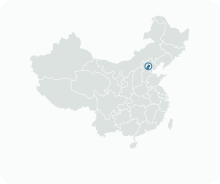
Get to know Fangshan District
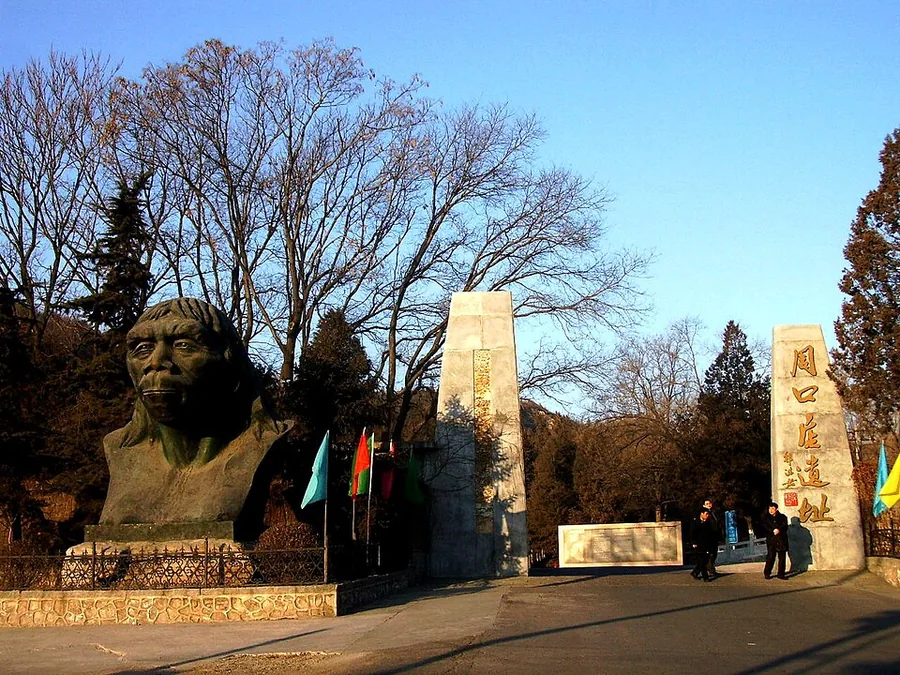
Photo adjustments
Proportionally resized and converted to WebP without cropping, retouching or changing the photographed subject.
- Administrative area
- District · 市辖区
- Part of
- Beijing
- Chinese name
- 房山区
- Local areas
- District guide
Area & population
- Area in the source
- 2,019.00 km²
- Population · 2020 census
- 1,312,778
Source: cited geographic source, as of the dates shown.
History
At Zhoukoudian, about 50 kilometres from central Beijing, with the Taihang Mountains (太行山) behind it and the North China Plain in front, Peking Man lived 700,000 to 200,000 years ago, and the Upper Cave people 30,000 to 10,000 years ago. Excavation on a large scale began in 1927 and has produced fossils of more than 40 individuals and over 100,000 stone tools. The site became a national key protected site in 1961 and a UNESCO World Heritage Site in 1987.
At Dongjialin village (董家林村) in Liulihe town, 43 kilometres south-west of the city, lies the walled site of the first capital of Yan in the early Western Zhou, covering 5.25 square kilometres with a city, palace area and noble cemetery together. Historians treat it as the starting point of Beijing's growth as a city. Bronzes found there by chance in 1964 first revealed it. The Jin imperial tombs, more than 860 years old, bear witness to Beijing's long history as a capital.
What to see
The Zhoukoudian Site Museum (周口店遗址博物馆) opened its new building on 18 May 2014 and shows more than a thousand human and animal fossils and artefacts in four halls. At Liulihe, the Beijing Archaeological Site Museum (北京考古遗址博物馆), opened in 1995, keeps four noble tombs of Yan and a chariot-and-horse pit where they were found.
Yunju Temple (云居寺), 70 kilometres from the city centre, forms with the Fangshan stone sutras (房山石经), the sutra caves of Stone Sutra Hill (石经山) and its Tang and Liao pagodas a single Buddhist heritage group, in the district's words. The monk Jingwan (静琬) and others began carving Buddhist scripture on stone in 605, and the work continued through six dynasties for 1,039 years, producing 14,278 slabs. On Stone Sutra Hill, nine caves held the tablets; the open Leiyin Cave (雷音洞) has four pillars carved with 1,056 Buddhas.
Shihua Cave (石花洞), in Hebei town (河北镇), is a karst cave of eight known levels, found by a monk in 1446 and opened to visitors in 1987; the first four levels, 2,500 metres in all, have been opened to visitors. The district also contains the Fangshan World Geopark (中国房山世界地质公园) and the Shangfangshan National Forest Park (上方山国家森林公园), whose secondary forest the district describes as the oldest in North China.
Highlights
- Zhoukoudian Peking Man Site 周口店遗址: Home of Peking Man 700,000 to 200,000 years ago; UNESCO World Heritage Site since 1987.
- Liulihe Site 琉璃河遗址: First capital of the Western Zhou state of Yan, with tombs and a chariot pit shown in place.
- Yunju Temple 云居寺: Home of 14,278 stone sutra slabs carved over 1,039 years from 605.
- Shihua Cave 石花洞: Eight-level karst cave in Hebei town, discovered in 1446.
Sources for this guide
房山概况 · Fangshan District People's Government, Beijing
周口店遗址 · Fangshan District People's Government, Beijing
云居寺 · Fangshan District People's Government, Beijing
琉璃河遗址 · Fangshan District People's Government, Beijing
石花洞 · Fangshan District People's Government, Beijing
Original English written from the listed sources and checked sentence by sentence against quoted extracts by a separate reviewer. Updated 2026-09-25.
Explore Fangshan District
Core places to explore, with English and Chinese names.
Places to explore around Fangshan District
The entrance to the Zhoukoudian Peking Man Site, with a sculpted head and site-name stone.Zhoukoudian周口店
The Peking Man Site at Zhoukoudian preserves limestone caves and excavation localities that transformed the study of early humans in Asia. Finds include human and animal fossils, stone tools and evidence associated with the use…
Read the place guide →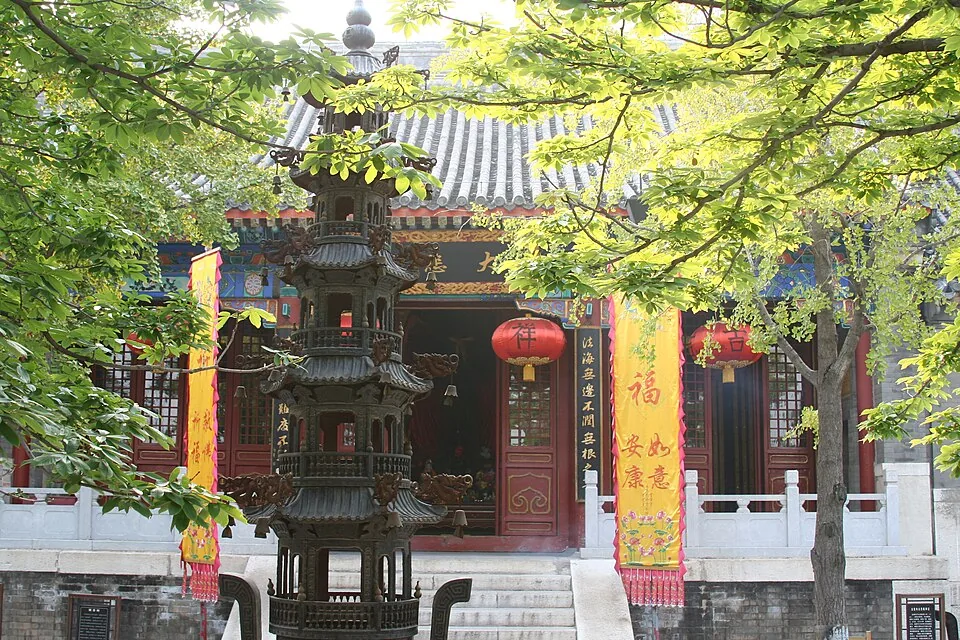 Avalokitesvara Hall at Yunju Temple, Beijing. Photo: 2012-10-02.
Yunju Temple云居寺
Yunju Temple in Fangshan is closely associated with the Fangshan Stone Sutras, a long effort to preserve Buddhist scriptures by engraving them on stone. The project began with the monk Jingwan and continued across many…
Read the place guide → An aerial view of river bends, farmland and rocky hills at Shidu, Beijing.
Shidu十渡
Shidu is a limestone-gorge landscape along the Juma River in southwestern Fangshan. Its name means the tenth crossing, recalling a route that once required repeated river fords; the numbered crossings still help identify…
Read the place guide →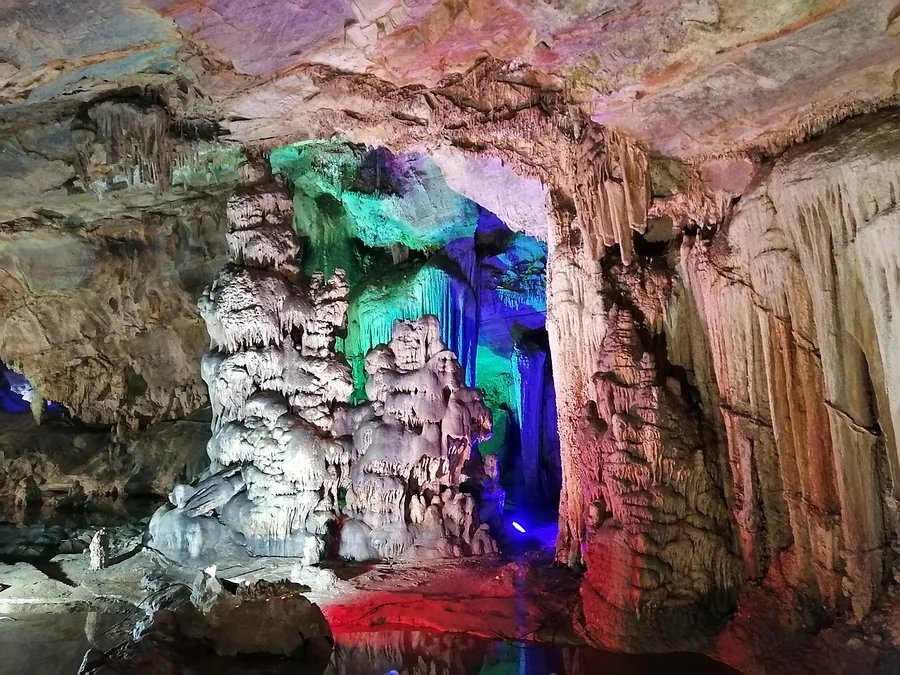 Illuminated limestone formations inside Shihuadong Cave in Beijing's Fangshan District.
Shihuadong Cave石花洞
Shihuadong is a layered limestone cave in Fangshan, where different movements of water have produced a remarkable variety of mineral deposits. Hanging stalactites, rising stalagmites and broad stone curtains share the cave with…
Read the place guide →Entrance to the Zhoukoudian Peking Man Site, Fangshan District, Beijing, with the Peking Man bust and commemorative pillars · 北京市房山区周口店北京人遗址入口,可见北京猿人头像雕塑及纪念石柱 Source-recorded photograph date: 2008-04-21.Zhoukoudian Peking Man Site Museum周口店北京人遗址博物馆
Zhoukoudian Peking Man Site Museum (周口店北京人遗址博物馆) introduces the discoveries made around Dragon Bone Hill in Beijing's Fangshan District.
Read the place guide →Plan your visit
Getting there
Fangshan District is about 30 km in a straight line from central Beijing. Search for 房山区 in a map app to find stations and your accommodation.
Where to stay →Build your route
Zhoukoudian and Yunju Temple are about 15 km apart in a straight line. The linked place guides have entrance and visit details.
Continue with Beijing →More in Beijing
Sources & geographic information
Administrative names and parent areas: Official geographic directory · Reference date 2026-09-06.
Photo: Zhoukoudian · Mutt · CC BY-SA 4.0. Proportionally resized and converted to WebP without cropping, retouching or changing the photographed subject.

Photo: Yunju Temple · Alexamies · CC BY-SA 3.0. Converted to WebP and resized without changing the subject or cropping the source frame.

Photo: Shidu · David290 · CC BY-SA 4.0. Proportionally resized and converted to WebP without cropping, retouching or changing the photographed subject.

Photo: Shihuadong Cave · Yumeto · CC BY-SA 4.0. Proportionally resized and converted to WebP without cropping, retouching or changing the photographed subject.

Photo: Zhoukoudian Peking Man Site Museum · Mutt · CC BY-SA 4.0. Proportionally resized and converted to WebP without cropping, retouching or changing the photographed subject.
Map data © OpenStreetMap contributors. Pins mark approximate centres, not entrances or boundaries.