


Get to know Lin'an District
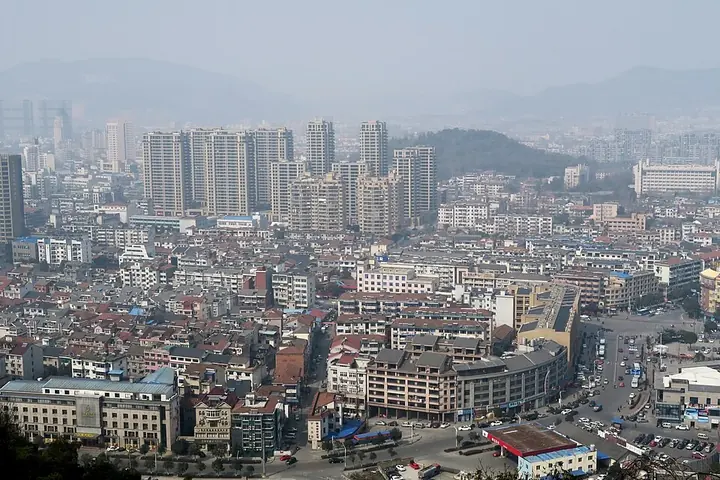
Photo adjustments
Full frame retained; proportionally resized and converted to WebP. No retouching or changes to the photographed subject. Card displays may crop the view.
- Administrative area
- District · 市辖区
- Part of
- Hangzhou
- Chinese name
- 临安区
- Local areas
- District guide
Area & population
- Area in the source
- 3,118.77 km²
Source: cited geographic source, as of the dates shown.
Setting and landscape
Two ranges cross the district, the Tianmu Mountains and the Yuling Mountains (昱岭山脉). The main peak of the Tianmu range, Qingliang Peak (清凉峰, 1,787 metres), stands on the border with Jixi (绩溪) in Anhui; West Tianmu (西天目山, 1,505 metres) and East Tianmu (东天目山, 1,479 metres) are also in Lin'an. The land divides into three river basins: the South Tiao Stream (南苕溪) in the east, the Tianmu Stream (天目溪) in the centre and the Changhua Stream (昌化溪) in the west. The old Hangzhou-Huizhou road (杭徽古道) linked them, and for more than 1,100 years they formed three separate counties until they were merged in 1960.
History
A county was first set up here in 211 as Linshui (临水县) and renamed Lin'an in 280 after Lin'an Mountain. Qian Liu (钱镠), founder of the Wuyue kingdom (吴越国), was born in Lin'an, and while building his state he raised a new walled town, Yijin (衣锦城), where the Wuyue ancestral temple and his own tomb were built. At the Lin'an Museum (临安博物馆), a guide quoted by Hangzhou News calls his tomb the only well-preserved royal tomb in Zhejiang. Lin'an became a county-level city in 1996 and a district of Hangzhou on 15 September 2017.
What to see
The Tianmu Mountain reserve is built around the West and East Tianmu peaks. Logging was banned there in 1956; it became Zhejiang's first national nature reserve in 1986 and a UNESCO biosphere reserve in 1996. The reserve records 2,351 species of higher plants and 5,024 animal species. The name comes from two pools on the mountain, said to be the eyes of heaven. Chanyuan Temple (禅源寺) is on Tianmu Mountain.
Other sights include Qingshan Lake (青山湖), Taihuyuan (太湖源), the Zhexi Grand Canyon (浙西大峡谷), Daming Mountain (大明山) and the Tuankou hot springs (湍口温泉). National key protected sites in the district are the Wuyue royal tombs (临安吴越国王陵), Gongchen Pagoda (功臣塔) with the Gongchen Temple site, the Tianmu kiln sites (天目窑遗址群) and the stone pagoda of Puqing Temple (普庆寺).
Food and local products
Lin'an's "old three treasures" are Tianmu Yunwu tea (天目云雾茶), Tianmu dried bamboo shoots (天目笋干) and hickory nuts (山核桃); Lin'an hickory nuts and Tianmu dried bamboo shoots are national geographical-indication products. Changhua bloodstone (昌化鸡血石), a prized seal stone, also comes from here. Tianmu hotpot (天目暖锅) is a clay pot simmered over a charcoal stove on the table. Guangming Daily reports that Lin'an has picked ten signature pots, the first being Zhaoming dried bamboo shoots and old duck (昭明笋干老鸭).
Highlights
- Tianmu Mountain 天目山: Zhejiang's first national nature reserve (1986) and a UNESCO biosphere reserve since 1996.
- Wuyue royal tombs 临安吴越国王陵: National key protected site; Qian Liu, founder of Wuyue, was born and buried in Lin'an.
- Tianmu kiln sites 天目窑遗址群: National key protected site in the district.
- Lin'an hickory nuts 临安山核桃: One of the "old three treasures" and a national geographical-indication product.
- Zhaoming duck and dried-bamboo pot 昭明笋干老鸭暖锅: First of the ten signature Tianmu hotpots Lin'an has picked, as reported by Guangming Daily.
Sources for this guide
临安区 - 维基百科,自由的百科全书 · Wikipedia (Chinese) · CC BY-SA 4.0
天目山 - 维基百科,自由的百科全书 · Wikipedia (Chinese) · CC BY-SA 4.0
浙江:天目暖锅,越“滚”越有味! _光明网 · Guangming Daily (gmw.cn)
“浙里”光影,“云看”文博|临安博物馆:穿越乱世“桃花源” 探寻千年吴越文化_杭州网 · Hangzhou News (hangzhou.com.cn)
Original English written from the listed sources and checked sentence by sentence against quoted extracts by a separate reviewer. Updated 2026-09-25.
Explore Lin'an District
Core places to explore, with English and Chinese names.
Places to explore around Lin'an District
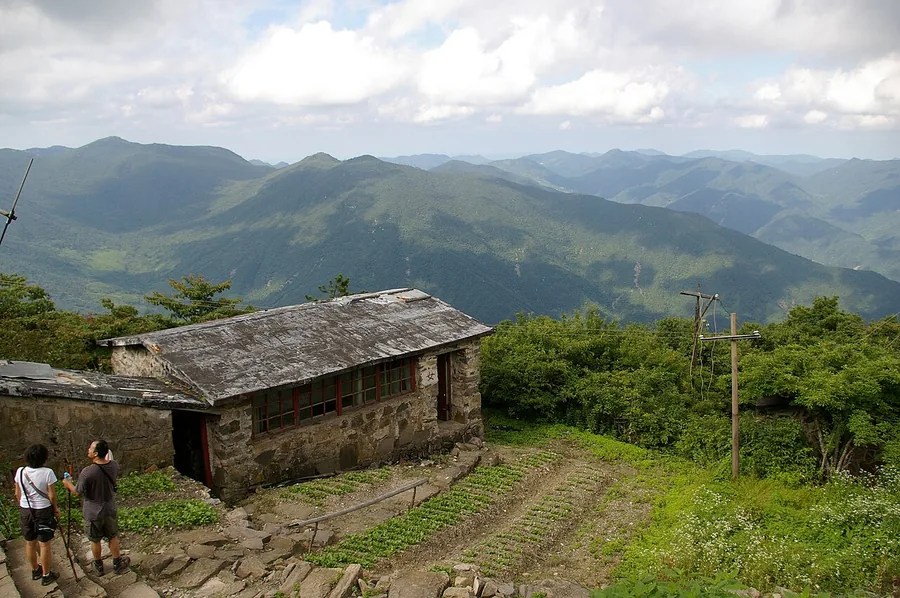 A mountain outlook in Mount Tianmu Park, Zhejiang; 11 July 2009.
Tianmu Mountain天目山
Tianmu Mountain is best known for its tall Cryptomeria trees, ginkgo population and layered forest scenery. The western mountain combines protected woodland with Buddhist sites, including Chanyuan Temple near its southern foot…
Read the place guide →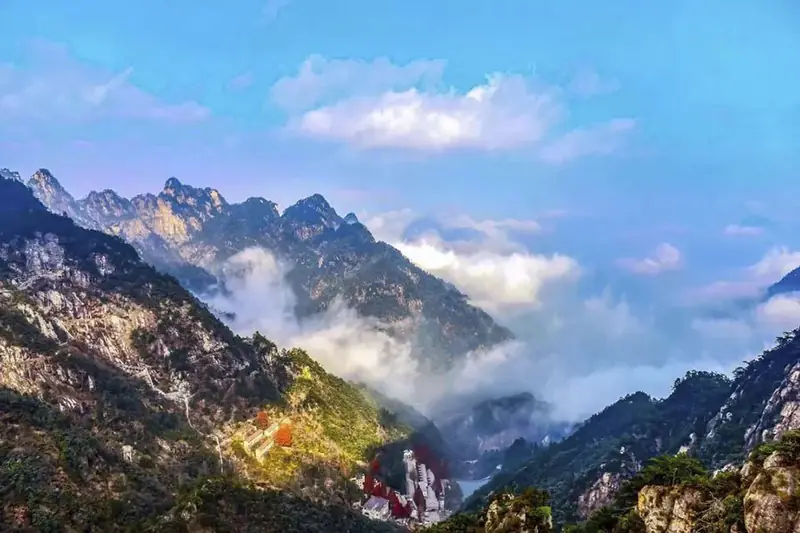 Daming Mountain Scenic Area · 大明山风景区
Daming Mountain Scenic Area大明山风景区
Daming Mountain’s scenic routes move between waterfalls, exposed rock and high mountain vegetation. Longmen Waterfall gives the lower landscape a water-shaped focus, while the Longmen Feidu suspension bridge reveals the depth of…
Read the place guide →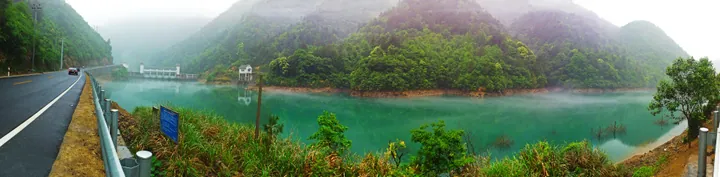 A panoramic view of a reservoir and misty forested mountains inside the Grand Canyon of West Zhejiang, Lin'an District, Hangzhou. · 杭州市临安区浙西大峡谷内水库与云雾缭绕的群山全景。 Source-recorded photograph date: Taken on 30 April 2012.
Zhexi Grand Canyon浙西大峡谷
Gorge scenic area in Lin'an, Hangzhou, in three sections; Longjing Gorge has waterfalls, deep pools, a suspension bridge and raft stretches.
Read the place guide → AI illustration · AI 示意图(仅供参考,非该地点实拍)
Qingshan Lake青山湖
Qingshan Lake in Hangzhou’s Lin’an District is known for a northern-shore water forest where pond cypress and bald cypress stand in shallow lake water.
Read the place guide →Local life & food
Lin'an District local specialties
临安区特色美食 · 1 specialties to discover
 Zhaoming duck and dried-bamboo pot 昭明笋干老鸭暖锅AI illustration · AI 示意图
The broth is rich and savory, with tender duck and firmer, fibrous bamboo shoots providing contrasting bites.
Source ↗Read the dish guide →All dish names · 全部菜名 (1)
More dishes from across Zhejiang are in the Zhejiang food guide.
Plan your visit
Getting there
Lin'an District is about 40 km in a straight line from central Hangzhou. Search for 临安区 in a map app to find stations and your accommodation.
Where to stay →Build your route
Tianmu Mountain and Daming Mountain Scenic Area are about 55 km apart in a straight line. The linked place guides have entrance and visit details.
Continue with Hangzhou →More in Hangzhou
Sources & geographic information
Administrative names and parent areas: Official geographic directory · Reference date 2026-09-06.
Some facts checked against 临安区 — Wikipedia contributors, CC BY-SA 4.0.
Some facts checked against 天目山 — Wikipedia contributors, CC BY-SA 4.0.
Photo: Tianmu Mountain · Jakub Hałun · CC BY-SA 4.0. Proportionally resized and converted to WebP without cropping, retouching or changing the photographed subject.

Photo: Daming Mountain Scenic Area · Source photographer · License not provided. EXIF orientation normalized; resized without changing aspect ratio; converted to WebP. No subject edits.
Photo: Zhexi Grand Canyon · fish4fish · CC BY-SA 3.0. Full frame retained; proportionally resized and converted to WebP. No retouching or changes to the photographed subject. Card displays may crop the view.

Map data © OpenStreetMap contributors. Pins mark approximate centres, not entrances or boundaries.