


Get to know Hezuo
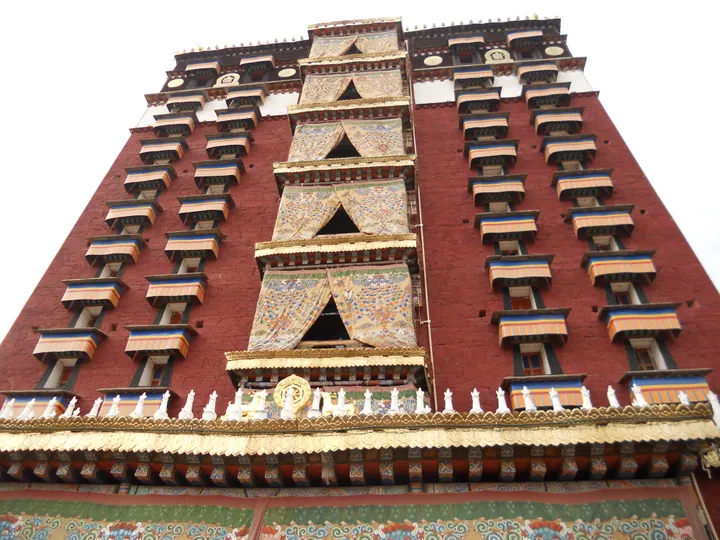
Photo adjustments
Full frame retained; proportionally resized and converted to WebP. No retouching or changes to the photographed subject. Card displays may crop the view.
- Administrative area
- County-level city · 县级市
- Part of
- Gannan Tibetan Autonomous Prefecture
- Chinese name
- 合作市
- Local areas
- County-level city guide
Area & population
- Area in the source
- 2,670.00 km²
- Population · 2020
- 112,173
- Administrative seat
- Gyamkar Subdistrict
Source: cited geographic source, as of the dates shown.
Setting and landscape
The Daxia River rises within the city's territory and flows west to east through it for 65 kilometres. The land steps down from northwest to southeast: the Anyê Nyenchen range (阿尼念卿山) in the north mostly stands above 3,500 metres, and the central Hezuo basin lies at 2,900 to 3,200 metres. The city government describes the climate as long winters with no real summer, spring running straight into autumn and a frost-free season of only about 56 days. Alpine meadow and shrub dominate the vegetation, and the Meiren (美仁) and Dangzhou (当周) grasslands hold wetlands.
History
The old name, Heicuo (黑错), is Tibetan for a place where antelopes roam, and the city goes by the nickname Antelope City (羚城). Heicuo belonged to Xiahe County (夏河县). Standing where Tibetan and Han areas meet, close to Labrang Monastery (拉卜楞寺), it grew into a trading centre and the economic hub of Amdo. In 1956 it was renamed Hezuo, a similar-sounding Chinese name, and in 1958 the prefecture government moved here.
What to see
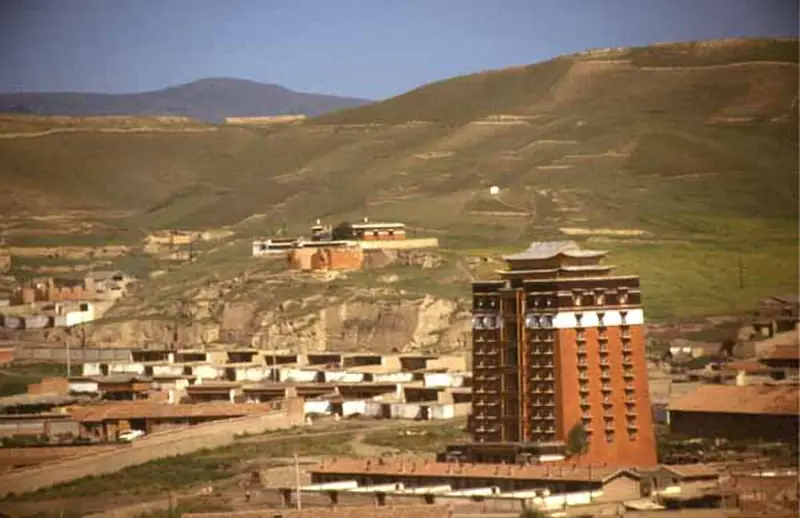
Heicuo Monastery (黑错寺), also called Hezuo Monastery, is a Gelug monastery founded in 1673. Its landmark is the nine-storey Milarepa Pavilion (米拉日巴佛阁), first built in 1777, destroyed during the Cultural Revolution and rebuilt from 1998. The rebuilt tower is more than 40 metres high and enshrines the founders of the Nyingma, Sakya, Kagyu, Kadam and Gelug schools; side shrines hold 1,025 elbow-high images of Milarepa in all.
The city government also lists Anyê Nyenchen Mountain, the Tao River scenery at Lexiu (勒秀), the Gangcha karst cave (岗岔溶洞) and the Meiren and Dangzhou grasslands. Local festivals include the Xianglang festival (香浪节) and the arrow-planting festival (插箭节), and Namthar Tibetan opera (南木特藏戏) and the Hacinmu ritual dance (哈钦木法舞) are part of its intangible heritage.
Food and local products
Gannan Tibetan baozi, also called Zhuohua baozi (卓华包子) or "ox-eye" baozi for their shape, have a thin white wrapper through which the filling shows; today they are made with wheat flour and mutton with a little mutton fat, and the juice is sucked out from the top before eating. The juema pig (蕨麻猪), named for the silverweed roots it feeds on, is raised mainly around Hezuo and is also called the Hezuo pig; Gannan Tibetans roast it wrapped in mud over embers. Butter tea, butter tsampa and highland barley liquor are also local fare.
Getting oriented
The city government puts the urban area 226 kilometres from Lanzhou (兰州) and 47 kilometres from Xiahe Airport (夏河机场), with the Lanzhou–Hezuo expressway (兰合高速) and national road G568 passing through.
Highlights
- Milarepa Pavilion 米拉日巴佛阁: Nine-storey tower of Heicuo Monastery, first built in 1777 and rebuilt from 1998.
- Heicuo Monastery 黑错寺: Gelug monastery founded in 1673, also called Hezuo Monastery.
- Dangzhou grassland 当周草原: Grassland wetland within the city, listed among its main landscapes.
- Gannan Tibetan baozi 甘南藏包子: Ox-eye-shaped mutton buns with a see-through wrapper; the juice is sucked out first.
Sources for this guide
合作市简介-合作市人民政府 · Hezuo Municipal People's Government
地理之旅:高原明珠 羚城圣地——甘南合作市-合作市人民政府 · Hezuo Municipal People's Government
舌尖上的羚城之藏餐-合作市人民政府 · Hezuo Municipal People's Government
合作市 - 维基百科,自由的百科全书 · Wikipedia (Chinese) · CC BY-SA 4.0
黑错寺 - 维基百科,自由的百科全书 · Wikipedia (Chinese) · CC BY-SA 4.0
Original English written from the listed sources and checked sentence by sentence against quoted extracts by a separate reviewer. Updated 2026-09-23.
Explore Hezuo
Core places to explore, with English and Chinese names.
Places to explore around Hezuo
 Milarepa Pavilion ·
 Plan your visit
Getting there
Hezuo covers the centre of Gannan Tibetan Autonomous Prefecture. Search for 合作市 in a map app to find stations and your accommodation.
Where to stay →Build your route
Start with Milarepa Pavilion. The linked place guides have entrance and visit details.
Continue with Gannan Tibetan Autonomous Prefecture →More in Gannan Tibetan Autonomous Prefecture
Sources & geographic information
Administrative names and parent areas: Official geographic directory · Reference date 2026-09-06.
Some facts checked against 合作市 — Wikipedia contributors, CC BY-SA 4.0.
Some facts checked against 黑错寺 — Wikipedia contributors, CC BY-SA 4.0.
Photo: Milarepa Pavilion · The original uploader was Gruschke at German Wikipedia . · CC BY-SA 3.0. EXIF orientation normalized; resized without changing aspect ratio; converted to WebP. No subject edits.

Map data © OpenStreetMap contributors. Pins mark approximate centres, not entrances or boundaries.