


Get to know Guyuan County
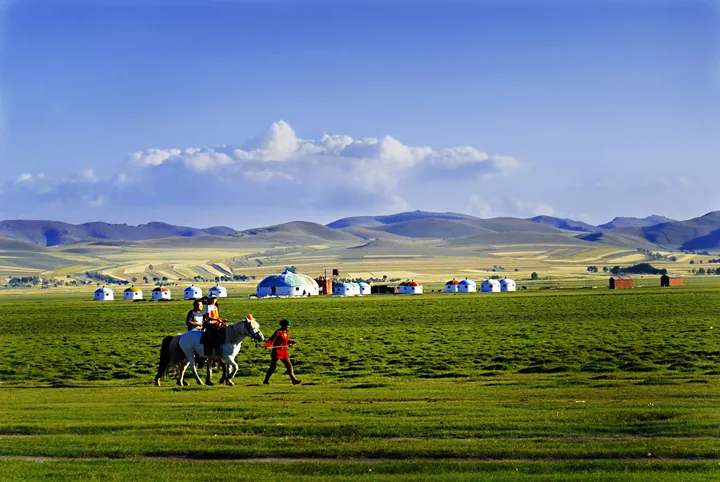
Photo adjustments
Full frame retained; proportionally resized and converted to WebP. No retouching or changes to the photographed subject. Card displays may crop the view.
- Administrative area
- County · 县
- Part of
- Zhangjiakou
- Chinese name
- 沽源县
- Local areas
- County guide
Area & population
- Population · 2020 census
- 167,587
Source: cited geographic source, as of the dates shown.
Setting and landscape
The county averages 1,536 metres above sea level and has a temperate continental steppe climate; the county government gives a summer mean temperature of 17.7°C. It counts 5 reservoirs, 6 lakes and 19 main rivers and calls itself the "source of three rivers" and a "water tower" for Beijing and Tianjin. It has the Shandian River (闪电河) national wetland park and the Huluhe (葫芦河) provincial wetland park.
History
From early times this was grazing land of the northern nomadic peoples. The first administrative unit was Changzhou (昌州), at today's Jiuliancheng (九连城), which the Jin reduced to Jianchang County (建昌县) in 1123. The county government says Liao, Jin and Yuan emperors came here for summer retreats and hunting. The county was founded in 1913 as Dushi County (独石县), with its seat at Dushikou (独石口); in 1915 it was renamed Guyuan, "source of the Gu", because Dushikou lay beside the Gu or Bai River (沽水, 白河) near its source, and in 1919 the seat moved to Xiaohezi (小河子). Today's seat is Pingdingbao Town (平定堡镇).
What to see
The county records 727 historic sites, including the old Zhangjiakou–Kulun trade road (张库古商道) and Great Wall remains. Three are national key cultural relics sites: the Xiaohongcheng (小宏城) site, the Jiuliancheng walled-town site and the Shuzhuanglou Yuan tomb (梳妆楼元墓).
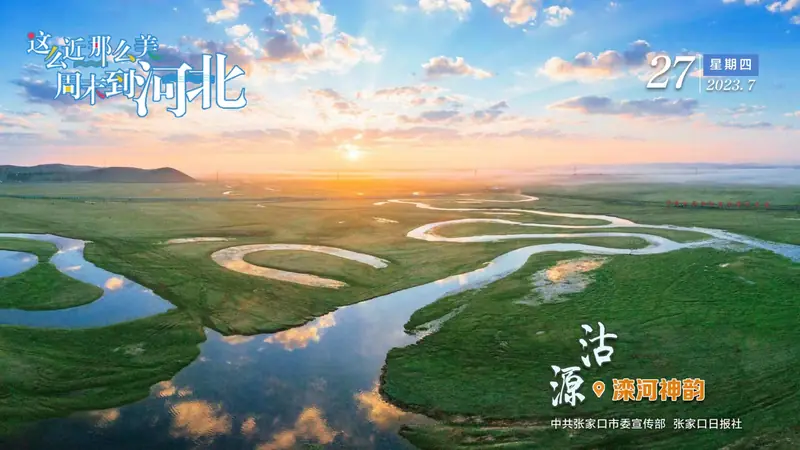
The Luanhe Shenyun (滦河神韵) scenic area, inside the Shandian River wetland park, follows the winding river across the grassland and has a Neolithic altar and a review platform from the Liao–Jin–Yuan era. The wetland's bird garden, on the East Asian–Australasian flyway, has recorded 221 bird species. Kulun Naoer (库伦淖尔), a lake 3 kilometres north of the county town, has a horse-show area and holds a winter fishing festival.
Food and local products
Youmian (莜面), flour from hardy naked oats, is washed, dried, roasted and milled; for wowo (窝窝) a pinch of dough is pushed across a smooth stone slab into a small tube, and the rolls are dipped in dishes of mutton, mushrooms, cabbage or potato with chilli, garlic and vinegar. Koumo (口蘑) mushrooms, named after the old term "beyond the pass" (口外) for Bashang, grow on rich grassland and can be identified by smell alone. Quinoa trials began in 2012 and succeeded. At Kulun Naoer, iron-pot stewed fish, whole roast lamb and oat-noodle banquets are served.
Getting oriented
Fengning (丰宁) in Chengde lies to the east, Chicheng (赤城) and Chongli (崇礼) to the south, and Kangbao (康保) and Zhangbei (张北) to the west. The county government puts the seat 167 kilometres from Zhangjiakou.
Highlights
- Shandian River National Wetland Park 闪电河国家湿地公园: Grassland river wetland whose bird garden has recorded 221 species.
- Luanhe Shenyun 滦河神韵: Wetland scenic area with a Neolithic altar and a Liao–Jin–Yuan review platform.
- Kulun Naoer 库伦淖尔: Lake 3 km north of the county town with a winter fishing festival.
- Shuzhuanglou Yuan tomb 梳妆楼元墓: National key cultural relics site.
- Youmian 莜面: Naked-oat flour pushed into rolls on a stone slab and eaten with dipping dishes.
- Koumo mushrooms 口蘑: Grassland mushrooms that can be identified by smell alone.
Sources for this guide
沽源县情况 - 沽源县人民政府 · Guyuan County People's Government, Zhangjiakou
历史沿革 - 沽源县人民政府 · Guyuan County People's Government, Zhangjiakou
地理环境 - 沽源县人民政府 · Guyuan County People's Government, Zhangjiakou
滦河神韵风景区 - 沽源县人民政府 · Guyuan County Bureau of Culture, Radio, Television and Tourism
闪电河国家湿地观鸟园 - 沽源县人民政府 · Guyuan County Bureau of Culture, Radio, Television and Tourism
库伦淖尔旅游度假区 - 沽源县人民政府 · Guyuan County People's Government, Zhangjiakou
沽源特产:莜面 - 沽源县人民政府 · Guyuan County People's Government, Zhangjiakou
沽源藜麦 - 沽源县人民政府 · Guyuan County People's Government, Zhangjiakou
坝上沽源特产“口蘑” - 沽源县人民政府 · Guyuan County People's Government, Zhangjiakou
Original English written from the listed sources and checked sentence by sentence against quoted extracts by a separate reviewer. Updated 2026-09-24.
Explore Guyuan County
Core places to explore, with English and Chinese names.
Places to explore around Guyuan County
 Luanhe Shenyun Scenic Area ·
 Plan your visit
Getting there
Guyuan County is about 120 km in a straight line from central Zhangjiakou. Search for 沽源县 in a map app to find stations and your accommodation.
Where to stay →Build your route
Start with Luanhe Shenyun Scenic Area. The linked place guides have entrance and visit details.
Continue with Zhangjiakou →More in Zhangjiakou
Sources & geographic information
Administrative names and parent areas: Official geographic directory · Reference date 2026-09-06.
Photo: Luanhe Shenyun Scenic Area · Source photographer · License not provided. EXIF orientation normalized; resized without changing aspect ratio; converted to WebP. No subject edits.
Map data © OpenStreetMap contributors. Pins mark approximate centres, not entrances or boundaries.