


Get to know Yangyuan County
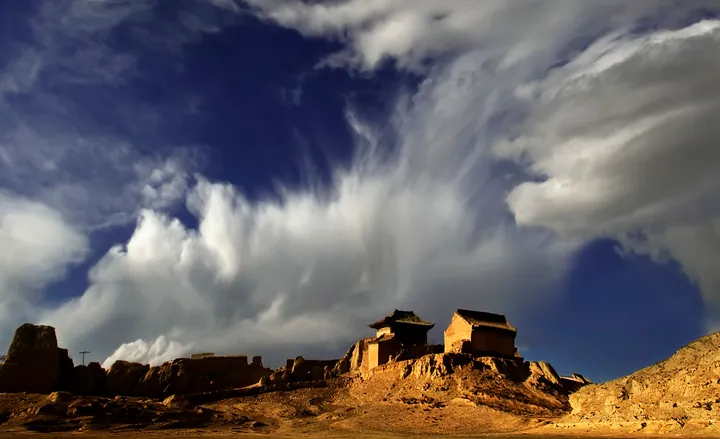
Photo adjustments
Full frame retained; proportionally resized and converted to WebP. No retouching or changes to the photographed subject. Card displays may crop the view.
- Administrative area
- County · 县
- Part of
- Zhangjiakou
- Chinese name
- 阳原县
- Local areas
- County guide
Setting and landscape
The county stretches 82 kilometres from west to east and about 27 kilometres from north to south. Mountains ring it on the north and south, and the Sanggan River crosses it from west to east. Elevations range from 778 to 2,045.9 metres; piedmont plain covers 57 per cent of the land, mountains 27 per cent and river flats 16 per cent. The climate is continental monsoon, with large day–night temperature swings and about 356 millimetres of rain a year.
History
The name is old: the county government's history table lists a Yangyuan County under the Western Han, alongside Sanggan (桑干) and East Anyang (东安阳) counties. Under the Liao the area was Hongzhou (弘州), governed from today's Xicheng (西城). In 1693 the Qing created Xining County (西宁县) with its seat at Xicheng, and in 1913 it was renamed Yangyuan.
What to see
The Nihewan sites lie in the east of the county along the Sanggan River. More than 80 early-human sites have been found since the 1970s, and Chinese Wikipedia counts 40 of the world's 53 known sites older than one million years here; the Majuangou (马圈沟) site is dated to 2 million years ago. The layered Nihewan strata were exposed when an ancient lake drained about 18,000 years ago. Xiaochangliang (小长梁), one of the early stone-tool sites, was listed with the Nihewan group as a national key cultural relics protection site on 25 June 2001. Jiufeng Temple (鹫峰寺), Zhenzhu Spring (珍珠泉) and the hot spring at Zaoxitang (澡洗塘温泉) are among the county's other sights.
Food and local products
Gezha biscuits (圪渣饼) from Chuaigutuan (揣骨疃) have a history of nearly 500 years. They are about 2 millimetres thick, round, golden and translucent, and crisp, fragrant and sweet; an official born in Chuaigutuan sent them to the Qing court in the Xianfeng reign. Gongfo apricots (供佛杏) come from a tree that the monk Menjing (门静) planted at Anle Temple (安乐寺) in Nankou (南口) village in 1918, and are named for being offered to the Buddhas. Yangyuan also grows green "parrot" mung beans (鹦哥绿豆). Yellow millet cake (黄糕), steamed from husked broomcorn millet flour and kneaded while hot, is eaten almost daily. Bean-curd skin (油皮), lifted from simmering soy milk with a sorghum stalk, and a porridge of cornmeal with a little bean flour are other local foods; Huashaoying (化稍营) is known for dog meat stewed in a long-kept stock.
Highlights
- Nihewan sites 泥河湾遗址群: More than 80 early-human sites along the Sanggan River; national key site since 2001.
- Majuangou site 马圈沟遗址: Dated to 2 million years ago.
- Gezha biscuits 圪渣饼: Paper-thin golden biscuits from Chuaigutuan with nearly 500 years of history.
- Gongfo apricots 供佛杏: Grown from a tree planted at Anle Temple in 1918 and named for temple offerings.
Sources for this guide
阳原县历史沿革 · Yangyuan County People's Government, Zhangjiakou
阳原县地理环境 · Yangyuan County People's Government, Zhangjiakou
阳原县地方特产 · Yangyuan County People's Government, Zhangjiakou
泥河湾遗址 · Wikipedia (Chinese) · CC BY-SA 4.0
阳原县 · Wikipedia (Chinese) · CC BY-SA 4.0
小长梁文化 · Wikipedia (Chinese) · CC BY-SA 4.0
Original English written from the listed sources and checked sentence by sentence against quoted extracts by a separate reviewer. Updated 2026-09-24.
Explore Yangyuan County
Core places to explore, with English and Chinese names.
Yangyuan County 阳原县
Plan your visit
Getting there
Yangyuan County is about 95 km in a straight line from central Zhangjiakou. Search for 阳原县 in a map app to find stations and your accommodation.
Where to stay →More in Zhangjiakou
Sources & geographic information
Administrative names and parent areas: Official geographic directory · Reference date 2026-09-06.
Some facts checked against 泥河湾遗址 — Wikipedia contributors, CC BY-SA 4.0.
Some facts checked against 阳原县 — Wikipedia contributors, CC BY-SA 4.0.
Some facts checked against 小长梁文化 — Wikipedia contributors, CC BY-SA 4.0.
Map data © OpenStreetMap contributors. Pins mark approximate centres, not entrances or boundaries.