


Get to know Hulan District
- Administrative area
- District · 市辖区
- Part of
- Harbin
- Chinese name
- 呼兰区
- Local areas
- District guide
Area & population
- Area
- 2,185.90 km²
- Population · 2019
- 527,705
Source: English Wikipedia, as of the dates shown.
Hulan lies on the north bank of the Songhua River, along the lower Hulan River, north of Harbin’s central urban districts. Its visitor geography is deliberately two-part: old Hulan is a compact literary and civic townscape associated with Xiao Hong, while the Hulan River Mouth Wetland is a broad riverside landscape. Treat them as separate outings rather than trying to walk between them.
Read old Hulan through Xiao Hong
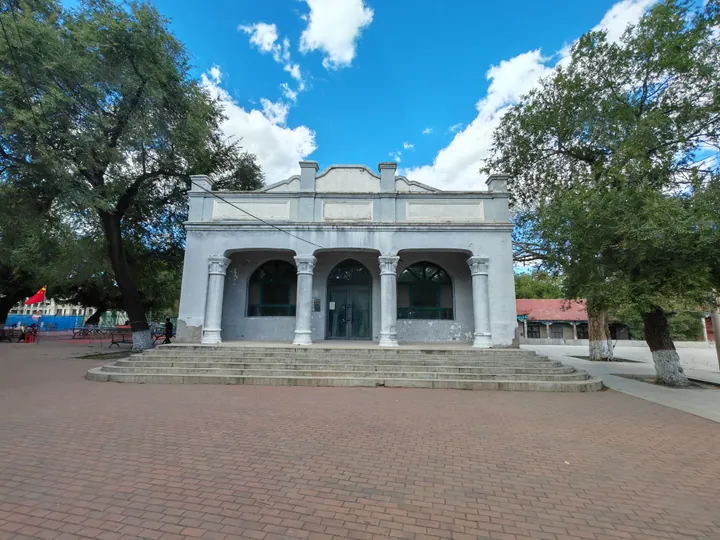
Begin with Xiao Hong’s Former Residence (萧红故居) and the adjacent Xiao Hong Memorial Hall (萧红纪念馆). They are related but not the same visit: the residence is the courtyard and rooms associated with her childhood, while the hall interprets her life and writing. The Heilongjiang culture-and-tourism account gives the memorial hall’s address as 226 Xiao Hong Avenue, says it opened on 6 June 2011, and describes 1,600 square metres of exhibition space.
Look at the residence as a physical setting for Tales of Hulan River, not just as a portrait stop. A 2026 Xinhua report describes the five-room main house, east and west side rooms, brick-paved paths and the rear garden. It also reports an AR guide and a temporary exhibition following Xiao Hong’s life beyond Hulan. Those digital and exhibition features are time-sensitive: enjoy them if available, but do not plan the trip around them.
If the old-town venues are open, add Xigang Park (西岗公园) or Hulan Confucian Temple (呼兰文庙). The provincial tourism account places Xiao Hong’s grave and a historic cactus in Xigang Park and identifies the Confucian Temple among Hulan’s surviving historic buildings. These are useful extensions for visitors interested in how literary memory sits alongside local civic and religious history, but current visitor access for each stop should be checked before making a fixed itinerary.
A separate landscape at the river mouth
Hulan River Mouth Wetland Park (呼兰河口湿地公园) lies where the Hulan River meets the Songhua. A 2023 provincial tourism account describes the park as 38.5 square kilometres; treat that as the area stated in that account rather than a promise about the present visitor footprint. The National Forestry and Grassland Administration’s 2024 report describes reedbeds, open water and birdlife at the confluence, and records summer recreation alongside winter ice-and-snow programming. It is a place to watch the river edge and wetland habitat, not a guaranteed menu of boats, shuttles or seasonal sports.
The wetland is not an extension of the Xiao Hong compound. Confirm the current visitor gate, opening status and any seasonal restrictions before leaving Harbin. No current boat boarding point or wetland return shuttle was verified for this guide, so arrange a road return rather than assuming that an older tourism description still describes today’s service.
Getting there and planning the return
Metro is useful for reaching Hulan’s wider north-bank area, but it is not a verified doorstep connection for these two outings. The Harbin government’s transport guide lists Jiangbei University Town (江北大学城) on Metro Line 2 and includes bus 551 among the city’s listed routes; it does not provide an attraction-side transfer to the Xiao Hong sites or the wetland.
For a public-transport approach, a current Moovit route listing shows bus 551 running between Harbin Railway Station (哈站) and Hulan Yixing Community (呼兰亿兴小区), with 16 listed stops and a displayed daily span of 06:00–20:40. The stop list ends at the Hulan residential area, not at either attraction, and the listing is dynamic rather than a substitute for a same-day operator notice. From the town end, use a taxi or ride-hailing service with the exact Chinese name 萧红故居 Xiāo Hóng Gùjū, 萧红纪念馆 Xiāo Hóng Jìniànguǎn or 呼兰河口湿地公园 Hūlán Hékǒu Shīdì Gōngyuán and ask the driver to confirm the current visitor entrance. For the return, go back to 呼兰亿兴小区 for a bus toward 哈站 or arrange a direct road ride; from the wetland, do not count on finding a last-minute shuttle.
Before setting out, confirm admission, opening days, registration and the correct gate with each venue. The sources reviewed here do not establish whether a particular domestic-ID process accepts a foreign passport or whether English-language assistance is available. Carry your passport and ask the venue directly. In practical terms, a half-day fits the old-town literary cluster; combining it with the wetland needs a full day and a planned road return.
Explore Hulan District
Core places to explore, with English and Chinese names.
Hulan District 呼兰区
Plan your visit
Getting there
Hulan District is about 15 km (straight-line distance) from central Harbin. Search for 呼兰区 in a map app to find stations and your accommodation.
Where to stay →More in Harbin
Sources & geographic information
Administrative names and parent areas: Official geographic directory (dmfw.mca.gov.cn) · Reference date 2026-09-06.
Background text adapted from Hulan District — Wikipedia contributors, under CC BY-SA 4.0. Text has been shortened and reorganized; source revision 1305900704.
Map data © OpenStreetMap contributors. Pins mark approximate centres, not entrances or boundaries.
