


Get to know Nangang District
- Administrative area
- District · 市辖区
- Part of
- Harbin
- Chinese name
- 南岗区
- Local areas
- District guide
Area & population
- Area
- 182.90 km²
- Population · 2019
- 1,047,385
- Administrative seat
- Dacheng Subdistrict (大成街道)
Source: English Wikipedia, as of the dates shown.
Nangang is an urban district with several useful visitor faces rather than one enclosed attraction. The most coherent first walk is the railway-station and Museum Square area: Harbin Railway Station, Hongjun Street, early twentieth-century façades, and museums sit close enough to read as one historical corridor. The university and museum stops farther along Metro Line 1 are a separate outing, and the Haxi area around Harbin West Railway Station is a western rail-and-city node, not an extension of the central walk.
A railway-era walk
Begin at the south square of Harbin Railway Station (哈尔滨站) and look straight down Hongjun Street (红军街). The broad avenue was first known as Horvat Avenue during the railway-era development of Harbin and was renamed Hongjun Street in 1949. A recent local account describes a route of roughly a kilometre linking former foreign consulates, museums, and the public courtyard now called City Origin Square.
This is an outdoor architecture walk, not a promise that every historic building is open. Read the façades, entrances, rooflines, and later adaptations from the pavement. Some buildings have commercial or cultural uses, while others are simply working properties. At the junction with Dazhi Street, the recently opened City Origin Square provides a courtyard-scale pause among historic buildings; its exhibitions and internal businesses may change, so treat the public space and any indoor programme as separate questions.
Museums, campuses, and the Line 1 corridor
Museum Square is best treated as a cluster of distinct institutions. The Heilongjiang Provincial Museum (黑龙江省博物馆) and the Memorial Hall of Revolutionary Leaders’ Visits to Heilongjiang (革命领袖视察黑龙江纪念馆) are separate venues near Museum Station (博物馆站), not alternate names for one museum. A provincial tourism guide also places the Harbin Railway Museum and Nangang Museum near Railway Bureau Station (铁路局站), and the Harbin Institute of Technology museums near Harbin Institute of Technology Station (哈工大站). These stops make Line 1 a practical way to choose one additional museum or campus visit after the station-side walk.
The Harbin Institute of Technology Museum and Space Museum (哈尔滨工业大学博物馆、航天馆) publishes unusually clear visitor instructions. Its listed address is 59 Company Street (公司街59号), Nangang District. The official page gives opening hours of Tuesday to Saturday, 09:00–16:00; it closes on Thursday afternoon, Sundays, Mondays, statutory holidays, and school summer and winter vacations. Groups should call at least two working days ahead. The page says the museums welcome the general public, but it does not explain how foreign passports are handled, so contact the venue if admission matters to your itinerary. It directs metro users to Railway Bureau Station (哈铁路局站) and then about 200 metres south along Company Street; it also lists local bus routes including 11, 31, 33, 55, 63, 64, 81, 82, 86, 92, 94, 104, 107, 111, and 119.
A taste of Harbin’s everyday history
Harbin red sausage is a city-wide food tradition, not a dish invented by Nangang or tied to one guaranteed shop. The Heilongjiang cultural authorities describe the “Lidaosi” style as a Russian-influenced sausage introduced with Qiulin’s 1900 Harbin trading company. The documented process uses pork and beef, spices, curing, stuffing, cooking, and two rounds of hardwood smoking. That combination gives the sausage a tight slice and a pronounced smoky aroma, while recipes vary among producers. Buy it where you find a current, labelled product, and read the ingredients if you avoid pork, beef, particular spices, or mixed-meat foods.
Getting around and planning the day
A sensible sequence is the station-side Hongjun Street and Museum Square walk first, followed by one chosen Line 1 museum or university stop. Do not combine that route with Haxi in the same “short walk.” If your ticket is for Harbin West Railway Station (哈尔滨西站), treat the western node as your arrival point or as a separate trip. China Railway describes Harbin West as a high-speed and conventional passenger station at 501 Harbin Street (哈尔滨大街501号), between the Haxi area of Nangang and Qunli in Daoli.
For metro connections, the city’s visitor guidance lists Harbin Railway Station on Line 2, Museum Station as a Line 1/Line 2 interchange, and a Line 3 route from Harbin West via Zhujiang Road (珠江路) to Line 2. Those relationships are useful for choosing a route, not a guarantee of today’s timetable, entrance, queue, or seasonal shuttle. Reverse the route to the exact railway station printed on your ticket and check live information before leaving.
Nangang has no single visitor entrance or useful district-wide taxi address. Give a driver the exact Chinese name and street address of the museum, hotel, or railway station you want. For venue visits, confirm the current opening notice and booking channel separately; a district page cannot substitute for an institution’s admission rules. Outdoor street scenes are easiest to combine with other stops, while museums and university spaces deserve their own time buffer.
Explore Nangang District
Core places to explore, with English and Chinese names.
Nangang District 南岗区
Plan your visit
Getting there
Nangang District covers the centre of Harbin. Search for 南岗区 in a map app to find stations and your accommodation.
Where to stay →More in Harbin
Sources & geographic information
Administrative names and parent areas: Official geographic directory (dmfw.mca.gov.cn) · Reference date 2026-09-06.
Background text adapted from Nangang, Harbin — Wikipedia contributors, under CC BY-SA 4.0. Text has been shortened and reorganized; source revision 1331081675.
Map data © OpenStreetMap contributors. Pins mark approximate centres, not entrances or boundaries.
Image credits & notes (1)
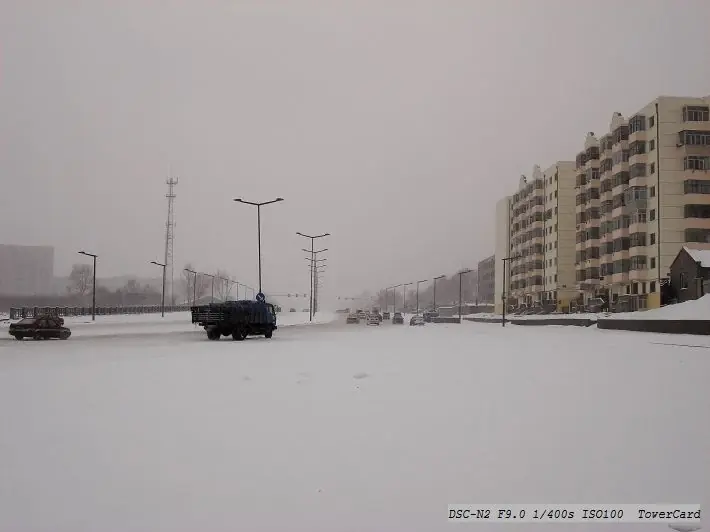
- A snow-covered avenue in Nangang District, Harbin. Photo: Taken on 14 February 2007.Photo: TowerCard · CC BY-SA 3.0Resized for the web; the photo itself has not been edited. Thumbnails may show a cropped view.
