


Get to know Pingfang District
- Administrative area
- District · 市辖区
- Part of
- Harbin
- Chinese name
- 平房区
- Local areas
- District guide
Area & population
- Area
- 98.00 km²
- Population · 2010
- 190,253
Source: English Wikipedia, as of the dates shown.
A district shaped by memory and making
Pingfang is a southern district of Harbin whose visitor meaning comes from a sharp historical contrast. The settlement was formerly known as Yihe Tun; “Pingfang” was chosen with a wish for peace, not as a description of one-storey houses. In the 1930s, the Japanese army established its Unit 731 biological-warfare base here. After 1949, factories and workers from across China turned the damaged area into a planned industrial centre, and Pingfang became a formal district in 1953.
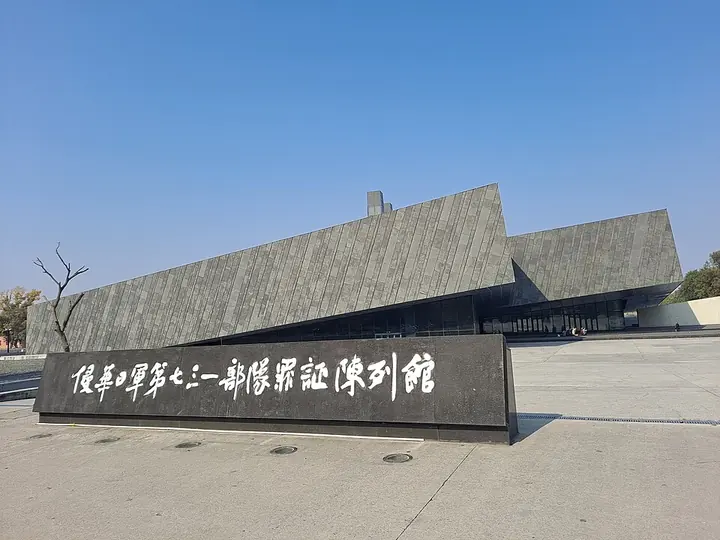
The central visit is the Exhibition Hall of Evidence of Crime by Unit 731 of the Japanese Imperial Army (侵华日军第七三一部队罪证陈列馆) and the surviving site around it. This is a memorial and historical exhibition, not a spectacle. Its displays address the biological-warfare programme, human experimentation, weapons development, the destruction of evidence and postwar trials. Archaeological work at the former laboratory and special-prison complex known as Sifang Building (四方楼) also identified blast points and ash pits linked to the attempted destruction of evidence. Leave time to read, and treat the site with the quiet attention appropriate to a place of mass suffering.
Pingfang’s later history is still legible in its urban landscape. The area’s major postwar factories included the predecessors of today’s Dong’an engine company, Harbin Aircraft Industry Group and Northeast Light Alloy. The names Xinjiang Avenue (新疆大街) and Youxie Avenue (友协大街) recall, respectively, the builders’ idea of a “new frontier” and Soviet assistance to the factory-building effort. They are clues to a planned industrial town; they do not imply that working factory premises are open for casual entry.
What else to look for
District cultural-tourism information also highlights the Harbin Ice and Snow Culture Museum (哈尔滨冰雪文化博物馆), Xia Qing Culture and Arts Museum (夏青文化艺术馆), and the Robot and Intelligent Manufacturing Planning Exhibition Center (哈尔滨机器人及智能制造规划展示中心). The first focuses on the city’s relationship with ice and snow; the second presents the life and voice work of broadcaster Xia Qing; the third uses robotics and manufacturing displays for public education. The same district programme describes parks and an ecological green corridor, while a city industrial-tourism route lists the Harbin Beer Museum and Qiulin Kvass Museum among Pingfang’s industrial-tourism resources.
These are useful leads rather than a guaranteed open-door circuit. Confirm each venue’s current hours, booking rules and visitor arrangements before making a special trip. Pingfang is a spread-out urban district, so treat each museum, park or factory-related venue as a separate stop rather than assuming that everything forms one walkable attraction.
Getting there and planning access
For a first visit, use the Unit 731 complex as the district’s practical anchor. The new exhibition hall is at 23 Xinjiang Avenue, Pingfang District, Harbin (哈尔滨市平房区新疆大街23号); the former headquarters site is separately identified at 47 Xinjiang Avenue (新疆大街47号). Take Harbin Metro Line 1 to Xinjiang Dajie Station (新疆大街站) and use Exit 2. The museum’s visitor notice also lists buses 343, 348, 338 and 371 to Xinjiang Avenue Station. Published walking distances from Exit 2 differ between notices, so use the Chinese address and live wayfinding for the particular building you have booked rather than relying on a memorised metre figure.
The latest published operating report available for this guide, dated 2 August 2026, says the complex opens Tuesday–Sunday from 09:00 to 18:00, with last entry at 17:00 for the new hall and 17:30 for the former headquarters site; Monday is normally closed except on public holidays. It also says that all visitors need a real-name, timed reservation made one to seven days ahead through the museum’s official WeChat account or the “畅游哈尔滨” mini-program, and must present the original valid identity document at entry. The report does not explain how a foreign passport is entered or verified. International visitors should confirm passport acceptance and the booking process with the museum before travelling; do not assume a domestic-ID workflow will accept a passport. The published service numbers are 0451-51747773 and 0451-51685222.
For return travel, reverse the Line 1 or bus connection after the visit and check live service on the day. These directions are for the Unit 731 complex, not a single all-purpose entrance for every part of Pingfang District.
Guide sources
- Xinhua: Touching Pingfang’s Pain and Glory
- People’s Daily: Repairing the Unit 731 Site and Restoring Historical Truth
- Pingfang District’s Four Themed Cultural-Tourism Resources
- Unit 731 Museum Introduces Free Reservation System
- Unit 731 Museum Extends Daily Opening Until 18:00
- Harbin Releases Its First Industrial-Tourism Sites and Routes
Explore Pingfang District
Core places to explore, with English and Chinese names.
Places to explore around Pingfang District
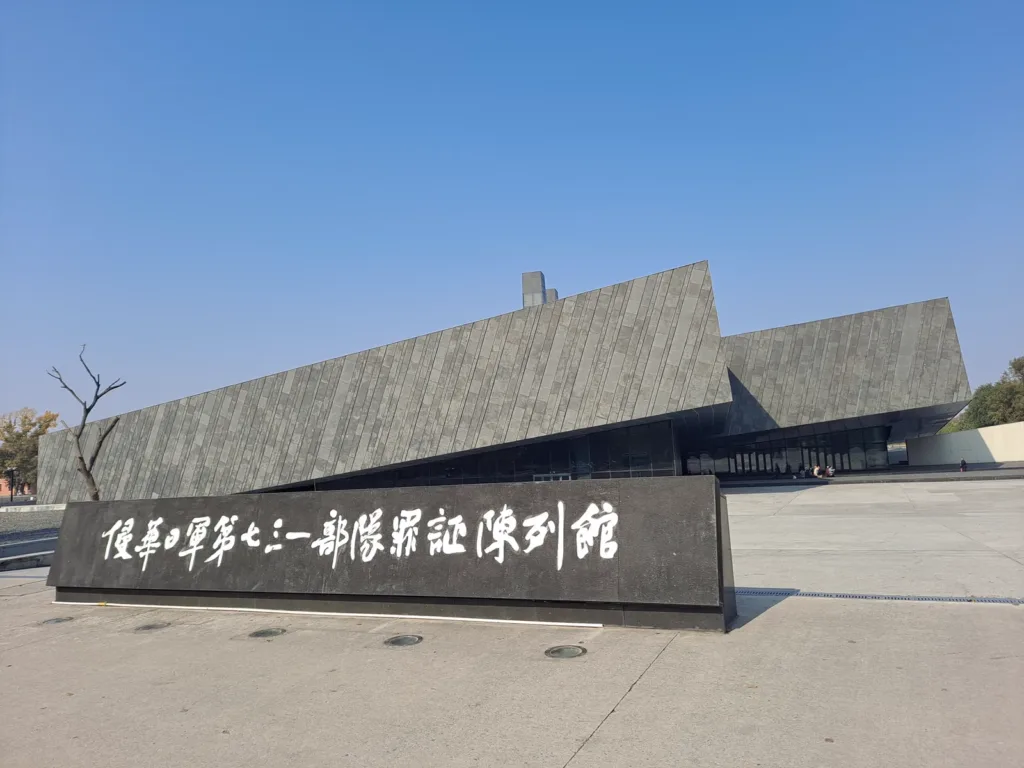 Exterior of the Unit 731 War Crime Exhibition Hall in Harbin, the modern exhibition building used in the museum complex. Photo: EditQ · CC BY-SA 4.0
Plan your visit
Getting there
Pingfang District is about 15 km (straight-line distance) from central Harbin. Search for 平房区 in a map app to find stations and your accommodation.
Where to stay →Build your route
Start with Unit 731 Museum. The linked place guides have entrance and visit details.
Continue with Harbin →More in Harbin
Sources & geographic information
Administrative names and parent areas: Official geographic directory (dmfw.mca.gov.cn) · Reference date 2026-09-06.
Background text adapted from Pingfang, Harbin — Wikipedia contributors, under CC BY-SA 4.0. Text has been shortened and reorganized; source revision 1335009640.
Map data © OpenStreetMap contributors. Pins mark approximate centres, not entrances or boundaries.
Image credits & notes (1)
- The Unit 731 war-crimes evidence museum in Pingfang District, Harbin. Photo: 2023-10-14.Photo: EditQ · CC BY-SA 4.0Resized for the web; the photo itself has not been edited. Thumbnails may show a cropped view.
