


Get to know Shangzhi
- Administrative area
- County-level city · 县级市
- Part of
- Harbin
- Chinese name
- 尚志市
- Local areas
- County-level city guide
Area & population
- Area
- 8,824.90 km²
- Population · 2018
- 560,448
- Administrative seat
- Shangzhi Town (尚志镇)
Source: English Wikipedia, as of the dates shown.
A wide, multi-stop city
Shangzhi is not a walkable district of central Harbin. It is a county-level city in southeastern Heilongjiang, administered by Harbin, with an official area of 8,910 square kilometres and 10 towns plus 7 townships. Those figures describe the administrative scale, not a single sightseeing zone.
The city's name carries a historical memory. It was formerly Zhuhe County and was renamed Shangzhi County after Zhao Shangzhi, one of the founders and leaders of the Northeast Anti-Japanese United Army; it later became a city. The local story is presented through memorial sites, public sculpture and the Shangzhi Martyrs Memorial Hall rather than through one preserved old town.
Plan Shangzhi one area at a time. Yabuli is the best-known winter-sports base, while Maoershan and the other forest destinations offer a different, mountain-and-forest day. The municipal tourism directory lists both the Maoershan and Yabuli areas alongside the Shangzhi Stele Forest, the The Hurricane Memorial Hall and Shangzhi Park, making clear that these are separate places and themes rather than one compact attraction.
What to see and notice
Yabuli Ski Tourism Resort is a resort area, not a single universal ski gate. The regional tourism listing names several ski fields and supporting facilities, including hotels, a forest hot spring and a forest zoo. Choose the exact hill, hotel or activity before booking; lift operation, lessons, rentals and reservations are operator-specific and seasonal.
For a history-focused visit, the city's memorial landscape connects Zhao Shangzhi and Zhao Yiman with the wider Northeast Anti-Japanese resistance. In Yuanbao Village, the The Hurricane Memorial Hall and related heritage sites interpret the rural setting associated with Zhou Libo's land-reform novel. These visits are different from a ski day and should be planned as separate stops.
Local agriculture gives the wider city another concrete theme. Xinhua describes Shangzhi as a major raspberry-growing area, with blackcurrants and other berries also part of the local processing economy. A greenhouse, orchard or tasting is not guaranteed on a particular date, so ask locally before treating berry production as a scheduled farm visit.
Getting there and moving on
There is no useful Harbin metro journey into Shangzhi's outlying towns. The municipal introduction says the Harbin–Mudanjiang passenger railway and the Bin-Sui Railway cross the city, and that Shangzhi has 13 railway stations. The practical consequence is important: choose the station for the exact resort, town or village, then arrange the last connection and the return before setting out.
For Yabuli, a 4 February 2025 winter travel guide listed about 27 daily high-speed trains from Harbin to Yabuli West and a local bus from Yabuli West through Qingshan Village and Yabuli South toward several ski areas. It also listed a separate set of buses from Yabuli South to ski fields, hotels and Yabuli Town. The guide was published for the 2025 Asian Winter Games period, so its times, fares and frequency are historical seasonal information, not a 2026–27 timetable.
A 23 November 2024 provincial report described the first winter-season K5197 service from Harbin to Yabuli South as a 2-hour-15-minute trip, with station shuttles and taxis serving nearby resort destinations. That report confirms the type of rail-and-last-mile connection available in that season; it does not confirm that the same train or shuttle operates on your travel date.
For a road transfer, give the driver the complete Chinese name of the destination, such as 亚布力滑雪旅游度假区 Yàbùlì Huáxuě Lǚyóu Dùjiàqū or 元宝镇元宝村 Yuánbǎo Zhèn Yuánbǎo Cūn, rather than only “Shangzhi”. Check the live 12306 schedule, the chosen resort's current notice and the return connection together. Current 2026–27 ski opening dates, lift status, tickets and local shuttle arrangements are not established by the dated sources above.
Guide sources
- Shangzhi introduction, Shangzhi Municipal Government
- Scenic spots, Shangzhi Municipal Government
- Shangzhi: a heroic city writing a new rural story, Xinhua
- Yabuli Ski Tourism Resort, Qulongjiang
- Travel to Yabuli by train and bus, Heilongjiang Provincial Government
- First winter-season train from Harbin to Yabuli South, Heilongjiang Provincial Government
- The wartime memory in a place name: Shangzhi City, Communist Party Member Network
Explore Shangzhi
Core places to explore, with English and Chinese names.
Places to explore around Shangzhi
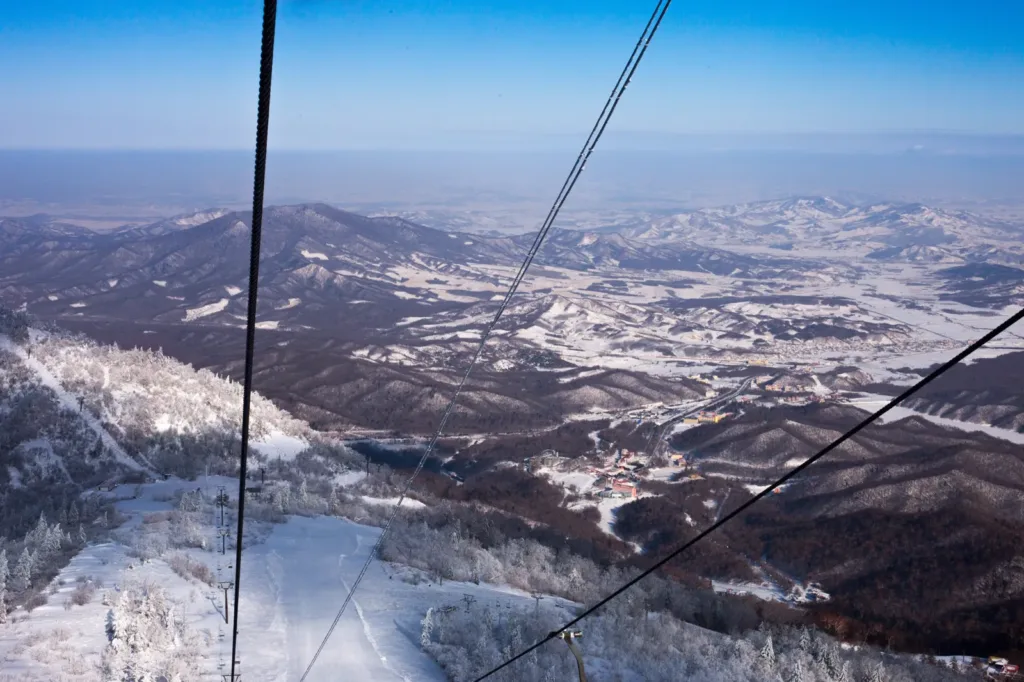 A view from a two-person chairlift over the snowy slopes and mountain valley of Yabuli Ski Resort in Yabuli, Heilongjiang. Photo: Cameraton Cleric · CC BY-SA 3.0
Plan your visit
Getting there
Shangzhi is about 120 km (straight-line distance) from central Harbin. Search for 尚志市 in a map app to find stations and your accommodation.
Where to stay →Build your route
Start with Yabuli Ski Resort. The linked place guides have entrance and visit details.
Continue with Harbin →More in Harbin
Sources & geographic information
Administrative names and parent areas: Official geographic directory (dmfw.mca.gov.cn) · Reference date 2026-09-06.
Background text adapted from Shangzhi — Wikipedia contributors, under CC BY-SA 4.0. Text has been shortened and reorganized; source revision 1365281998.
Map data © OpenStreetMap contributors. Pins mark approximate centres, not entrances or boundaries.
Image credits & notes (1)
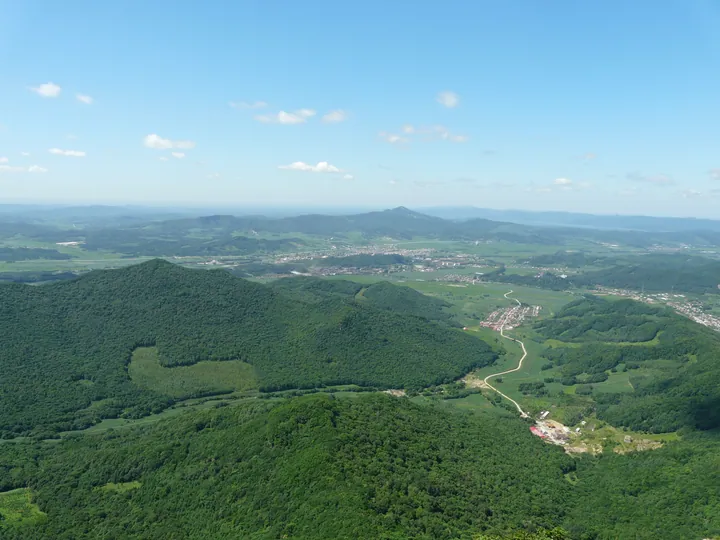
- Maoershan (Maoer Mountain) overlooking Shangzhi · 尚志市帽儿山Photo: Caliva · CC BY-SA 4.0 · taken 2010-08-01Resized for the web; the photo itself has not been edited. Thumbnails may show a cropped view.
