

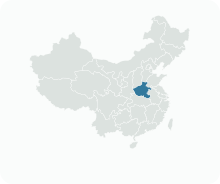
Get to know Zhongyuan District
- Administrative area
- District · 市辖区
- Part of
- Zhengzhou
- Chinese name
- 中原区
- Local areas
- District guide
Area & population
- Area
- 195.00 km²
- Population · 2019
- 1,080,900
Source: English Wikipedia, as of the dates shown.
A western district with several different faces
Zhongyuan is an urban district on the west side of Zhengzhou. The district government gives its area as 193 km² and describes a gradual change from shallow eroded hills in the southwest to a broad loess plain. Xiliuhu Lake (西流湖) and Changzhuang Reservoir are part of this west-side landscape, while the district’s history also includes the industrial expansion that followed the First Five-Year Plan.
That combination is the reason to treat Zhongyuan as a set of small areas rather than one walkable old town. Around the central civic area you can spend time in a major museum; farther west, a former factory complex and a long urban lake offer a different view of Zhengzhou. Give each cluster its own half-day, and use the exact Chinese destination in your map app rather than asking for a single “Zhongyuan District entrance.”
What to see and how to look at it
Zhengzhou Museum, Wenhan Street branch (郑州博物馆文翰街馆)
This is the district’s strongest indoor introduction to Zhengzhou. The museum describes itself as a comprehensive city museum with nearly 60,000 objects, including Neolithic pottery, Shang and Zhou bronzes, Tang and Song stone sculpture, ceramics and painting. Its Wenhan Street building has 21 galleries, with permanent displays that trace Zhengzhou’s history from the Palaeolithic period to the modern era.
Plan around the current published visitor rules: opening is 09:00–17:00, with Tuesday closed except on national public holidays. The guide lists an earlier last reservation and last-entry time on weekdays than at weekends and public holidays. Real-name entry applies. Advance booking through the museum’s WeChat account is available; the same guide says an individual visitor without an advance booking may present an accepted identity document, including a passport, at a self-service machine or staffed window to obtain a validation code. Recheck the museum’s latest notice before travelling, because special exhibitions and crowd controls can change.
The museum gives a practical route: take Metro Line 14 or Line 6 to Olympic Sports Centre (奥体中心), use Exit F, and walk about 900 m. It also lists B502, S601, S180 and S113 bus approaches, each with a named stop and walking distance. These are museum directions, not a claim that every part of the district is nearby.
Ersha Cultural and Creative Park and the former No. 2 Grinding Wheel Factory (郑州二砂文化创意园 / 郑州第二砂轮厂旧址)
The former factory is a way to read Zhengzhou’s western industrial history through buildings rather than a reconstructed story. The Zhengzhou Municipal Cultural Heritage Bureau identifies the site at 78 Huashan Road (华山路78号) as an eighth-batch National Key Cultural Relics Protection Unit. Its surviving components include grinding-wheel workshops, a finished-goods store, offices and processing buildings; the distinctive ceramic-wheel workshop uses a saw-tooth roof and reinforced-concrete structure. The plant was built in stages from the 1950s and production later ceased, after which the site gradually became a creative-park setting.
The city government describes the creative park as a reuse project based on the protected factory site, between Huashan Road and the west side of Zhongyuan Road. It identifies the large ceramic-wheel workshop as the park’s representative Bauhaus-style building. Look for the scale, roofline and industrial layout, and remember that a protected historic complex is not the same thing as a fully open museum.
The current metro operator lists Ersha (二砂) on Line 10. Its station page gives the operating directions as Zhengzhou Railway Station (郑州火车站) to Zhengzhou West (郑州西站), with published first and last trains in both directions. Use the Chinese address above in Amap/Gaode Maps to choose the current public approach; do not assume an exit, interior building or event space is open simply because the park exists.
Xiliuhu Park (西流湖公园)
For a slower outdoor visit, choose the park’s southern or northern section instead of trying to cover the whole lake. The Zhengzhou Garden and Landscape authority describes a 242.65-hectare urban ecological park with a 75.77-hectare lake and a 5.6-km water route. Zhongyuan Road divides its cultural-heritage area from its ecological recreation area; the park also contains specialist gardens, wetland and water views, and named landscape areas. The city listing gives the park as open all day.
The metro operator’s Line 1 station list includes Xiliuhu (西流湖) and Xisanhuan (西三环). The city’s park listing gives the south area as Zhongyuan Road–Xingwan Road (中原路—杏湾路) and the north area as Chemical Road–West Third Ring Road (化工路—西三环). Select the section you want first, then check the walking route and return station in Amap; the two areas are not one compact entrance.
Eating in the district
The dishes to look for are Zhengzhou and Henan foods shared across the city, not a single Zhongyuan District house specialty. Zhengzhou’s tourism authority describes 烩面 (huìmiàn) as hand-pulled wheat noodles served in a lamb-and-lamb-bone broth with lamb, daylily, wood ear and glass noodles; diners may add coriander, chilli oil and sugared garlic. Because the broth and toppings are substantial, ask about lamb, wheat and the day’s ingredients if you have dietary restrictions.
For a second local breakfast, look for 胡辣汤 (húlàtāng). A 2025 report on Henan’s heritage foods describes it as a hot, peppery breakfast soup and notes that common pairings include fried dough or stuffed buns; recipes vary by regional tradition, so do not treat one version as a district-wide standard. To find either dish without endorsing a particular business, copy the Chinese name into Meituan (美团) or Amap/Gaode Maps and inspect several nearby results yourself. Check the menu, recent reviews, current opening information and whether the dish is actually being served that day. Platform order is not a quality ranking, and a shop’s version does not make it the only authentic recipe.
Moving around Zhongyuan
Zhongyuan is spread out, so transport should be chosen for the specific place:
- Museum: Metro Lines 6 or 14 to Olympic Sports Centre (奥体中心), Exit F, then about 900 m on foot; or use the museum’s listed B502, S601, S180 and S113 bus approaches. For the return, go back to the same station and check the train destination on the platform.
- Ersha: Metro Line 10 to Ersha (二砂). The official station page records trains toward Zhengzhou Railway Station and Zhengzhou West; use Amap for the current exit and pedestrian approach to Huashan Road 78.
- Xiliuhu Park: Metro Line 1 to Xiliuhu or Xisanhuan, then select the south or north park area in the map app. Return by the same Line 1 corridor, checking the displayed direction before boarding.
If you arrive at Zhengzhou Railway Station, both the Line 1 and Line 10 station lists include Zhengzhou Railway Station and western Zhongyuan stops. Choose the line according to your destination, not simply according to the district name. For a taxi or ride-hail, show the full Chinese place name and address; “中原区” alone is too broad for a reliable drop-off.
Check before setting out
The museum has published hours, entry rules and routes, but special events can alter them. The authoritative heritage and city pages confirm Ersha’s protected status and park setting, but I did not find a current official public timetable that guarantees access to every building or exhibition space there. Check the venue’s current notice or on-site information before making it the only purpose of a trip. Likewise, lake weather, maintenance and local event arrangements can affect which park paths are pleasant on the day.
Explore Zhongyuan District
Core places to explore, with English and Chinese names.
Zhongyuan District 中原区
Plan your visit
Getting there
Zhongyuan District is about 4 km (straight-line distance) from central Zhengzhou. Search for 中原区 in a map app to find stations and your accommodation.
Where to stay →More in Zhengzhou
Sources & geographic information
Administrative names and parent areas: Official geographic directory (dmfw.mca.gov.cn) · Reference date 2026-09-06.
Background text adapted from Zhongyuan, Zhengzhou — Wikipedia contributors, under CC BY-SA 4.0. Text has been shortened and reorganized; source revision 1331081424.
Map data © OpenStreetMap contributors. Pins mark approximate centres, not entrances or boundaries.
Image credits & notes (1)
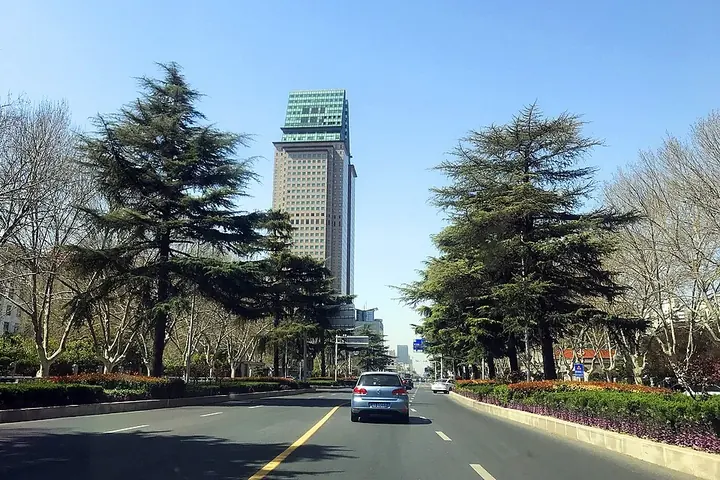
- Zhongyuan Road in Zhongyuan District, Zhengzhou. Photograph date recorded by the source: 2020-03-19 11:45:49.Photo: Windmemories · CC BY-SA 4.0Resized for the web; the photo itself has not been edited. Thumbnails may show a cropped view.
