

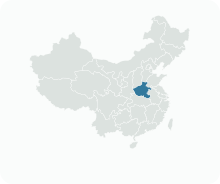
Get to know Huiji District
- Administrative area
- District · 市辖区
- Part of
- Zhengzhou
- Chinese name
- 惠济区
- Local areas
- District guide
Area & population
- Area
- 206.00 km²
- Population · 2019
- 303,500
Source: English Wikipedia, as of the dates shown.
Huiji is Zhengzhou’s northern district on the south bank of the Yellow River, where Mangshan hills, river landscapes, archaeology and ordinary urban life meet. Its attractions are spread across a broad administrative area, so visitors should plan by separate destinations rather than expect one compact tourist centre.
Why visit Huiji
Huiji gives Zhengzhou a different edge. The district lies north of the main urban core, with Mangshan to the west and the Yellow River to the north. It is an administrative district of two towns and six subdistricts, so “Huiji” describes a broad area rather than one walkable attraction cluster. The district’s name comes from Huiji Bridge, a three-arch stone bridge associated with the Sui-period Guangji Canal route; the local government explains the name as an idea of mutual benefit and cooperation.
The strongest reason to come is the meeting of a large river and a long human record. Along the Yellow River edge, you can read the landscape as well as look at it: the river runs on a raised bed above parts of the surrounding plain, while Mangshan provides the southern backdrop. Inland, Guxing preserves evidence of a Han-period industrial settlement, and Huayuankou carries the difficult memory of the 1938 breach of the Yellow River dike. These are different kinds of visits, not interchangeable photo stops.
Three useful anchors
Yellow River Cultural Park (郑州黄河文化公园)
The park is on the Yellow River’s south bank at 1 Huanghenan’an Road, Huiji District. The official city guide describes it as a national scenic area, a national geopark and a national 4A tourist area. Its open landscape is paired with built viewpoints and monuments: the five developed sections include Wulong Peak, Yueshan Temple, Dayu Mountain, the Yan and Huang Emperors statue area and Xinghai Lake. The 106-metre Yan and Huang Emperors statue, the Yellow River Stele Forest and the geology museum give a visitor several ways to spend time beyond a quick river photograph.
Treat it as an outdoor visit with a cultural layer. Look from the hill toward the river and plain, then use the indoor geology displays when heat, wind or rain makes the open slopes less comfortable. The city listing currently gives opening hours of 07:30–18:00 and a full ticket price of ¥48, with concession categories stated on that page. These are not a guarantee of entry on a future date: check the official listing before setting out, especially around weather or special closures.
Guxing Han Iron-Smelting Ruins Museum (郑州市古荥汉代冶铁遗址博物馆)
At Guxu North Road 79 in Guxing Town, the museum presents a national-level protected Han ironworks site outside the old Xingyang city wall. The official museum description records two large furnaces, associated ore-processing and water facilities, moulds and tools, and a production system rather than an isolated artefact. Its displays are organised around smelting, furnaces, mould-making and finished objects, making this a strong stop for understanding how an ancient workshop worked.
The listed hours are Tuesday to Sunday, 09:00–17:00; Monday is closed except for statutory holidays. The source gives a telephone number but does not state a passport-specific booking procedure or a current online reservation rule, so do not infer one. Confirm the day’s arrangements with the museum if your visit depends on a timed entry.
Huayuankou breach site (花园口黄河掘堤处)
The Huayuankou site at 21 Huayuankou Street is a memorial landscape, not a leisure attraction to be treated lightly. The Zhengzhou Cultural Heritage Bureau identifies three principal remains: the breach monument, Huayuankou Chronicle Square and a sculpture wall. The 1938 breach was made during the war and caused a catastrophic flood; the site’s panels and markers frame the event through the breach, displacement, ecological damage, efforts to close the breach and the river’s return. Read the interpretation before taking photographs and leave space for the memorial character of the place.
Seasons and how to pace a visit
Huiji has a continental monsoon climate with four distinct seasons. The district government characterises spring as dry and windy, summer as hot and rainy, autumn as cool and clear, and winter as cold and dry with little snow. That makes autumn and clear winter days comfortable for exposed viewpoints, while spring visitors should expect wind and summer visitors should allow for sudden rain. The riverbank and hill sections remain weather-dependent; check the destination’s same-day notices rather than assuming a past seasonal programme is still running.
Because the district is spread out, a sensible day chooses one main anchor and adds only a nearby second stop. The Yellow River Cultural Park and Guxing are both associated with the district’s north-western historic landscape, but they are separate destinations. Huayuankou is another riverfront destination, not a guaranteed walk from either one.
Getting there and moving between anchors
From Zhengzhou, use the exact Chinese destination name in Amap/Gaode Maps or another current local map, not only “Huiji District.” The district’s official transport page lists metro Lines 2, 3, 4 and 7 in the wider district, plus an extensive bus network, but it does not establish one metro station as the entrance to every riverfront site. Do not turn a broad line listing into a guessed last-mile walk.
For the Yellow River Cultural Park, the official city listing gives the most concrete public-transport options: tourist bus 游16 runs from Zhengzhou Railway Station through Nanyang Road and Jiangshan Road to the park; 游18 runs from the Beisanhuan–Wenhualu area via Nanyang Road and Jiangshan Road; and the Zhengzhou–Jiaozuo intercity railway serves Huanghe Jingqu Station. The park is also connected from the city by Jiangshan Road. Check the current bus and rail departures before travel, then confirm the final leg from the station or stop to the park entrance.
For the Guxing museum, keep the full destination string 郑州市古荥汉代冶铁遗址博物馆,郑州市惠济区古须北路79号 in your map app. The official museum page supplies the address and hours but no direct bus route. A taxi or ride-hailing trip to that exact address is therefore more dependable than inventing a station transfer; ask the driver to use the museum name and plan the return before leaving the outer district.
For Huayuankou, search 花园口黄河掘堤处,郑州市北邙花园口街21号 as a separate destination. The heritage authority confirms the address and the three memorial components, but the page does not provide a current bus timetable or a visitor shuttle. Use the map app’s live route for the date of travel and verify that the approach reaches the memorial area rather than a different riverbank access point.
Guide sources
Explore Huiji District
Core places to explore, with English and Chinese names.
Places to explore around Huiji District
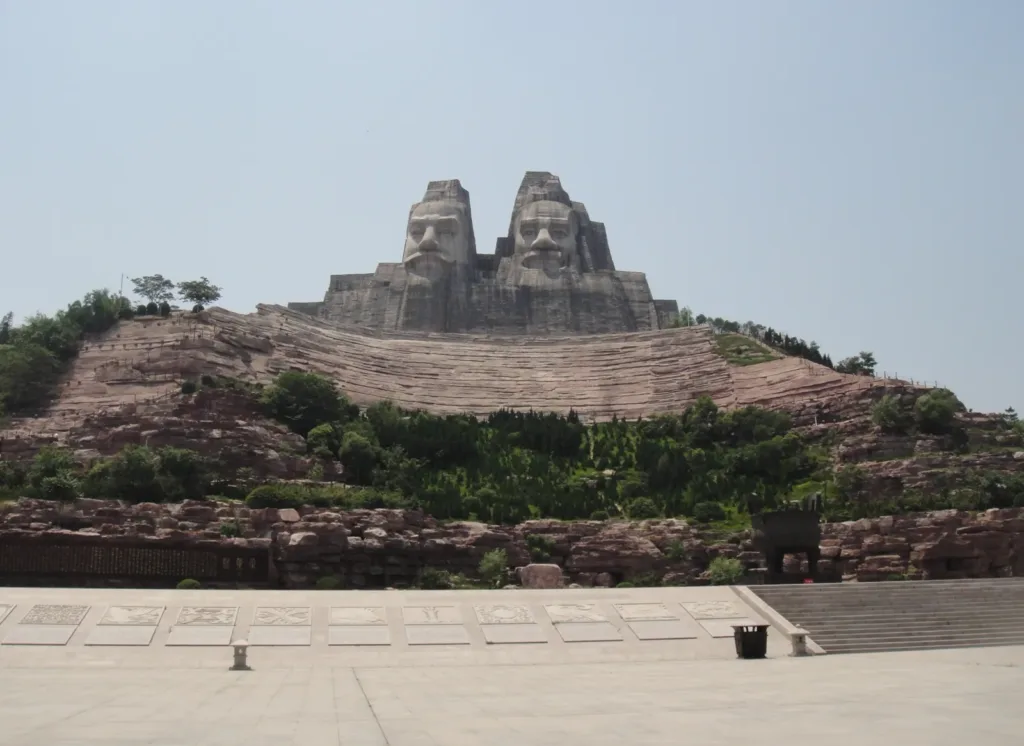 The Yan and Huang Emperors Statue area in Zhengzhou Yellow River Park, viewed across its broad plaza and stone hillside. Photo: Yefims · CC BY-SA 4.0
Plan your visit
Getting there
Huiji District is about 15 km (straight-line distance) from central Zhengzhou. Search for 惠济区 in a map app to find stations and your accommodation.
Where to stay →Build your route
Start with Yellow River Cultural Park. The linked place guides have entrance and visit details.
Continue with Zhengzhou →More in Zhengzhou
Sources & geographic information
Administrative names and parent areas: Official geographic directory (dmfw.mca.gov.cn) · Reference date 2026-09-06.
Background text adapted from Huiji, Zhengzhou — Wikipedia contributors, under CC BY-SA 4.0. Text has been shortened and reorganized; source revision 1327792777.
Map data © OpenStreetMap contributors. Pins mark approximate centres, not entrances or boundaries.
Image credits & notes (1)
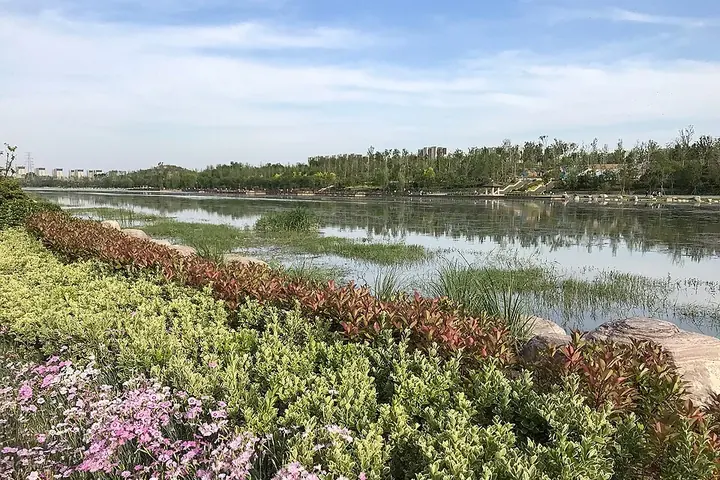
- The landscaped Jialu River in Huiji District, Zhengzhou. Photograph date recorded by the source: 2020-05-05 17:23:03.Photo: Windmemories · CC BY-SA 4.0Resized for the web; the photo itself has not been edited. Thumbnails may show a cropped view.
