

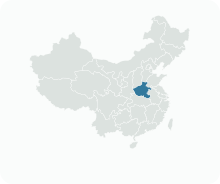
Get to know Guancheng Hui District

- Administrative area
- District · 市辖区
- Part of
- Zhengzhou
- Chinese name
- 管城回族区
- Local areas
- District guide
Area & population
- Area
- 204.00 km²
- Population · 2019
- 835,700
Source: English Wikipedia, as of the dates shown.
In brief: Guancheng Hui District is central Zhengzhou’s old urban and archaeological core: a living city built around the remains of an early Shang capital, with a museum, surviving rammed-earth walls, historic temples, an old Muslim quarter, and newer heritage streets close together.
Why this district is worth a stop
Guancheng is not a single attraction with one entrance. It is a 107-square-kilometre urban district in central Zhengzhou, and its most rewarding visitor area is the older core around the Zhengzhou Shang City site. The district government describes Guancheng as one of China’s five urban ethnic districts and as a place where the city’s commercial life and layered religious and archaeological heritage still meet.
The defining layer is the Zhengzhou Shang City site. Government heritage material identifies it as an early Shang capital associated with Shang Tang, a national key protected site announced in 1961. The described site covers about 25 square kilometres, and sections of its rammed-earth wall survive for roughly 7 kilometres. This is a useful way to understand Zhengzhou: the remains are not isolated in a remote archaeological park but sit among ordinary roads, shops and neighbourhoods.
A compact old-city day
Start with the Zhengzhou Shang Capital Site Museum (郑州商都遗址博物院), the museum built to interpret the Shang capital. The Zhengzhou government’s venue page gives the address as 200 metres west of the junction of Dong Dajie and Chengdong Road, on the south side of the road. It records daily opening from 09:00 to 17:00, with reservations stopping at 15:50 and entry stopping at 16:00; it is closed on Mondays except public holidays. The same page does not explain whether the reservation system accepts a foreign passport in the same way as a Chinese identity card, so check the museum’s current instructions before relying on a same-day visit.
Then read the city at street level. The wall remains and the surrounding archaeological-park spaces give scale to what the museum displays. The district’s current regeneration programme also includes the Shangdu Ancient City (商都古城) area and streets such as Pingdeng Street (平等街), Shuncheng Street (顺城街) and Fuminli (阜民里). These are urban streets, not a sealed historical set: walk quietly, leave room for residents, and do not assume every courtyard or event space is open to visitors.
The Zhengzhou Confucian Temple (郑州文庙) is at No. 301 Dong Dajie. The district government describes a temple founded in the Eastern Han, rebuilt in 1341 and restored in 2004, with three courtyards, the “De pei tian di” and “Dao guan jin gu” gateway inscriptions, Dacheng Hall and the two-storey Zunjing Pavilion. The City God Temple (城隍庙) stands 200 metres east of the Shangcheng Road–Zijing Shan Road junction on the north side. The city government identifies it as a Ming foundation, rebuilt in 1501, with a theatre stage and surviving halls that show the character of a historic Zhengzhou temple complex.
The Beida Mosque (北大清真寺) is on Qingzhen Temple Street. The district government describes it as an important historic mosque with palace-style Chinese Islamic buildings, the Baba tomb, two Xuande-period incense burners and old trees. This is a living religious site rather than a museum prop. Dress modestly, keep away from prayer areas, ask before taking photographs, and do not assume that a listed heritage status guarantees tourist entry at a particular time. Current public visiting hours and foreign-visitor arrangements were not stated on the official page I read.
Getting there and moving between sites
Use a specific place name, not just “Guancheng Hui District,” because the district has no single visitor gate. The operator’s current timetable lists Zhengzhou Railway Station (郑州火车站) and Zijing Shan (紫荆山) on Line 1, Dong Dajie (东大街) on Line 2, and Dong Dajie and Zhengzhou Wenmiao (郑州文庙) on Line 3. The station descriptions place Zhengzhou Wenmiao station at the Dong Dajie–Chengdong Road junction and Dong Dajie station at the Zijing Shan Road–Dong Dajie junction, matching the museum and temple addresses. For the museum and the Confucian Temple, Zhengzhou Wenmiao is the most targeted rail stop on Line 3; Dong Dajie is the Line 2/Line 3 interchange serving the same old-city area. From Zhengzhou Railway Station, a practical metro pattern is Line 1 to Zijing Shan, then Line 2 to Dong Dajie. Confirm the day’s direction, last train and exit signs in the operator’s planner rather than copying a fixed exit number.
For buses, the official venue pages list the following approaches: the Confucian Temple page names routes 35, 85, 152, 89, 60 and K85; the City God Temple page names 58, 33, 727, 61, B17, 52, 65 and 2; and the Beida Mosque page names 33, B17, 2, 58, 40 and 65. Those pages are older than the current visit date and do not provide a live timetable, so enter the Chinese destination into Amap/Gaode Maps immediately before travelling and check the return stop as well. For a taxi or ride-hailing car, use the Chinese destination and address: “郑州商都遗址博物院,东大街与城东路交汇处向西200米路南”, “郑州文庙,东大街301号”, “郑州城隍庙,商城路与紫荆山路交叉口向东200米路北”, or “郑州北大清真寺,清真寺街”.
The metro operator warns that its published times are for the selected day and that journey estimates exclude waiting and interchange time. That matters if you visit the museum late or plan to return after an evening performance or market visit. The old district is best treated as a cluster of short urban legs, with the exact walking connection checked at each current entrance rather than assumed from the district name.
Timing and expectations
The museum’s published Monday closure and entry cut-off are the clearest current scheduling facts. The older temple pages describe traditional festivals and fairs, but those descriptions are not a promise that a particular lunar-date event, performance or opening arrangement will occur during your trip. Check a current notice before planning around one. No future seasonal transport, special shuttle or passport appointment rule is assumed here.
Guide sources
Explore Guancheng Hui District
Core places to explore, with English and Chinese names.
Places to explore around Guancheng Hui District
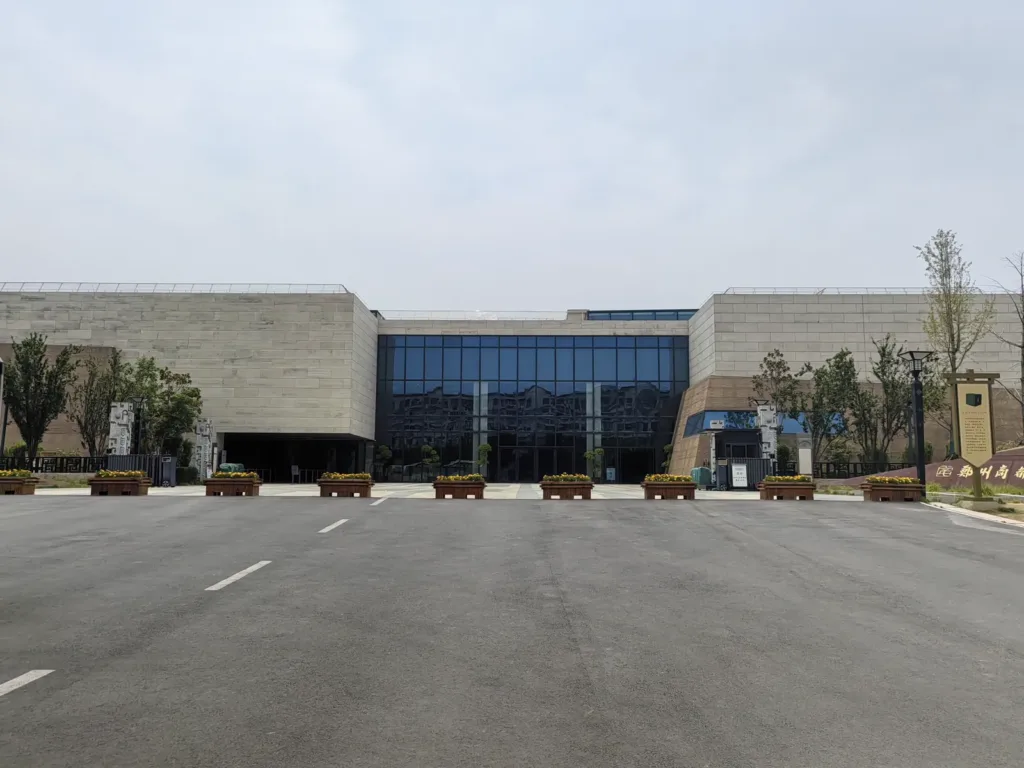 The entrance facade of Zhengzhou Shang Capital Site Museum in the Zhengzhou Shangcheng National Archaeological Site Park, photographed on 27 May 2025. Photo: Yumeto · CC BY-SA 4.0
Plan your visit
Getting there
Guancheng Hui District covers the centre of Zhengzhou. Search for 管城回族区 in a map app to find stations and your accommodation.
Where to stay →Build your route
Start with Zhengzhou Shang Capital Site Museum and Shang City Walls. The linked place guides have entrance and visit details.
Continue with Zhengzhou →More in Zhengzhou
Sources & geographic information
Administrative names and parent areas: Official geographic directory (dmfw.mca.gov.cn) · Reference date 2026-09-06.
Background text adapted from Guancheng, Zhengzhou — Wikipedia contributors, under CC BY-SA 4.0. Text has been shortened and reorganized; source revision 1353058493.
Map data © OpenStreetMap contributors. Pins mark approximate centres, not entrances or boundaries.
Image credits & notes (1)
- Zijingshan Road in Guancheng Hui District, Zhengzhou. Photograph date recorded by the source: 2020-03-13 11:48:14.Photo: Windmemories · CC BY-SA 4.0Resized for the web; the photo itself has not been edited. Thumbnails may show a cropped view.
