

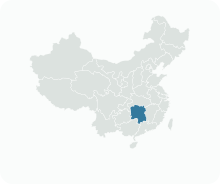
Get to know Changsha County
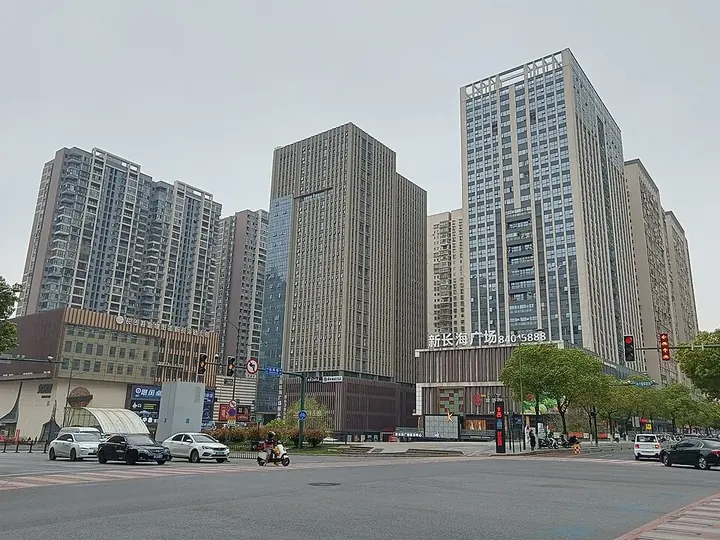
Photo adjustments
Full frame retained; proportionally resized and converted to WebP. No retouching or changes to the photographed subject. Card displays may crop the view.
- Administrative area
- County · 县
- Part of
- Changsha
- Chinese name
- 长沙县
- Local areas
- County guide
Area & population
- Population · 2006
- 750,500
- Administrative seat
- Xingsha
Source: cited geographic source, as of the dates shown.
Getting oriented
The county sits on the outskirts of Changsha in the north-east of the province. Liuyang (浏阳) lies to its east, Yuhua District (雨花区) to its south, and Furong (芙蓉区), Kaifu (开福区) and Wangcheng (望城区) districts to its west, while Yueyang (岳阳) prefecture lies to the north.
History
The name is old. Under the Qin a Xiang county (湘县) was the seat of Changsha commandery; the Western Han renamed it Linxiang (临湘县), and in 589 the Sui renamed Linxiang as Changsha County. Changsha city was created from the county's urban area in 1933, and in 1951 part of the county was split off to form Wangcheng County.
What to see
The former residence of Huang Xing (黄兴故居) stands at Liangtang in Huangxing town (黄兴镇). Huang Xing, a leader of the 1911 Revolution, was born in the house in 1874. It was built in 1864 as a courtyard compound of 32 rooms, of which 12 survive: single-storey earth-and-timber buildings with grey tiled roofs and whitewashed mud walls. It has been a nationally protected site since 1988.
The Kaihui Martyrs' Cemetery (开慧烈士陵园) holds the grave of Yang Kaihui (杨开慧), executed in Changsha in 1930. Mao Zedong sent money for headstones in the names of their three sons; her mother was buried in the same grave in 1969, and behind it a large tablet carries Mao's handwritten poem "Reply to Li Shuyi" (蝶恋花·答李淑一). Graves of her grandfather, father and a cousin lie in the same grounds.
Taogong Temple (陶公庙) in Langli Subdistrict (㮾梨街道) is laid out as gateway, opera stage, stone stairway, main hall and side halls. The gateway is a five-bay brick archway with a glazed coiled-dragon finial on its ridge and glazed figures of the Eight Immortals on either side, and an opera stage stands directly behind it, so visitors enter the inner court beneath the stage.
Food and local products
The Jinjing green tea (金井绿茶) scenic area in Jinlong village, Jinjing town, covers about 550 mu (roughly 37 hectares), with a group of century-old tea trees and a workshop that teaches Jinjing green tea making, a technique on Hunan's provincial intangible heritage list. It was named one of China's 30 most beautiful tea gardens in 2016.
Highlights
- Former residence of Huang Xing 黄兴故居: Birthplace of the 1911 Revolution leader, built 1864; nationally protected since 1988.
- Kaihui Martyrs' Cemetery 开慧烈士陵园: Grave of Yang Kaihui and her mother, with a tablet of Mao's poem to Li Shuyi.
- Taogong Temple 陶公庙: Temple in Langli with a glazed brick archway gate and an opera stage over the entrance.
- Jinjing green tea 金井绿茶: Tea whose making technique is on Hunan's provincial intangible heritage list.
Sources for this guide
黄兴故居纪念馆 · Changsha County People's Government
开慧烈士陵园 · Changsha County People's Government
陶公庙 · Changsha County People's Government
金井绿茶非遗文化旅游景区 · Changsha County People's Government
长沙县 · Chinese Wikipedia · CC BY-SA 4.0
Original English written from the listed sources and checked sentence by sentence against quoted extracts by a separate reviewer. Updated 2026-09-25.
Explore Changsha County
Core places to explore, with English and Chinese names.
Changsha County 长沙县
Plan your visit
Getting there
Changsha County is about 15 km in a straight line from central Changsha. Search for 长沙县 in a map app to find stations and your accommodation.
Where to stay →More in Changsha
Sources & geographic information
Administrative names and parent areas: Official geographic directory · Reference date 2026-09-06.
Some facts checked against 长沙县 — Wikipedia contributors, CC BY-SA 4.0.
Map data © OpenStreetMap contributors. Pins mark approximate centres, not entrances or boundaries.