

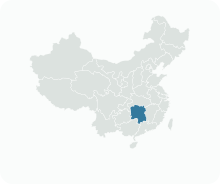
Get to know Kaifu District
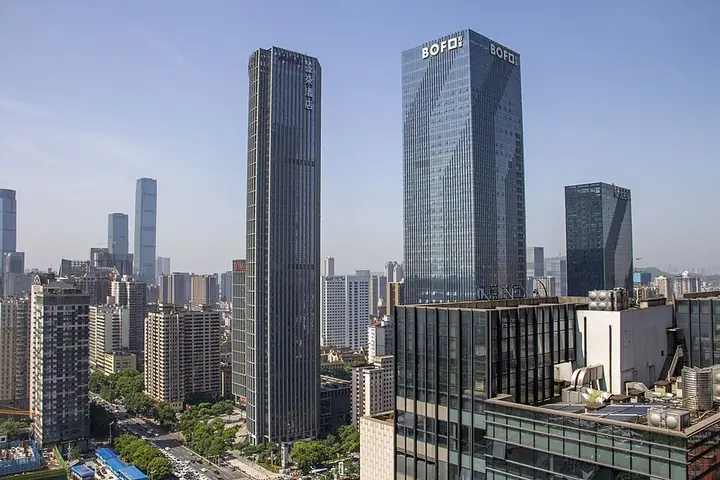
Photo adjustments
Full frame retained; proportionally resized and converted to WebP. No retouching or changes to the photographed subject. Card displays may crop the view.
- Administrative area
- District · 市辖区
- Part of
- Changsha
- Chinese name
- 开福区
- Local areas
- District guide
Area & population
- Area in the source
- 188.73 km²
- Population · 2014
- 595,000
- Administrative seat
- Furongbeilu
Source: cited geographic source, as of the dates shown.
History
The district government repeats a local saying that Kaifu Temple came first and the city of Changsha afterwards. The temple grew out of the Huichun Garden (会春园), a summer retreat built north of the city by the Ma family, who ruled the Chu kingdom (楚国) from Changsha in the Five Dynasties period. In 927 Ma Xifan (马希范), son of Ma Yin (马殷), gave part of the garden to the monk Baoning (保宁) to found the temple. It belongs to the Yangqi (杨岐) branch of the Linji school of Chan Buddhism, and its line of teachers includes the Japanese monk Shinchi Kakushin (心地觉心), whose Hotto branch in Japan counts Kaifu Temple as one of its ancestral temples. In 1886 the monks Jichan (寄禅) and Liyun (笠云) and the poet Wang Kaiyun (王闿运) formed the Bihu Poetry Society (碧湖诗社) at the temple. Hunan listed it as a provincial protected heritage site in 1983.
Setting and landscape
Four rivers run through or past the district: the Xiang, the Liuyang (浏阳河), the Laodao (捞刀河) and the Sha (沙河). Yue Lake (月湖), Nianjia Lake (年嘉湖) and Qingzhu Lake (青竹湖) lie within it, and the hills of Xiufeng (秀峰山), Eyang (鹅羊山) and Taiyang (太阳山) rise in the north. The district counts nearly 20 square kilometres of water and 75 kilometres of embankment.
What to see
Besides Kaifu Temple, the district lists two more temples among its historic sights, Tielu Temple (铁炉寺) and Hongshan Temple (洪山寺). Chaozong Street (潮宗街) is an old street paved with granite slabs, and the district government says Xiang embroidery (湘绣), one of China's four famous embroidery styles, originated here; the Shaping Xiang Embroidery Town (沙坪湘绣小镇) is on its list of heritage sights. Revolutionary sites include the former seat of the Communist Party's Xiang District Committee (湘区委员会旧址), the Former Residence of Yang Kaihui (杨开慧故居) and the Chuanshan Society (船山学社).
The Hunan Museum (湖南省博物馆), a national first-grade museum, stands here along with the Changsha Museum (长沙市博物馆), the city library and the Changsha Concert Hall (长沙市音乐厅). Martyrs' Park (烈士公园) and Yuehu Park (月湖公园) are also here, as is Window of the World (世界之窗), listed by the district as a national AAAA tourist attraction.
Getting oriented
The National University of Defense Technology (国防科大) and Xiangya Hospital (湘雅医院) are in Kaifu, as is the Malanshan (马栏山) video and creative industry park, where several thousand media and creative companies are based. The Jinxia (金霞) economic development zone concentrates on manufacturing and logistics, and the district's freight facilities include Changsha New Port (长沙新港) and the Changsha rail freight centre.
Highlights
- Kaifu Temple 开福寺: Chan temple founded in 927 from part of the Ma family's Huichun Garden; Hunan provincial protected site since 1983.
- Chaozong Street 潮宗街: Old street paved with granite slabs.
- Hunan Museum 湖南省博物馆: National first-grade museum located in the district.
- Shaping Xiang Embroidery Town 沙坪湘绣小镇: Listed by the district among its historic and cultural sights; Xiang embroidery is claimed as originating in Kaifu.
- Former Residence of Yang Kaihui 杨开慧故居: One of the district's revolutionary heritage sites.
Sources for this guide
区域简介 · Kaifu District People's Government, Changsha
文旅资源 · Kaifu District People's Government, Changsha
开福区 - 维基百科,自由的百科全书 · Wikipedia (Chinese) · CC BY-SA 4.0
开福寺 (长沙) - 维基百科,自由的百科全书 · Wikipedia (Chinese) · CC BY-SA 4.0
Original English written from the listed sources and checked sentence by sentence against quoted extracts by a separate reviewer. Updated 2026-09-25.
Explore Kaifu District
Core places to explore, with English and Chinese names.
Places to explore around Kaifu District
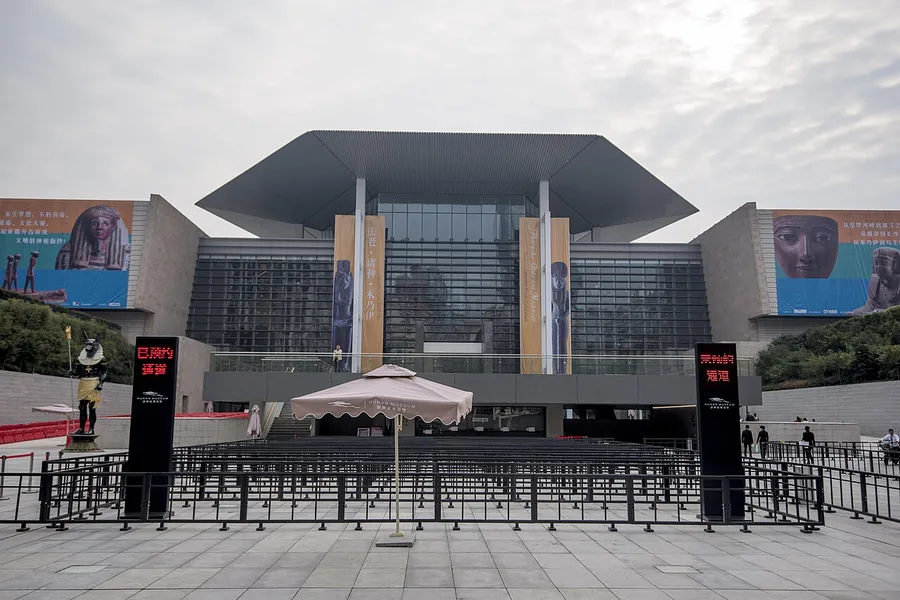 Entrance to the new Hunan Museum building in Changsha, September 2018.
Hunan Museum湖南博物院
Hunan Museum is especially rewarding for the Mawangdui Han tomb finds, where textiles, lacquerware and other burial objects preserve remarkably detailed traces of life and belief. The story of Xin Zhui and her household anchors…
Read the place guide →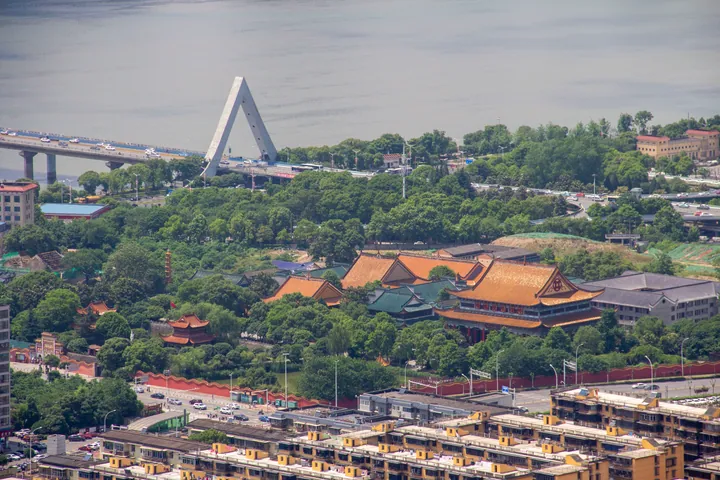 An elevated view over Changsha: the walled Kaifu Temple compound at the centre with several large halls under orange-yellow tiled roofs, a red perimeter wall and dense trees, the broad grey Xiang River behind with a cable-stayed bridge crossing at the upper left, and blocks of flats in the foreground.
Kaifu Temple开福寺
Kaifu Temple (开福寺) is a working Buddhist monastery in the north of Changsha, Hunan, founded in the Five Dynasties and Ten Kingdoms period; Kaifu District, in which it stands, takes its name from it.
Read the place guide →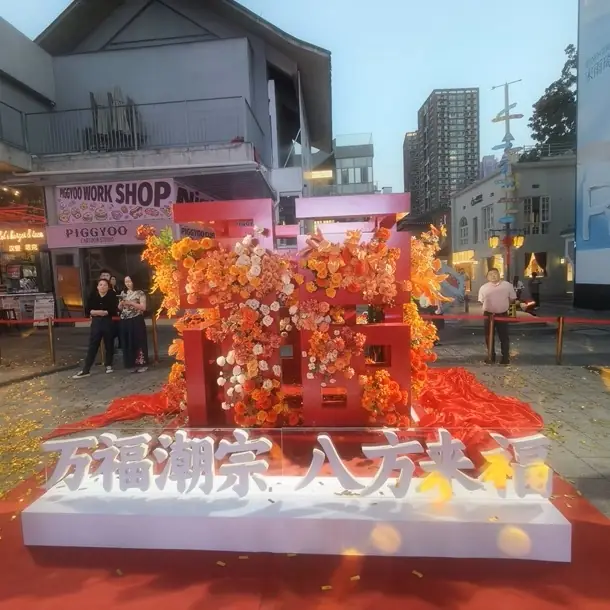 Chaozong Street · 潮宗街
Chaozong Street潮宗街
Granite-paved Changsha street named after a lost city gate, with an excavated Song-era wall, a 1924 church, old mansions and new shops.
Read the place guide →Plan your visit
Getting there
Kaifu District is about 6 km in a straight line from central Changsha. Search for 开福区 in a map app to find stations and your accommodation.
Where to stay →Build your route
Hunan Museum and Kaifu Temple are both listed here. The linked place guides have entrance and visit details.
Continue with Changsha →More in Changsha
Sources & geographic information
Administrative names and parent areas: Official geographic directory · Reference date 2026-09-06.
Some facts checked against 开福区 — Wikipedia contributors, CC BY-SA 4.0.
Some facts checked against 开福寺 (长沙) — Wikipedia contributors, CC BY-SA 4.0.
Photo: Hunan Museum · Siyuwj · CC BY-SA 4.0. Proportionally resized and converted to WebP without cropping, retouching or changing the photographed subject.

Photo: Kaifu Temple · 維基小霸王 · CC BY-SA 4.0. Full frame retained; proportionally resized and converted to WebP. No retouching or changes to the photographed subject. Card displays may crop the view.

Photo: Chaozong Street · Source photographer · License not provided. EXIF orientation normalized; resized without changing aspect ratio; converted to WebP. No subject edits.
Map data © OpenStreetMap contributors. Pins mark approximate centres, not entrances or boundaries.