

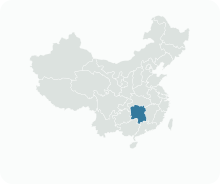
Get to know Liuyang
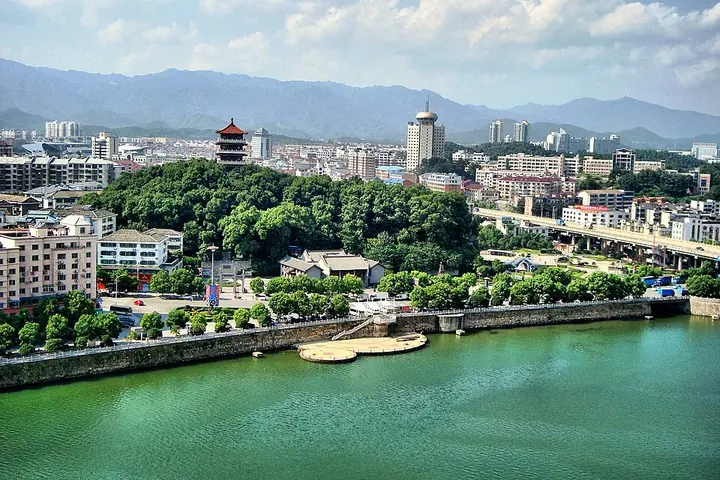
- Administrative area
- County-level city · 县级市
- Part of
- Changsha
- Chinese name
- 浏阳市
- Local areas
- County-level city guide
Area & population
- Area
- 5,008.00 km²
- Population · 2010
- 1,278,928
- Administrative seat
- Guankou
Source: English Wikipedia, as of the dates shown.
Liuyang is not another neighbourhood of Changsha. Its own government describes it as a county-level city administered by Changsha and set on the Hunan–Jiangxi border. The Liuyang River and the mountain systems around it give the city a different scale from the provincial capital: the centre is a useful base, while many of the strongest nature and heritage experiences sit in separate towns.
The city’s character is easiest to read in layers. The riverfront and the urban Confucian tradition belong to the centre; Tan Sitong’s former residence adds late-Qing reform history; Wenjiashi carries the memory of the Autumn Harvest Uprising; and the eastern mountain country leads toward Dawei Mountain and other rural landscapes. Provincial tourism material presents these as connected themes, but not as one ticketed complex or one short walk.
What to see
Begin in the urban centre with the Liuyang River waterfront and Liuyang Confucian Temple (浏阳文庙). The provincial tourism authority places the temple in its urban “search for the original intention” route and separately recommends the city section of the riverfront. The temple is also the home of Liuyang Confucian sacrificial music, a national intangible cultural heritage project. The music was created in 1829 for ceremonies at the temple and combines instruments, song, dance and ritual; its heritage record does not establish a daily public performance schedule, so do not arrive expecting a staged ceremony.
In the city, look for the Former Residence of Tan Sitong (谭嗣同故居) as a compact historical counterpoint to the river. Tan Sitong grew up in Liuyang and became one of the most radical reformers of the late Qing. The Hunan cultural-tourism authority describes the residence, also known as Tai Fu Tai Mansion and Liuyang Guild Hall, as a late-Ming brick-and-wood compound with two courtyard spaces, a garden and carved wall, gate and lattice-window details; it is a nationally protected cultural relic. The source confirms the site’s identity and heritage status, but not a current opening timetable or foreign-passport admission procedure.
Wenjiashi Meeting Site of the Autumn Harvest Uprising (秋收起义文家市会师旧址) is a separate road excursion in Wenjiashi Town, not a second urban museum. The Hunan government’s visitor page gives the memorial’s address as No. 34 Renmin Road, Wenjiashi Town, Liuyang (浏阳市文家市镇人民路34号) and explains that the former Wenhua Academy became Liren School before the 1927 meeting of the uprising forces. The complex includes the former site, a memorial museum, Autumn Harvest Square and a visitor service centre. The same page gives a contact number, but the page read here does not establish current hours, online booking or passport-specific entry; confirm those details before making the out-and-back journey.
The eastern mountains are another part of Liuyang’s identity, but they are not a single city park. Dawei Mountain (大围山) and Daowu Mountain (道吾山) already have separate place guides in the Changsha catalogue. Use them as separate road-based outings, with the exact visitor entrance and return transport checked for the chosen mountain; do not merge a mountain area into the city centre or assume that reaching Liuyang town solves the final leg.
Fireworks and food
Liuyang fireworks (浏阳花炮) are a living manufacturing tradition, not a reason to enter an unmarked workshop. The national intangible-heritage record lists Liuyang Fireworks Making Craft in the first national batch in 2006, identifies Liuyang as the declaring area, and describes a traditional handmade system of 12 stages and 72 processes. It also records later development of cold-light, smokeless, daytime, indoor and stage products. If a museum visit or public display is announced, use that regulated venue; never enter a production compound or handle fireworks without explicit permission.
For food, seek Liuyang steamed dishes (浏阳蒸菜) as a local cooking system rather than one fixed recipe. Plates or bowls of seasoned ingredients are placed in stacked steamers over boiling water, often alongside the rice. Reporting that compares Liuyang with other steamed-food regions highlights local fermented black beans (douchi), tea oil and chilli, as well as cured vegetables and meats such as fish, pork and duck. A Liuyang food writer describes the style as valuing ingredients and lasting flavour over elaborate presentation; these sources describe a regional tradition, not a guarantee that every restaurant uses the same ingredients.
Ask what is in each bowl if you avoid meat, fish, fermented soy, chilli or shared cooking equipment. Steaming does not make a dish vegetarian or allergen-free, and its appearance is not enough to establish that it is safe for a particular diet.
Planning the visit
Treat Liuyang as a dispersed county-level city. The city centre, Wenjiashi, the fireworks-cultural sites and the mountain parks have different operators and access conditions. No city-wide visitor passport or single admission ticket was established by the sources read for this guide. Keep the Chinese name of the exact venue in Amap or Apple Maps, and arrange the return road connection before leaving the centre for a rural site.
A 17 September 2026 report announced a Liuyang–Changsha stop bus service scheduled to start on 20 September. It describes two two-way corridors: Liuyang–Changsha–Zhuzhou–Xiangtan Coach Station (长株潭汽车站) and Liuyang–Changsha South Railway Station (长沙高铁南站). The report says the service was to run daily, with 64 buses or departures across the service, a first departure at 06:40 and a last at 19:00; tickets and live vehicle information were to be available through the Didi app or WeChat mini-program. Treat these as the latest published operating details, not a promise for your travel date: check the live listing, exact neighbourhood stop and reverse journey before setting out.
There is no current metro ride or operating railway into Liuyang established by the sources used here. The Changsha–Liuyang Maglev project is still under construction in the latest March 2026 progress report; the planned line would reach Guankou and is described as targeting 2029 operation. Do not put the future line into a present-day itinerary. From Changsha, use the named coach or stop-bus connection, then arrange a local road transfer for Wenjiashi or a mountain entrance. No fixed fare, journey time, last-mile bus number or tourist shuttle joining all of these places was verified here.
Before paying for a bus or reserving a venue, check whether the booking interface accepts a foreign passport and your available payment method. The pages read for the historic sites do not establish a current passport workflow. Carry the original passport, keep the Chinese destination name visible, and confirm the return departure while you still have mobile signal.
Explore Liuyang
Core places to explore, with English and Chinese names.
Places to explore around Liuyang
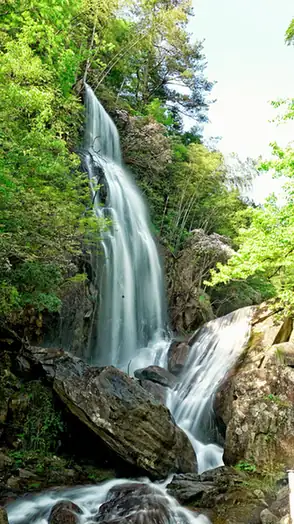 Dawei Mountain · 大围山
Dawei Mountain大围山
Dawei Mountain is a large forest destination in Liuyang, the county-level city administered by Changsha. It is special for the combination of high forested ridges, rhododendron country, Quaternary glacial landforms and mountain history around Qixing Peak, rather than for a single viewpoint or a quick city outing.
Read the place guide →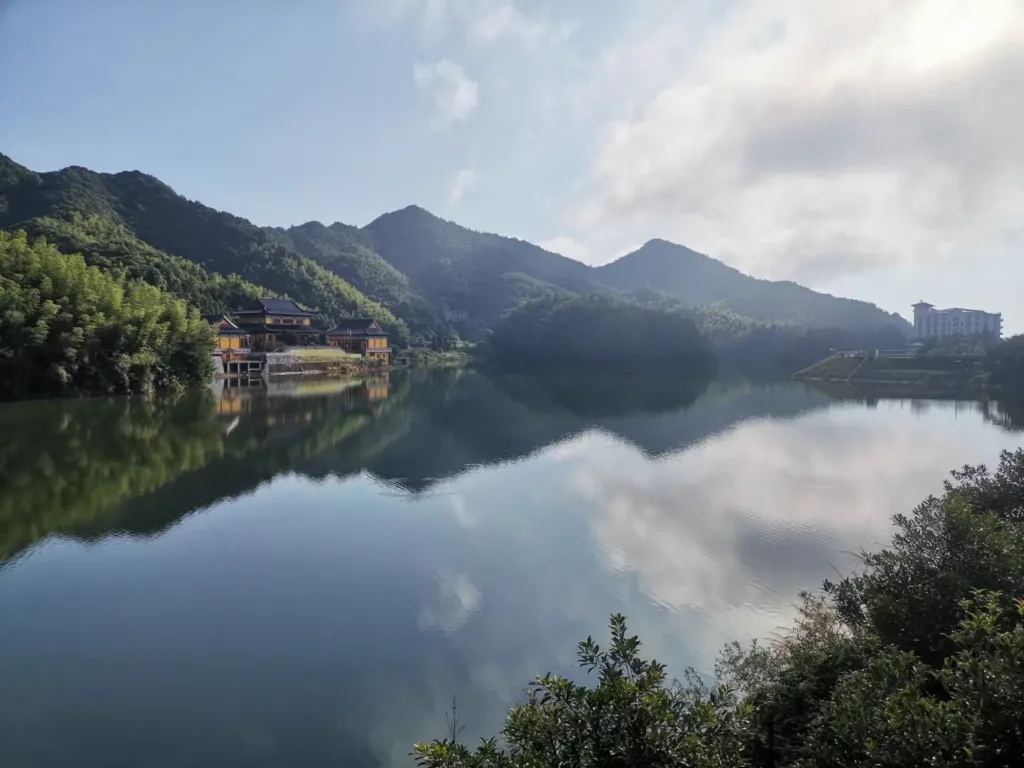 The reservoir on the hilltop of Daowu Mountain, Liuyang, Hunan. Photo: Allervous (Wikimedia Commons user) · CC BY-SA 4.0
Daowu Mountain道吾山
Daowu Mountain is a forested mountain in Liuyang, the county-level city administered by Changsha. Its appeal is the change of pace from town to wooded ridges, stream valleys and waterfalls, with a long-standing Buddhist landscape around Tianhu and the mountain temples. The clearest walking route described for visitors starts at Shangyunxi in Jiaoxi Village and climbs 5.4 km towards the Tianhu area; it is a rural mountain outing, not a walk from central Changsha.
Read the place guide →Plan your visit
Getting there
Liuyang is about 70 km (straight-line distance) from central Changsha. Search for 浏阳市 in a map app to find stations and your accommodation.
Where to stay →Build your route
Dawei Mountain and Daowu Mountain are both listed here. The linked place guides have entrance and visit details.
Continue with Changsha →More in Changsha
Sources & geographic information
Administrative names and parent areas: Official geographic directory (dmfw.mca.gov.cn) · Reference date 2026-09-06.
Background text adapted from Liuyang — Wikipedia contributors, under CC BY-SA 4.0. Text has been shortened and reorganized; source revision 1364229404.
Photo: Dawei Mountain · cn.tripadvisor.com. Resized for the web; the photo itself has not been edited.
Map data © OpenStreetMap contributors. Pins mark approximate centres, not entrances or boundaries.
Image credits & notes (1)
- Liuyang and its riverfront seen from Yintian Hotel in Liuyang, Hunan. Photo: Taken on 14 September 2010.Photo: HALUK COMERTEL · CC BY 3.0Resized for the web; the photo itself has not been edited. Thumbnails may show a cropped view.
