

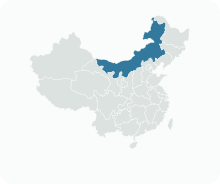
Get to know Jalainur District
- Administrative area
- District · 市辖区
- Part of
- Hulunbuir
- Chinese name
- 扎赉诺尔区
- Local areas
- District guide
Area & population
- Area
- 272.00 km²
- Population · 2020
- 84,424
- Administrative seat
- Subdistrict 3
Source: English Wikipedia, as of the dates shown.
Jalainur is best understood as an industrial and lake-edge district rather than a single downtown sightseeing block. Its visitor story joins three layers: prehistoric animals recovered from the open-cast mine, the coal-and-railway culture that shaped the settlement, and the grassland and Hulun Lake landscape around it. The municipal cultural-tourism plan frames the district through long history, grassland civilisation and a century of mining, and names Hulun Lake, the Mammoth Tourism Area, the Mining Museum and the Mining Heritage Ecological Park as linked resources.
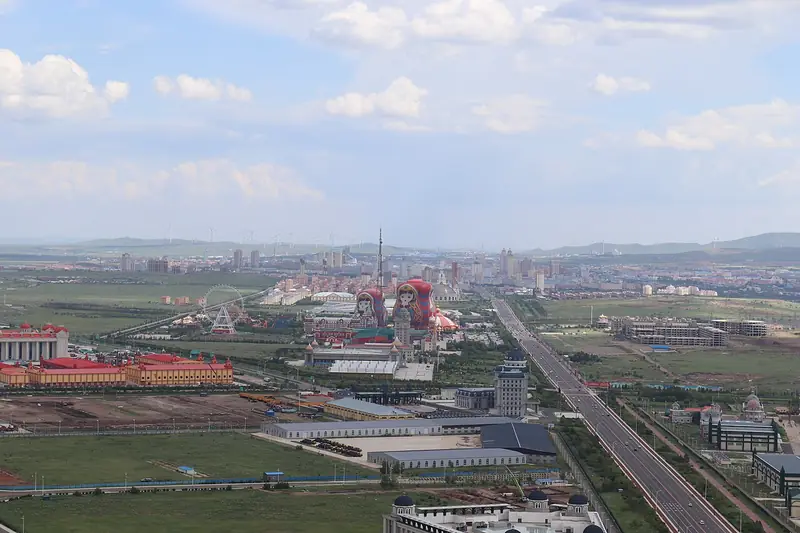
Start with the Mammoth Tourism Area (扎赉诺尔猛犸旅游区, also called Mammoth Park). The operator places it north of National Highway 301 and presents it as a large outdoor theme park built around Jalainur’s fossil story. Its account traces the “hometown of mammoths” identity to finds in the open-cast mine between 1980 and 1984, and describes large sculptures of mammoths, woolly rhinoceroses, giant deer and sabre-toothed cats, together with recreational facilities. The most useful way to read the park is as an outdoor introduction to the district’s deep-time landscape: walk the sculpture grounds, then check which indoor, amusement or seasonal facilities are operating on the day.
Pair that landscape with the Steam Locomotive Museum (扎赉诺尔区蒸汽机车博物馆). A Xinhua report carried by China Radio International describes four exhibition halls covering locomotive construction, railway science, world and Chinese locomotive history, and the use of steam locomotives in Jalainur. It also records more than 900 objects and a locomotive displayed as a full longitudinal section. The same report says the museum opened to the public free of charge in 2015. That is a historical opening record, not confirmation of today’s hours, admission policy or reservation procedure, so verify those details before setting out.
The mining story needs a little discipline. A mine pit is not automatically a visitor attraction, and the fossil-bearing area is not a reason to enter working or unmanaged ground. A 2025 report in Inner Mongolia Daily places the Mammoth Tourism Area and Jalainur National Mine Park within the district’s current tourism programming, alongside the district museum and the Steam Locomotive Museum, but it does not establish a general public route into the mine or fossil sites. Stay on signed, managed visitor grounds and use a museum or designated park route for interpretation.
Hulun Lake adds a different pace. The same 2025 report describes a lake visitor service centre and a fishing-culture museum, with cruises and lakeside activities presented as part of the district’s tourism offer. Treat these as site-specific and potentially seasonal: confirm whether the centre, museum, boat service and any winter facilities are operating before making them the fixed centre of your day. The lakefront is a separate experience from Mammoth Park, not a promise that every district attraction can be covered from one entrance.
Getting there and getting back
For rail travel, use the Chinese destination 扎赉诺尔西站 (Jalainur West Railway Station). China Railway’s station list gives its address as “内蒙古自治区满洲里市扎赉诺尔矿区站前街” and marks passenger boarding, baggage and parcel services as available. The district has no established metro or tourist-shuttle information in the sources used here. From the station, take a taxi or ride-hailing car to the managed entrance of 扎赉诺尔猛犸旅游区 Zhālàinuò'ěr Měngmǎ Lǚyóuqū; the operator places the park north of National Highway 301. If you are visiting the museum, show the full Chinese name 扎赉诺尔区蒸汽机车博物馆 Zhālàinuò'ěr Qū Zhēngqì Jīchē Bówùguǎn rather than asking for a generic “museum.”
Because the district contains separate sites, do not tell a driver only “Jalainur District.” Keep the Chinese attraction name on your phone, and arrange the return pickup from the same site. For the return journey, confirm a current train from 扎赉诺尔西站 in the China Railway app or at the station before leaving the attractions. A city tourism plan includes Jalainur in a route linking Manzhouli and other Hulunbuir destinations, but it does not provide a dependable local bus timetable or a fixed last-mile transfer for these sites.
Explore Jalainur District
Core places to explore, with English and Chinese names.
Jalainur District 扎赉诺尔区
Plan your visit
Getting there
Jalainur District is about 155 km (straight-line distance) from central Hulunbuir. Search for 扎赉诺尔区 in a map app to find stations and your accommodation.
Where to stay →More in Hulunbuir
Sources & geographic information
Administrative names and parent areas: Official geographic directory (dmfw.mca.gov.cn) · Reference date 2026-09-06.
Background text adapted from Jalainur District — Wikipedia contributors, under CC BY-SA 4.0. Text has been shortened and reorganized; source revision 1288856608.
Map data © OpenStreetMap contributors. Pins mark approximate centres, not entrances or boundaries.
Image credits & notes (1)
- Representative view in Jalainur District · 扎赉诺尔区代表景观。Photo: Liuxingy · CC BY-SA 4.0Resized for the web; the photo itself has not been edited. Thumbnails may show a cropped view. Original file title: 满洲里 遥望城区内 02.
