


Get to know Guanshan Township
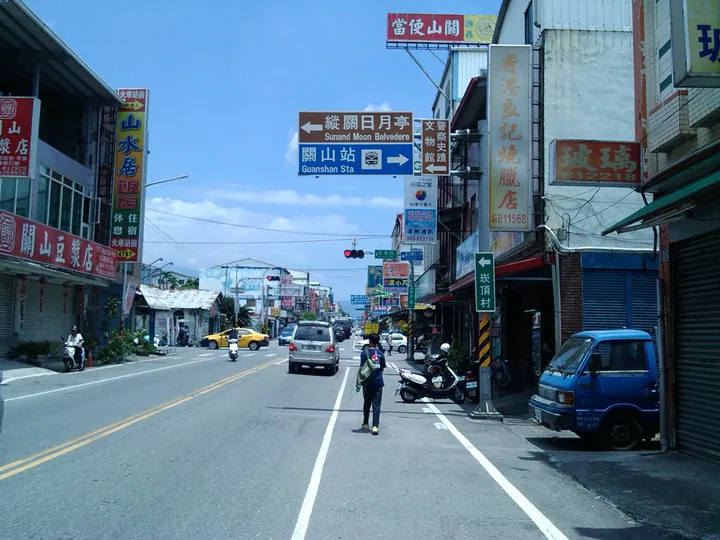
Photo adjustments
Full frame retained; proportionally resized and converted to WebP. No retouching or changes to the photographed subject. Card displays may crop the view.
- Administrative area
- Township · 鎮
- Part of
- Taitung County
- Chinese name
- 關山鎮
- Local areas
- Township guide
Area & population
- Area in the source
- 59.00 km²
Source: cited geographic source, as of the dates shown.
What to see
The waterside section follows the Hongshi River (紅石溪), passing irrigation channels, areca-lined paths, zelkova woodland and a Bunun (布農) settlement. The route then climbs towards Zongguan Riyue Pavilion (縱關日月亭). Beyond the pavilion are mahogany trees; the route returns along the Beinan River (卑南溪) to Guanshan Waterfront Park (關山親水公園).
Rice and local history
Guanshan Rice School (關山米國學校) occupies a former rice mill converted by the local farmers' association. It contains rice-culture exhibits, rooms for rice-based activities and displays of milling equipment and rice varieties. Guanshan Police History Museum (關山警史館) preserves uniforms, communications equipment, hand-cranked telephones and other policing objects from the Japanese period.
Sources for this guide
城鄉遊蹤-花東縱谷國家風景區 · East Longitudinal Valley National Scenic Area Administration
關山環鎮自行車道 | 交通部觀光署花東縱谷國家風景區管理處-自行車主題網 · East Longitudinal Valley National Scenic Area Administration
Original English written from the listed sources and checked sentence by sentence against quoted extracts by a separate reviewer. Updated 2026-09-27.
Explore Guanshan Township
Core places to explore, with English and Chinese names.
Guanshan Township 關山鎮
Plan your visit
Getting there
Guanshan Township is about 30 km in a straight line from central Taitung County. Search for 關山鎮 in a map app to find stations and your accommodation.
Where to stay →More in Taitung County
Sources & geographic information
Administrative names and parent areas: Official geographic directory · Reference date 2026-09-06.
Map data © OpenStreetMap contributors. Pins mark approximate centres, not entrances or boundaries.